
Khichdi Paratha
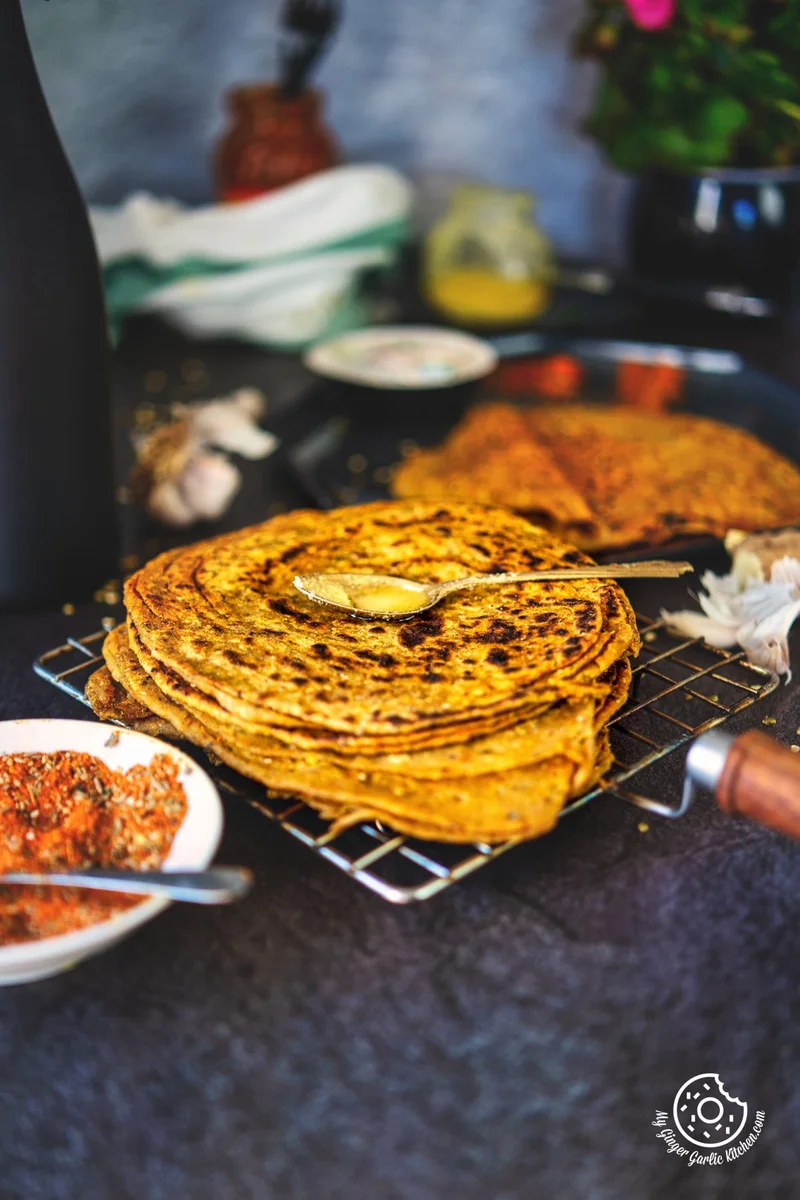
Khichdi paratha is an Indian flatbread made by kneading leftover khichdi with flour, minced vegetables and spices. It is a flavourful way to turn a small amount of leftover khichdi into crisp, layered parathas.
Ingredients
- 7–8 pieces, cut into 2.5 cm piecescabbage
- 1 medium, peeled and cut into 2.5 cm piecescarrot
- 1 medium, peeled and dicedonion
- 2.5 cm, peeledginger
- 2–3 cloves, peeled and roughly choppedgarlic
- 2 smallgreen chillies
- 2 teaspoonscumin seeds
- 2 teaspoonscarom seeds
- 2 teaspoonswhite sesame seeds
- 2 tablespoonsdried fenugreek leaves (kasuri methi)
- ½ teaspoonground turmeric
- 2 teaspoonsred chilli powder
- 1 tablespoonground cumin and coriander
- 1½ teaspoonspink or regular salt
- ¼ teaspoonasafoetida
- ½ teaspoonred chilli flakes
- 360 ml (1½ cups)leftover khichdi
- to tastesalt
- 250 g (2 cups)wholemeal flour
- 480 ml (2 cups)minced vegetables
- as neededwater or yoghurt, if needed to bring the dough together
- as requiredparatha spice mix
- 75–90 ml (5–6 tablespoons), or as neededghee or oil, for cooking
- to serve, optionalonion and tomato raita
- to serve, optionalgarlic chutney
- to serve, optionalpickle
Instructions
- 1
Mince vegetables
Put the onion, carrot, garlic, ginger, green chillies and cabbage in a blender. Blend to a coarse paste, or mince the vegetables by hand.
- 2
Mix the spices
Combine the cumin seeds, carom seeds, sesame seeds, red chilli powder, cumin-coriander powder, salt, dried fenugreek leaves and asafoetida in a small bowl. Mix well. Store any extra spice mix in an airtight container at room temperature for up to 2 months.
- 3
Make the dough
Mix the leftover khichdi and minced vegetables in a bowl. Stir in salt to taste and the flour, then knead to make a soft dough. Add a little water if it does not come together. Add 1 teaspoon of ghee or oil and knead it in. Cover and leave for 20–30 minutes, then divide into 8 equal portions and roll each into a ball.
- 4
Shape triangle parathas
Dip a dough ball in dry flour and roll it into a 10 cm circle. Brush generously with 1 teaspoon of ghee and spread over some spice mix. Fold the circle in half, brush half of the folded surface with more ghee, add spice mix, then fold again into a triangle. Dust with flour and roll gently into a triangle about 10–13 cm across and 3 mm thick.
- 5
Shape layered parathas
Alternatively, dust a dough ball with flour and roll it into a 10 cm circle. Spread 1 teaspoon of ghee over it, then sprinkle on about 1 teaspoon of spice mix, or enough to make a thin layer. Pleat the dough from one side into thin folds, stretching it slightly as you go. Stretch the pleated strip gently, roll it into a pinwheel and tuck the end underneath. Dust with flour and roll gently into a 13 cm circle, about 3–4 mm thick. Repeat with the remaining dough.
- 6
Cook the parathas
Heat a pan or tawa evenly. Cook a rolled paratha over medium heat for 2–3 minutes, until brown spots appear underneath. When bubbles form and the colour changes, flip it. Brush the cooked side with ghee and cook the other side for 2–3 minutes, then flip once more and brush with ghee. Cook until both sides are crisp and golden, pressing with a spatula for even cooking. Repeat with the remaining parathas.
- 7
Serve hot
Crumple each paratha gently with your hands to reveal its layers, and drizzle with a little ghee. Serve hot with curry, raita, chutney or pickle, or enjoy as an evening snack with masala chai.
What is khichdi paratha?
Khichdi paratha is a stuffed-style Indian flatbread made by mixing cooked khichdi into the dough rather than using it as a filling. Khichdi itself is a familiar South Asian dish of rice and lentils, and this recipe gives leftovers a second outing.
Vegetables add freshness, while the spice mix seasons the dough and the folds create a layered finish. The recipe offers two shaping options: a simple triangle or a pleated, pinwheel-style lachha paratha.
Nutrition and macros by portion
The nutrition label shows one serving as written: 210 calories, 0g protein, 0g carbs, 0g fat.
| Portion | Adjustment | kcal | Protein | Carbs | Fat |
|---|---|---|---|---|---|
| Lighter | Use less ghee | 147 kcal | 0g | 0g | 0g |
| This serving | As written | 210 kcal | 0g | 0g | 0g |
| Hungry | Serve an extra paratha | 315 kcal | 0g | 0g | 0g |
The khichdi and wholemeal flour provide most of the carbohydrates, while ghee or oil contributes much of the fat. The recipe also includes lentils in the khichdi and some protein from the flour, though the supplied nutrition listing gives zero for protein, carbohydrates and fat. Serve a paratha with raita and extra vegetables or a vegetable curry to make a more balanced plate.
Choose the right khichdi
Leftover khichdi: Use khichdi that is cool enough to handle and mix smoothly into the vegetables and flour. Its moisture varies, so add water only if the dough needs help coming together.
Flour: Wholemeal flour gives the parathas their hearty character. Add it after mixing the khichdi and vegetables so you can judge the dough’s consistency as you knead.
Build the flavour
Vegetables: Blend or mince them coarsely rather than turning them into a completely smooth purée. A little texture helps the dough stay interesting without leaving large pieces that make rolling difficult.
Spice mix: Cumin, carom, sesame, dried fenugreek and chilli bring fragrance and warmth. Spread the mix across the ghee layer so the seasoning is distributed between the folds.
Keep the dough soft
Kneading: The khichdi and vegetables already contribute moisture, so add water in small amounts only when necessary. Aim for a soft dough that holds together without sticking excessively to your hands.
Resting: Covering the dough for 20–30 minutes gives it time to settle before shaping. Divide it into 8 equal portions for parathas that cook at a similar pace.
Make the layers
Triangle fold: Brush the first circle with ghee and spice mix, fold it in half, then brush and season again before folding into a triangle. The ghee between the folds helps keep the layers distinct.
Lachha fold: Pleat the dough into a strip, roll it into a pinwheel and tuck the end underneath. Use gentle pressure when rolling the final shape so the layers do not get squashed flat.
Look for golden spots
Pan heat: Heat the pan evenly before adding a paratha, then cook over medium heat. Brown spots and bubbles are cues to turn it; allow 2–3 minutes on each side as directed.
Finish: Brush with ghee as you turn the paratha and press it lightly with a spatula for even contact with the pan. It is ready when both sides are crisp and golden.
Serve it warm
Pairings: Serve the parathas with curry, onion and tomato raita, garlic chutney or pickle. A bowl of raita offers a cooling contrast to the chilli and spices.
For a simpler snack, serve one hot with masala chai. The recipe also suggests gently crumpling the cooked paratha to open up its layers before serving.
Recipe notes & tips
- Chop or blend the vegetables coarsely so they mix into the dough without becoming watery.
- Add water gradually because leftover khichdi can vary in moisture.
- Keep the spice mix in an airtight container if you make it ahead.
- Dust the dough lightly with flour while rolling to prevent sticking.
- Use medium heat and wait for brown spots before turning each paratha.
- Press gently with a spatula while cooking to help the paratha cook evenly.
Variations
- Vegan option: Use oil instead of ghee and plant-based yoghurt if yoghurt is needed in the dough.
- Milder spice: Reduce the red chilli powder and flakes to suit your preference.
- Extra herbs: Add a little more dried fenugreek to the spice mix for a stronger herbal note.
- Triangle style: Fold each ghee-brushed circle in half twice to make the simpler triangular shape.
- Lachha style: Pleat each circle into a strip and coil it into a pinwheel for more visible layers.
Common mistakes to avoid
- Adding too much water: The khichdi and vegetables bring moisture, so add water a little at a time.
- Blending the vegetables smooth: Keep them coarse so the dough retains some texture.
- Rolling too thinly: Leave the parathas about 3–4 mm thick for the layered style.
- Using high heat: Cook over medium heat so the inside has time to cook before the outside gets too dark.
- Skipping the ghee between folds: Brush the layers as directed to help them separate.
- Turning too soon: Wait for bubbles and brown spots underneath before flipping.
How to store
Let leftover cooked parathas cool, then refrigerate in an airtight container for up to 3 days. Reheat in a pan over medium heat until hot and crisp; brush with a little ghee or oil if needed. Uncooked dough can be covered and refrigerated, but the parathas are best shaped and cooked fresh.
Frequently asked questions
Can I use any leftover khichdi?
Yes, provided it is cool enough to handle and can be mixed into a dough. If it is especially moist, you may need a little more flour; if the dough will not come together, add water a little at a time.
Do I have to make the spice mix?
The spice mix gives the parathas their particular flavour, but you can prepare it ahead and keep it in an airtight container. The recipe says it can be stored at room temperature for up to 2 months.
What is the difference between the two shapes?
The triangle method folds the dough into a simple layered triangle. The lachha method uses pleats and a pinwheel coil to create more visible layers.
How can I tell when a paratha is cooked?
Look for brown spots and bubbles as it cooks, then turn it as directed. The finished paratha should be crisp and golden on both sides.
What can I serve with khichdi paratha?
Serve it with curry, raita, chutney or pickle. It can also be eaten as a snack with masala chai.
Can I make these parathas vegan?
Yes. The recipe notes that some ingredients can be replaced with vegan alternatives; use oil instead of ghee and plant-based yoghurt if you need yoghurt for the dough.
Cook it from the original
This recipe comes from mygingergarlickitchen.com. Their page has the author’s own photos, notes and tips — the best place to cook it from.
Open the recipe on mygingergarlickitchen.com