
Paneer Manchurian
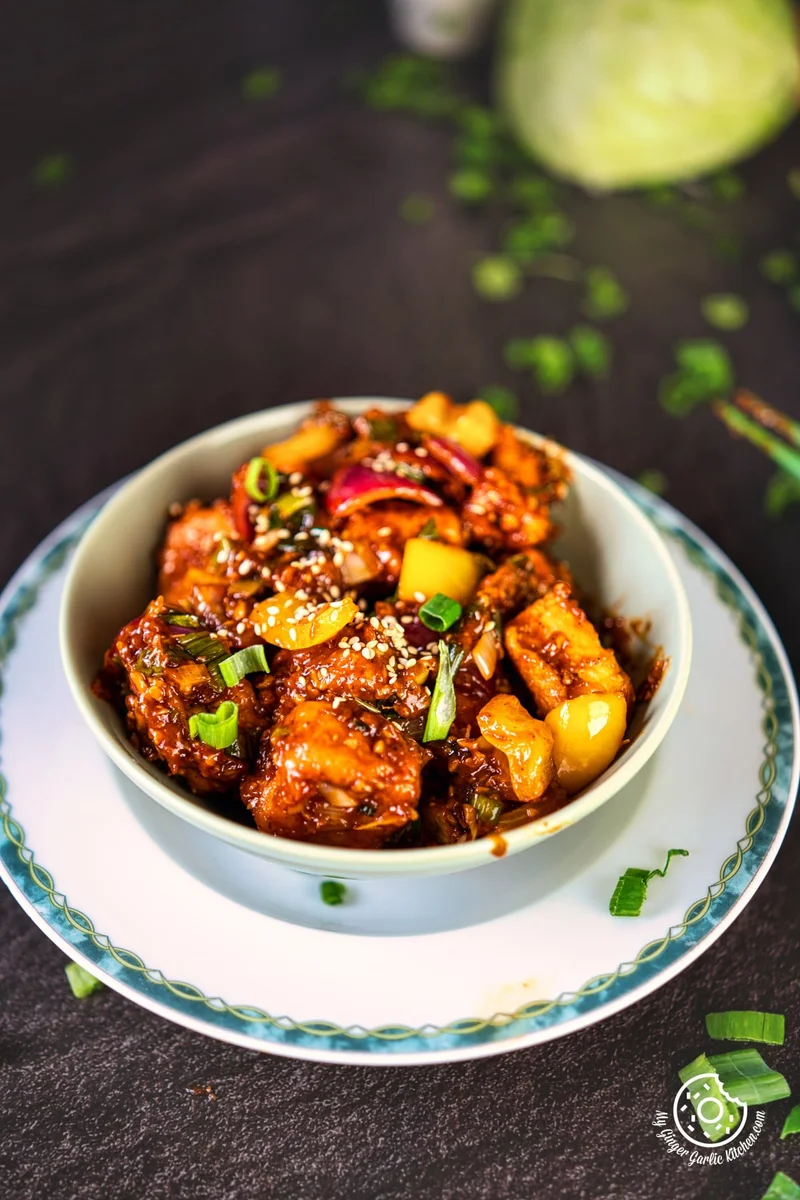
Paneer Manchurian is an Indo-Chinese dish of crisp, battered paneer tossed in a punchy sauce with ginger, garlic, chilli and vegetables. It makes a flavour-packed main or sharing dish, ready in about 30 minutes of active cooking, plus time to marinate the paneer.
Ingredients
- 300 gpaneer
- 45 ml (3 tablespoons)plain flour (maida)
- 45 ml (3 tablespoons)cornflour
- 5 ml (1 teaspoon)soy sauce
- 5 ml (1 teaspoon)ginger and garlic paste
- ¾ teaspoonred chilli powder
- 60–75 ml (4–5 tablespoons)water
- enough for deep-fryingoil
- 30 ml (2 tablespoons)oil
- 2.5 cm (1-inch piece)ginger, chopped
- 30 ml (2 tablespoons)garlic, chopped
- 1 smallgreen chilli, chopped
- 30 ml + 60 ml (2 + 4 tablespoons)spring onions, sliced (white parts + greens)
- 1 mediumonion, diced and separated into petals
- 1 mediumbell pepper, diced
- 5 ml (1 teaspoon)black pepper powder
- 22.5 ml (1½ tablespoons)soy sauce
- 15 ml (1 tablespoon)chilli sauce or Schezwan sauce
- 15 ml (1 tablespoon)tomato ketchup
- 15 ml (1 tablespoon)cornflour
- 30–45 ml (2–3 tablespoons)water
- to tastesalt
- to garnishtoasted sesame seeds
- a handfulspring onion greens, sliced
Instructions
- 1
Cut and coat
Cut the paneer into cubes and set aside. In a bowl, combine the plain flour, 45 ml (3 tablespoons) of cornflour, soy sauce, ginger and garlic paste and chilli powder. Add salt if needed, keeping in mind that the soy sauce may already be salty. Add the paneer and mix to coat, then add 45–60 ml (3–4 tablespoons) water to make a semi-thick batter that clings to the cubes. Leave to marinate for 30 minutes.
- 2
Fry the paneer
Heat frying oil in a wide pan or kadai. Deep-fry the coated paneer over medium heat until lightly golden. Drain on a plate lined with kitchen paper.
- 3
Mix the slurry
In a small bowl, mix 15 ml (1 tablespoon) cornflour with 30–45 ml (2–3 tablespoons) water until smooth. Set aside.
- 4
Cook the sauce
Heat 30 ml (2 tablespoons) oil in a wide non-stick pan over medium heat. Add the chopped ginger, garlic and green chilli and sauté for 1 minute, or until they change colour slightly. Add 30 ml (2 tablespoons) spring onions and cook for 30–40 seconds. Add the onion petals and bell pepper, then sauté for 2–3 minutes.
- 5
Thicken and toss
Add the soy sauce, chilli sauce, black pepper and vinegar, mix and cook for 30 seconds. Stir in the tomato ketchup, then add ¼ cup spring onion greens and cook for 1 minute. Reduce the heat to low, stir the cornflour slurry and add it to the pan. Cook, mixing, until the sauce thickens. Add salt to taste if needed, then add the fried paneer and toss to coat. Cook for 1 minute over high heat. For a gravy-style version, add 1 cup more water or vegetable stock.
- 6
Garnish and serve
Transfer the paneer Manchurian to a bowl. Garnish with spring onion greens and toasted sesame seeds, and serve immediately.
What is paneer Manchurian?
Manchurian dishes are part of Indo-Chinese cooking, a style developed in India that brings Chinese-influenced techniques together with local ingredients and flavours. Paneer takes the place of meat in this version, with a crisp coating and a savoury, spicy sauce.
The recipe works by keeping the paneer separate until the sauce is ready. That lets the cubes brown first, then pick up the sauce without spending too long simmering in it.
Nutrition and macros by portion
The nutrition label shows one serving as written: 290 calories, 0g protein, 0g carbs, 0g fat.
| Portion | Adjustment | kcal | Protein | Carbs | Fat |
|---|---|---|---|---|---|
| Lighter | Use less frying oil | 203 kcal | 0g | 0g | 0g |
| This serving | As written | 290 kcal | 0g | 0g | 0g |
| Hungry | Serve with extra rice | 435 kcal | 0g | 0g | 0g |
The paneer contributes most of the protein and fat, while the flour and cornflour provide the main carbohydrates; the frying oil and sauce oil add further fat. Serve a portion with vegetables and rice or noodles to make a more rounded plate.
Getting the coating right
Flour and cornflour form the coating, while ginger and garlic paste, soy sauce and chilli powder season it. Add the water gradually so the batter is thick enough to cling to the paneer but still loose enough to coat each cube.
Marinating gives the coating time to settle onto the paneer. The method calls for 30 minutes, so plan for that rest when allowing time for the dish.
Frying the paneer
Fry the coated cubes over medium heat until they are lightly golden, as specified in the method. Work in batches if needed so the pieces have room in the pan and the oil stays hot.
Drain the cubes on kitchen paper before they go into the sauce. This helps remove excess frying oil and keeps the coating from feeling greasy.
Building the sauce
Start with ginger, garlic and green chilli, then add the spring onion, onion and bell pepper in the stated order. Brief sautéing keeps the vegetables from becoming too soft before the sauce is finished.
Soy sauce, chilli sauce, black pepper and ketchup bring salty, spicy and sweet-savoury notes. The recipe method also mentions vinegar, though it does not give an amount in the ingredient list.
Using the cornflour slurry
Stir the slurry again just before adding it, since cornflour can settle at the bottom of the bowl. Keep the heat low as you pour it into the pan and stir until the sauce thickens.
For a gravy-style result, the method suggests adding 1 cup of water or vegetable stock. Otherwise, use the slurry to make a thicker sauce that clings to the paneer.
Serving it fresh
Toss the fried paneer into the thickened sauce at the end and cook over high heat for just 1 minute. Serve promptly, while the coating is at its crispest.
The spring onion greens and toasted sesame seeds finish the dish with a fresh, aromatic garnish. Serve it as part of a meal alongside plain rice or noodles.
Recipe notes & tips
- Add the batter water gradually to judge how well it coats the paneer.
- Use medium heat for frying, as directed, and aim for a light golden colour.
- Drain the fried cubes on kitchen paper before adding them to the sauce.
- Mix the cornflour slurry again immediately before pouring it into the pan.
- Taste the sauce before adding salt, since soy sauce can already be quite salty.
- Add the paneer only once the sauce has thickened, then serve without delay.
Variations
- Make it gravy-style: add 1 cup of water or vegetable stock as suggested in the method.
- Adjust the heat: vary the amount of chilli sauce to suit your preference.
- Change the pepper: use any colour of bell pepper, as the ingredient notes allow.
- Use a vegan alternative: replace the paneer with a vegan counterpart, as noted in the recipe.
- Serve with noodles: pair the finished dish with noodles for a more substantial meal.
Common mistakes to avoid
- Batter too thick: add a little of the measured water until it coats the cubes evenly.
- Batter too thin: mix in a little of the flour-and-cornflour mixture so it clings to the paneer.
- Paneer crowded in the pan: fry in batches so the cubes can colour rather than steam.
- Slurry added without mixing: stir it again first so the cornflour is evenly dispersed.
- Paneer left simmering in sauce: toss it in at the end and cook for only 1 minute on high heat.
How to store
For the best texture, serve the dish as soon as it is made. If there are leftovers, refrigerate them in a covered container and use within 2 days; reheat in a pan until piping hot, knowing the coating will soften.
Frequently asked questions
Can I make paneer Manchurian ahead?
You can prepare the sauce and fry the paneer ahead, then combine them shortly before serving. The coating is crispest when the paneer is tossed into the sauce at the end.
How do I make it into a gravy?
Add 1 cup of water or vegetable stock to the sauce, as the method suggests. Let it thicken with the cornflour slurry before adding the fried paneer.
How spicy is this dish?
It includes green chilli, chilli powder, black pepper and chilli or Schezwan sauce. Adjust the chilli sauce to your taste, as the recipe recommends.
Can I use a different-coloured bell pepper?
Yes. The ingredient notes say that any colour of bell pepper can be used.
Can I make a vegan version?
The recipe notes that some ingredients can be replaced with vegan counterparts. Choose a vegan alternative to paneer and check that the sauces you use are suitable.
Cook it from the original
This recipe comes from mygingergarlickitchen.com. Their page has the author’s own photos, notes and tips — the best place to cook it from.
Open the recipe on mygingergarlickitchen.com