
BEST Tender Top Round Roast Beef Recipe
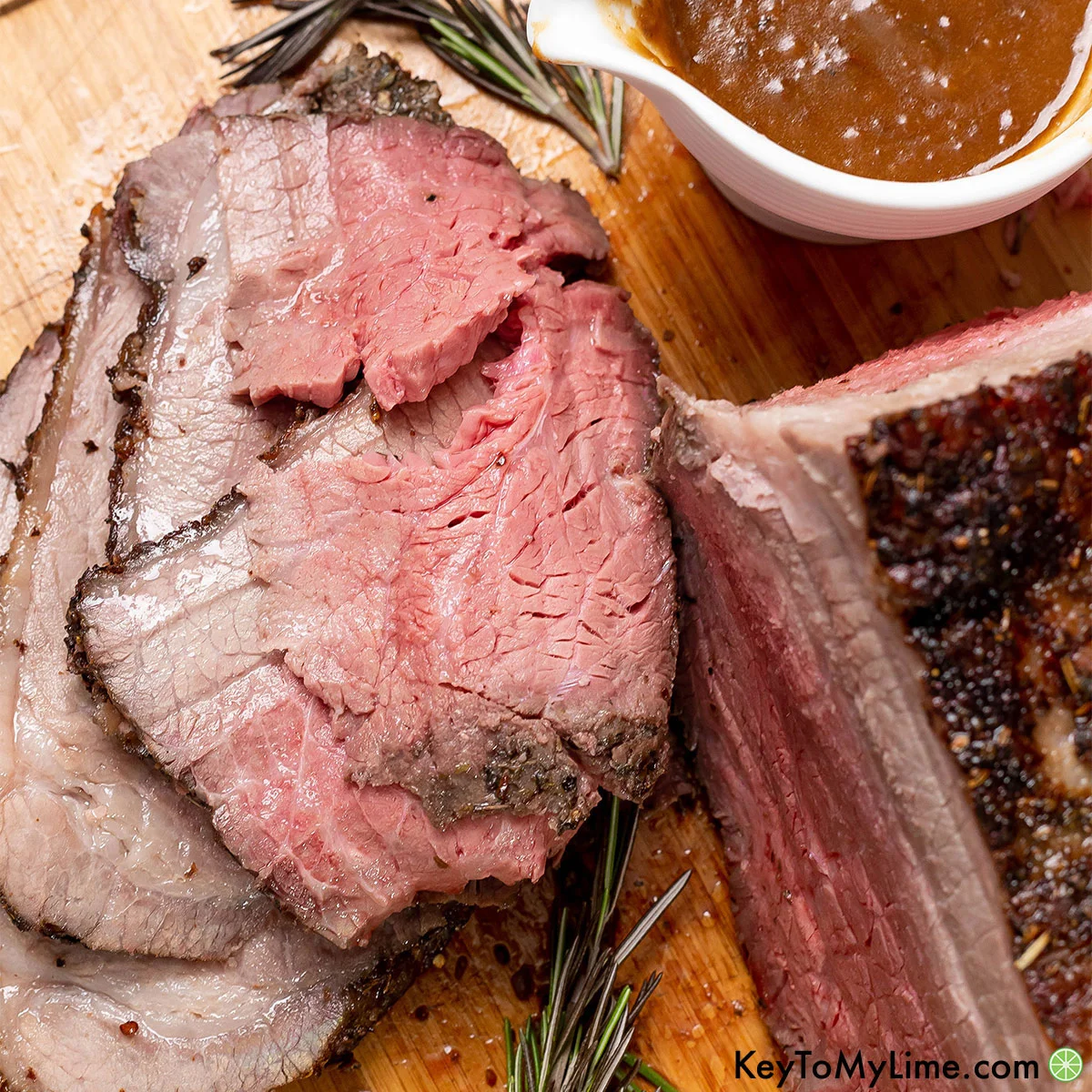
This American-style top round roast is seasoned with herbs, roasted slowly and finished with a hot oven sear for a browned crust. It makes a generous centrepiece for a Sunday or holiday dinner, with pan drippings ready to turn into gravy.
Ingredients
- 2.27 kg (5 lb)top round beef roast
- 15 ml (1 tablespoon)kosher salt
- 10 ml (2 teaspoons)dried oregano leaves
- 7.5 ml (1½ teaspoons)dried thyme leaves
- 7.5 ml (1½ teaspoons)coarse black pepper
- 5 ml (1 teaspoon)dried rosemary
- 5 ml (1 teaspoon)garlic powder
- 5 ml (1 teaspoon)onion powder
- 30 g (¼ cup)plain flour
- 415 ml (1¾ cups)beef stock
Instructions
- 1
Dry the roast
Set the roast on several layers of kitchen paper. Use more paper to pat every side thoroughly dry.
- 2
Salt all sides
Sprinkle the salt evenly over the roast from about 15 cm (6 inches) above it, turning to cover every side.
- 3
Apply the rub
Mix the oregano, rosemary, thyme, pepper, garlic powder and onion powder in a small bowl. Break up the rosemary with the back of a spoon, then spread the mixture over the roast and gently rub it into the meat. Wrap the roast tightly twice in cling film, put it on a plate and refrigerate overnight, or for at least 6 hours.
- 4
Prepare the oven
About 30 minutes before cooking, heat the oven to 150°C (300°F) and take the roast out of the fridge, removing the cling film. Set a wire rack or trivet in a large cast-iron skillet, shallow ovenproof dish or roasting tin; use a metal dish if you plan to make pan gravy. Place the roast in the centre, fat side up.
- 5
Add water and thermometer
Pour 1 cup of water into the bottom of the pan without letting it run over the roast. Insert an ovenproof meat thermometer into the centre of the meat, making sure it does not touch fat.
- 6
Roast to temperature
Once the oven has heated for 30 minutes, put in the roast. Cook for about 21–26 minutes per pound; for a 5 lb roast, allow about 1 hour 45 minutes to 2 hours 10 minutes. Roast until the centre reaches 125°F (52°C) for medium rare before resting; it should rise by 5–10°F as it rests. Start checking after about 90 minutes, then check every 10–15 minutes until it reaches the target. Have a large piece of foil ready to tent the roast as soon as it comes out.
- 7
Rest and sear
Carefully take the roast out, leaving the liquid in the pan, and tent it with foil. Rest for 15–20 minutes, or until the internal temperature reaches 130–135°F (54–57°C). Meanwhile, raise the oven to 450°F (230°C). Remove the foil and thermometer, then return the roast to the oven for about 5–8 minutes, until the crust is browned and crisp.
- 8
Save the drippings
Take the roast out of the oven and transfer it to a chopping board. Keep the pan drippings for au jus or gravy.
- 9
Slice and serve
With a sharp, preferably non-serrated knife, slice the roast against the grain. Arrange the slices on a serving platter and serve hot with your chosen sides and au jus or pan gravy.
- 10
Make pan gravy
For optional pan gravy, skim excess fat from the drippings and use a wooden spoon to loosen the browned bits. Set the pan over medium heat and sprinkle in ¼ cup of flour, whisking until smooth. Cook, whisking, for 2 minutes or until the flour turns golden. Gradually whisk in 1¾ cups of beef broth until no lumps remain. Simmer, whisking, until the gravy thickens, reduces slightly and reaches your preferred consistency.
What is top round roast beef?
Top round is a lean cut from the hindquarter of the animal, often roasted whole and carved into slices. This American-style version uses a simple herb-and-spice rub and a low oven to cook the meat gently before a brief, hotter finish.
The overnight seasoning gives the salt time to flavour the roast, while resting and slicing across the grain help make each serving easier to chew.
Nutrition and macros by portion
The nutrition label shows one serving as written: 306 calories, 57g protein, 1g carbs, 9g fat.
| Portion | Adjustment | kcal | Protein | Carbs | Fat |
|---|---|---|---|---|---|
| Lighter | Less gravy, extra vegetables | 214 kcal | 40g | 1g | 6g |
| This serving | As written | 306 kcal | 57g | 1g | 9g |
| Hungry | Larger roast portion | 459 kcal | 85g | 1g | 13g |
The beef supplies most of the protein, while the flour used in the optional gravy contributes most of the carbohydrates. The roast and any gravy contribute fat; serve with vegetables and a moderate portion of potatoes or another starchy side for a balanced plate.
Why dry and season ahead?
Dry surface: Patting the meat dry helps the seasoning cling and supports browning during the final sear.
Salt and herbs: Salt goes on first, followed by oregano, thyme, rosemary, pepper, garlic and onion. Refrigerating the wrapped roast for at least 6 hours, preferably overnight, gives the seasoning time to settle into the surface.
Use temperature, not just timing
The 21–26 minutes per pound is a planning guide, not a guarantee: roast shape and oven behaviour can change the cooking time. Start checking the centre after about 90 minutes and continue every 10–15 minutes.
For the stated medium-rare target, take the roast out at 125°F (52°C) and allow the temperature to rise during the 15–20-minute rest. Keep the thermometer in the centre of the meat, clear of fat.
Rest before the final sear
Resting: Tent the roast with foil while the oven heats to 450°F (230°C). The recipe calls for resting until the centre reads 130–135°F (54–57°C).
Searing: Return the roast to the hot oven for 5–8 minutes, watching for a browned, crisp crust. Save the pan liquid and browned bits before moving on to carving.
Carve against the grain
Look for the direction of the muscle fibres on the roast, then cut across them rather than parallel to them. A sharp, non-serrated knife makes it easier to produce neat slices without tearing the crust.
Arrange the slices on a warm platter and serve promptly with the saved drippings, au jus or gravy.
Turn the drippings into gravy
For the optional gravy, first skim away excess fat and scrape the browned flavour from the pan. Whisk in the flour and cook it for 2 minutes, until golden, before gradually adding the beef broth.
Keep whisking as the gravy simmers so it thickens evenly and stays free of flour lumps. Stop when it reaches the consistency you like.
What to serve alongside
The roast and gravy pair well with roast or mashed potatoes, Yorkshire puddings, and green vegetables such as green beans or cabbage. Choose sides that can be prepared while the beef rests.
If serving the roast as part of a larger meal, offer the gravy separately so everyone can add the amount they prefer.
Recipe notes & tips
- Use a roasting pan made of metal if you want to make gravy from the drippings.
- Keep the thermometer tip in the centre of the roast and away from any fat.
- Check the temperature regularly near the end because oven times can vary.
- Prepare the foil tent before the roast comes out so you can cover it straight away.
- Let the roast rest before the final sear, then carve it across the grain.
- Whisk the broth into the gravy gradually to help prevent lumps.
Variations
- Herb mix: Adjust the balance of oregano, thyme and rosemary while keeping the same total seasoning.
- Peppery crust: Add more coarse black pepper to the rub for a stronger pepper flavour.
- Pan gravy: Use the drippings, flour and beef broth for a thicker sauce to spoon over the slices.
- Au jus: Serve the saved drippings as they are instead of thickening them into gravy.
- Meal sides: Pair the roast with potatoes and green vegetables for a traditional roast dinner.
Common mistakes to avoid
- Skipping the drying step: Pat the roast thoroughly dry so the rub adheres well.
- Guessing doneness by time: Use an ovenproof meat thermometer and begin checking after about 90 minutes.
- Thermometer touching fat: Reposition the probe in the centre of the meat for a useful reading.
- Cutting straight away: Rest the roast for 15–20 minutes before the final sear and carving.
- Slicing with the grain: Cut across the visible fibres for more tender slices.
- Adding broth too quickly: Pour it in gradually while whisking to avoid lumps in the gravy.
How to store
Refrigerate leftover beef and gravy in separate airtight containers within 2 hours, and use within 3–4 days. Reheat slices gently with a little gravy or stock until hot, taking care not to overcook the lean meat.
Frequently asked questions
Can I season the roast the night before?
Yes. Wrap it tightly and refrigerate it overnight, or for at least 6 hours, as directed. Remove the wrapping about 30 minutes before cooking.
How long does a 5 lb roast take?
The recipe estimates about 1 hour 45 minutes to 2 hours 10 minutes at 300°F (150°C), but timing varies. Use the thermometer to judge doneness rather than relying on the clock alone.
What temperature is this recipe aiming for?
The roast is taken out at 125°F (52°C) for medium rare, then rested until it reaches 130–135°F (54–57°C). The recipe notes that the temperature rises by about 5–10°F while resting.
Why does the roast need to rest?
Resting is part of the method before the high-heat sear and gives the internal temperature time to rise. Tent the pan with foil for 15–20 minutes.
Can I make gravy in a non-metal roasting dish?
The recipe recommends a metal dish if you want to make pan gravy on the hob. If your roasting dish is not suitable for a hob, save the drippings and make the gravy in a separate pan.
How should I slice top round?
Use a sharp knife and cut across the grain, rather than along the muscle fibres. This gives you slices that are easier to chew.
Cook it from the original
This recipe comes from keytomylime.com. Their page has the author’s own photos, notes and tips — the best place to cook it from.
Open the recipe on keytomylime.com