
Gluten-Free Chocolate Cookies
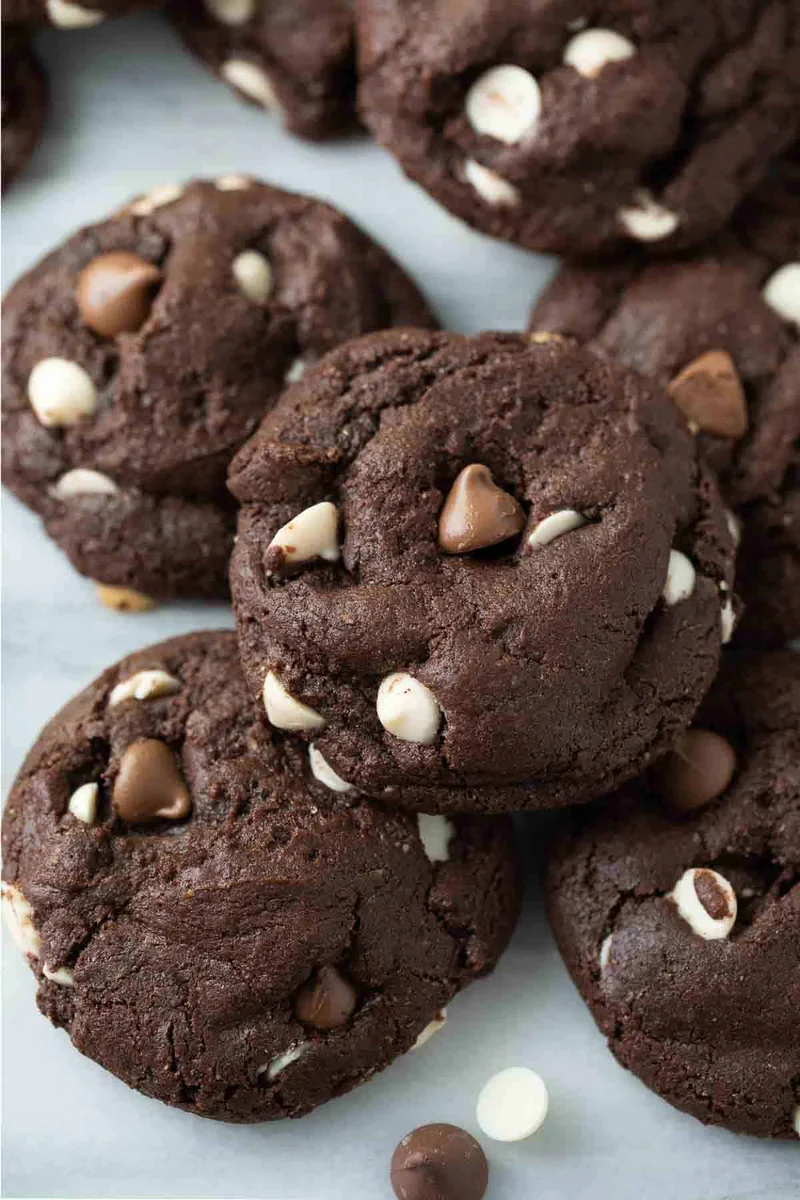
These American-style gluten-free chocolate cookies have rich cocoa flavour, chewy edges and soft, brownie-like centres. Chilling the dough helps make it easier to handle and gives the cookies time to firm up before baking.
Ingredients
- 180 g (1 1/2 cups)gluten-free 1:1 baking flour
- 24 g (1/4 cup)almond flour
- 43 g (1/2 cup)unsweetened cocoa powder
- 1.25 ml (1/4 teaspoon)salt
- 5 ml (1 teaspoon)baking powder
- 2.5 ml (1/2 teaspoon)baking soda
- 113 g (1/2 cup), at room temperaturebutter
- 120 ml (1/2 cup), preferably softened but still solidcoconut oil
- 150 g (3/4 cup), lightly packedbrown sugar
- 100 g (1/2 cup)granulated sugar
- 2 largeeggs
- 5 ml (1 teaspoon)vanilla extract
- 170 g (1 cup)white chocolate chips
- 85 g (1/2 cup)milk chocolate chips
Instructions
- 1
Mix dry ingredients
Whisk the gluten-free flour, almond flour, cocoa powder, salt, baking powder and baking soda together in a medium bowl. Set aside.
- 2
Cream the fats
Put the butter, coconut oil, brown sugar and granulated sugar in a stand mixer bowl or a large bowl for an electric hand mixer. Beat for 2–3 minutes, until well combined.
- 3
Add eggs and flour
Beat in the eggs and vanilla until combined. With the mixer on low, add the dry mixture gradually in 3 additions, beating well after each one.
- 4
Chill the dough
Stir in both kinds of chocolate chips. Cover the bowl and refrigerate the dough for at least 1 hour, preferably overnight.
- 5
Shape the cookies
When ready to bake, heat the oven to 175°C (350°F). Line two large, rimmed baking sheets with baking parchment or silicone liners. Scoop the dough into heaped tablespoon-sized balls.
- 6
Bake and cool
Arrange the dough balls a couple of inches apart on the prepared sheets. Bake for 11–13 minutes, until the edges are set and the centres are mostly set. Leave the cookies on the trays for 3–4 minutes, then transfer them to a wire rack to cool completely.
What are gluten-free chocolate cookies?
These are American-style drop cookies: portions of dough are placed on a baking sheet and baked until the edges set while the centres stay soft. This version uses a gluten-free 1:1 flour blend alongside almond flour, cocoa and two kinds of chocolate.
The combination gives the cookies a deep chocolate flavour and a fudgy, brownie-like middle. White chocolate chips add a sweet contrast, while milk chocolate chips make the mix especially chocolatey.
Nutrition and macros by portion
The nutrition label shows one serving as written: 202 calories, 3g protein, 24g carbs, 11g fat.
| Portion | Adjustment | kcal | Protein | Carbs | Fat |
|---|---|---|---|---|---|
| Lighter | One cookie with fruit | 141 kcal | 2g | 17g | 8g |
| This serving | As written | 202 kcal | 3g | 24g | 11g |
| Hungry | Two-cookie portion | 303 kcal | 5g | 36g | 17g |
The sugars and flour provide most of the carbohydrates, while the butter, coconut oil, almond flour and chocolate chips contribute much of the fat. Eggs and almond flour supply some protein. Pair a cookie with fresh fruit or yoghurt if you want a more balanced snack.
Choosing the ingredients
Gluten-free flour: use a 1:1 baking blend intended to replace ordinary flour. Blends differ, so measure by weight where possible and use the same blend consistently.
Almond flour: this adds another flour to the mix and contributes to the cookies’ tender texture. It is not the same as finely ground, defatted almond meal.
Butter and coconut oil: both should be soft enough to cream with the sugars. The coconut oil should be softened but still solid, rather than melted.
Why the dough needs chilling
Chilling for at least an hour gives the dough time to firm up, which makes it easier to scoop and shape. It also helps the cookies hold their shape as they bake.
Overnight chilling is an option if you want to prepare the dough ahead. Keep it covered in the fridge until you are ready to portion it.
Getting the texture right
Mix the dry ingredients evenly before adding them so the cocoa and raising agents are distributed through the flour. Once they go into the wet mixture, stop beating when the dough is combined.
The recipe’s doneness cue is a set edge and a centre that is mostly set. The cookies will continue to firm as they cool, so avoid waiting for the centres to look completely firm in the oven.
Portioning and spacing
Scoop the dough into heaped tablespoon-sized balls for the portions described in the method. A number 40 cookie scoop is one option for portioning.
Leave a couple of inches between the dough balls on the trays. This gives the cookies room as they bake and keeps neighbouring cookies from running together.
Serving the cookies
Let the cookies cool completely on a wire rack if you want their edges and centres to settle before serving. They are also enjoyable while still slightly warm, when the chocolate chips may be soft.
Serve them on their own or alongside a glass of milk, coffee or tea. For a dessert plate, pair a cookie with fresh fruit for a fresher contrast.
Recipe notes & tips
- Use a gluten-free 1:1 blend designed for baking.
- Bring the butter to room temperature so it creams smoothly with the sugars.
- Keep the coconut oil softened but solid rather than melting it.
- Chill the dough for at least 1 hour before shaping.
- Space the dough balls a couple of inches apart on the baking sheets.
- Let the cookies rest on the tray for 3–4 minutes before transferring them to a rack.
Variations
- Triple chocolate: use a mixture of white and milk chocolate chips as listed, or adjust the balance between them.
- White chocolate only: replace the milk chocolate chips with the same amount of white chocolate chips.
- Milk chocolate only: replace the white chocolate chips with the same amount of milk chocolate chips.
- Make-ahead dough: chill the covered dough overnight before baking.
- Smaller cookies: portion the dough into smaller balls and check them earlier, as baking time may change.
Common mistakes to avoid
- Using melted coconut oil: it can change the dough’s consistency; use it softened but still solid.
- Skipping the chill: the dough will be softer to portion; refrigerate it for at least 1 hour.
- Overmixing after adding flour: this can make the dough less tender; beat only until the additions are combined.
- Crowding the trays: the cookies may run together; leave a couple of inches between dough balls.
- Waiting for firm centres: the cookies may overbake; take them out when the edges are set and centres mostly set.
- Moving them straight off the tray: they are delicate while hot; leave them for 3–4 minutes first.
How to store
Once completely cool, store the cookies in an airtight container at room temperature. Reheat briefly in the oven or microwave if you would like to soften them before serving.
Frequently asked questions
Can I chill the dough overnight?
Yes. Cover the dough and refrigerate it overnight, as suggested in the method.
Can I use only one type of chocolate chip?
Yes. The recipe description suggests using white and milk chocolate for a triple-chocolate version; you can also choose one type to suit your taste.
How do I know when the cookies are done?
Look for set edges and centres that are mostly set. They will firm further during the short rest on the tray and as they cool.
Do I need a stand mixer?
No. The method also works with a large bowl and an electric hand mixer.
Can I use a different gluten-free flour?
The recipe calls for a gluten-free 1:1 baking flour. Other blends may behave differently, so results are most predictable with a blend made for direct baking substitutions.
Cook it from the original
This recipe comes from meaningfuleats.com. Their page has the author’s own photos, notes and tips — the best place to cook it from.
Open the recipe on meaningfuleats.com