
Overnight Chia Pudding with Fruit
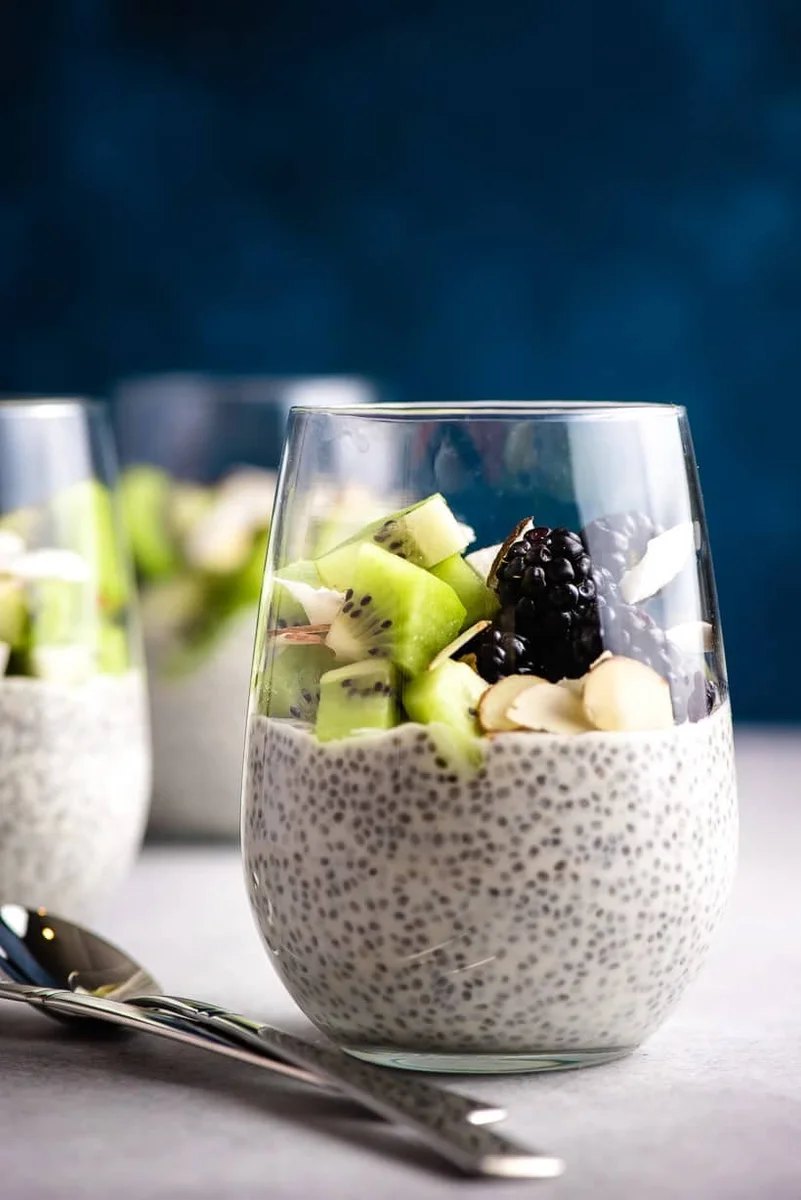
This make-ahead chia pudding combines coconut milk, Greek yoghurt and maple syrup for a creamy breakfast topped with fresh fruit and optional crunchy extras. Mix it the night before, then add the toppings just before serving.
Ingredients
- 360 ml (1½ cups)coconut milk (original sweetened)
- 240 g (1 cup)plain Greek yoghurt, 2% or full-fat
- 30 ml (2 tablespoons)maple syrup
- 10 ml (2 teaspoons)vanilla extract
- A pinchsalt
- 80 g (½ cup)chia seeds
- To tastefruit of your choice, such as kiwi and blackberries, strawberry and banana, or fresh peaches
- To tastedried coconut flakes
- To tastesliced almonds
Instructions
- 1
Mix the base
In a large bowl, whisk together the coconut milk, yoghurt, maple syrup, vanilla and salt. Stir in the chia seeds and leave the mixture to set for 5–10 minutes, stirring a few times to prevent clumps.
- 2
Chill overnight
Divide the pudding between four containers, seal them and refrigerate overnight.
- 3
Add the toppings
When ready to serve, top with your chosen fruit, coconut flakes and almonds if desired.
What is chia pudding?
Chia pudding is a chilled dish made by soaking chia seeds in liquid until they swell and thicken it. Chia has long been used as food in the Americas; this version takes a breakfast-friendly approach with coconut milk, yoghurt and fruit.
The combination of coconut milk and Greek yoghurt makes the base creamy, while maple syrup and vanilla give it a gentle sweetness. An overnight rest lets the seeds hydrate without needing to cook the mixture.
Nutrition and macros by portion
The nutrition label shows one serving as written: 333 calories, 10g protein, 20g carbs, 25g fat.
| Portion | Adjustment | kcal | Protein | Carbs | Fat |
|---|---|---|---|---|---|
| Lighter | Use less coconut milk | 233 kcal | 7g | 14g | 18g |
| This serving | As written | 333 kcal | 10g | 20g | 25g |
| Hungry | Add extra fruit and almonds | 500 kcal | 15g | 30g | 38g |
The chia seeds and maple syrup provide most of the carbohydrates, while coconut milk contributes much of the fat. Greek yoghurt supplies protein, with smaller amounts also coming from chia and the optional almonds. For a more balanced plate, serve the pudding with extra fresh fruit and a savoury protein-rich side.
Why this combination works
Coconut milk: the sweetened version specified here gives the pudding a coconut flavour and contributes to its rich texture.
Greek yoghurt: plain yoghurt adds tang and makes the mixture thicker and more substantial.
Chia seeds: once stirred into the liquid, they absorb it and create the pudding’s characteristic texture.
Avoiding clumps
Stir the seeds in thoroughly, then give the mixture a few more stirs during the first 5–10 minutes. This helps separate seeds that might otherwise gather into clumps as they begin to absorb liquid.
After that short rest, divide the mixture between containers and leave it undisturbed in the fridge overnight.
Checking the texture
The pudding should be thick and spoonable after chilling, with the chia seeds evenly dispersed. If it still looks loose when you take it from the fridge, allow it more time to chill before adding the toppings.
The fruit adds freshness and contrast, while coconut flakes and almonds offer a little crunch. Add them just before serving so they keep their texture.
Make-ahead timing
The hands-on preparation takes about 10 minutes, followed by an overnight chill. Because the pudding is portioned before chilling, it is ready to take from the fridge for a quick breakfast.
Keep the fruit and crunchy toppings separate until serving. This is especially useful if you are preparing all four portions ahead.
Fruit and serving ideas
Kiwi and blackberries bring a tart contrast, while strawberry and banana make a softer, sweeter topping. Fresh peaches are another option when they are available.
For a more filling breakfast, serve a portion alongside toast or another breakfast staple. Keep the coconut flakes and sliced almonds as optional toppings.
Recipe notes & tips
- Whisk the milk, yoghurt and flavourings until smooth before adding the seeds.
- Stir the chia mixture several times during its initial 5–10-minute rest.
- Divide the mixture into four containers before chilling for easy portions.
- Choose ripe fruit and cut it into bite-sized pieces for topping.
- Add coconut flakes and almonds just before eating to keep them crunchy.
Variations
- Kiwi and blackberries: use both for a fresh, tart topping.
- Strawberry and banana: slice the fruit over the pudding just before serving.
- Fresh peaches: add sliced peaches for a soft, juicy topping.
- Extra crunch: scatter sliced almonds and coconut flakes over each portion.
- Adjust the sweetness: use less maple syrup for a less sweet pudding.
Common mistakes to avoid
- Clumped seeds: stir several times during the first 5–10 minutes of setting.
- Rushing the chill: refrigerate overnight so the seeds have time to thicken the mixture.
- Uneven portions: divide the pudding between four containers before chilling.
- Soft toppings: add the fruit, coconut flakes and almonds when ready to serve.
- Overly sweet topping: taste the fruit and use less maple syrup if you prefer a subtler sweetness.
How to store
Keep the sealed pudding in the fridge and use it within 3–4 days. Store fruit and crunchy toppings separately, then add them when serving; this chilled pudding does not need reheating.
Frequently asked questions
Can I make this chia pudding the night before?
Yes. Divide it into four containers, seal them and refrigerate overnight, as directed.
How long does chia pudding need to set?
Give it 5–10 minutes after stirring in the seeds, stirring a few times, then refrigerate it overnight.
Which fruit works best?
The recipe suggests kiwi and blackberries, strawberry and banana, or fresh peaches. Choose the combination you like and add it just before serving.
Can I leave out the almonds or coconut flakes?
Yes. They are optional toppings, so you can omit either or both.
Can I use 2% Greek yoghurt instead of full-fat?
Yes. The recipe allows either 2% or full-fat plain Greek yoghurt.
Is this recipe gluten-free?
The recipe description identifies it as naturally gluten-free. Check the packaging of your ingredients if you need to avoid gluten.
Cook it from the original
This recipe comes from neighborfoodblog.com. Their page has the author’s own photos, notes and tips — the best place to cook it from.
Open the recipe on neighborfoodblog.com