
Gravlax Recipe: How to Cure Salmon
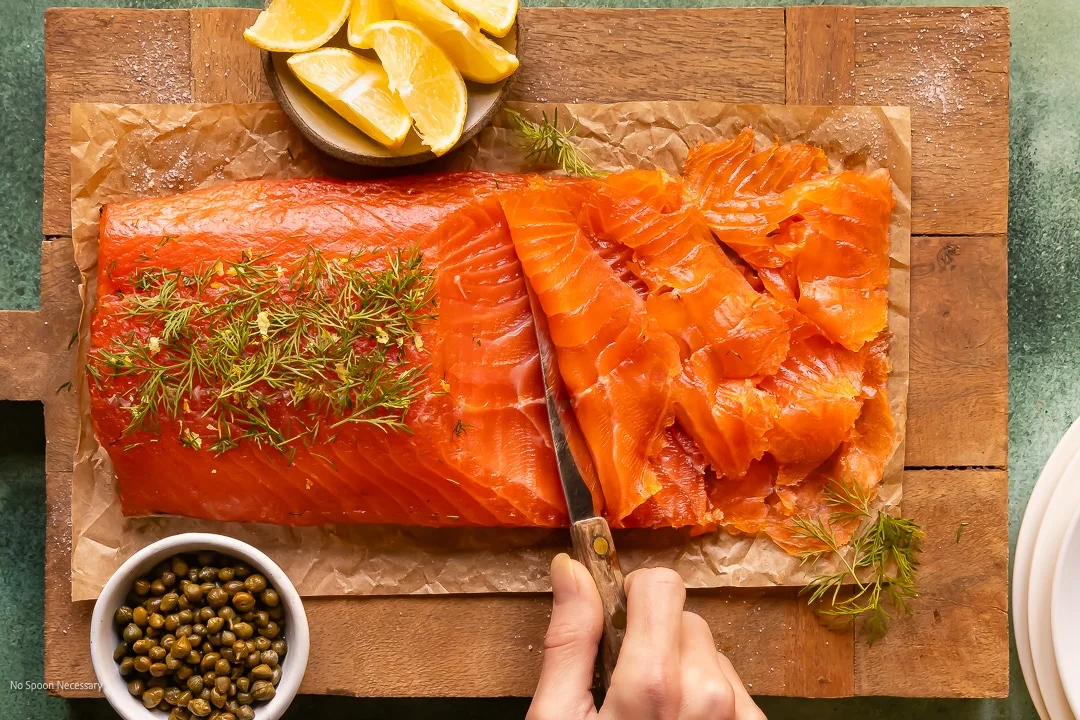
Gravlax is salmon cured in the fridge with salt, sugar, dill and citrus rather than cooked with heat. This version is easy to prepare ahead and can be sliced thinly for a platter, sandwiches or a starter.
Ingredients
- 907 g (2 lb)skin-on, centre-cut sushi-grade salmon fillet
- 15 ml (1 tbsp), optionalvodka
- 2 whole, zested (about 22 ml, or a scant 1½ tbsp)lemons
- 2 whole, zested (about 30 ml, or a heaped 2 tbsp)oranges
- 240 ml (1 cup), roughly chopped, plus more for garnishfresh dill
- 120 ml (8 tbsp)coarse sea salt, preferably freshly cracked pink Himalayan salt
- 90 ml (6 tbsp), or more to tastegranulated sugar
- A scant 1 ml (¼ tsp)freshly ground black pepper
Instructions
- 1
Mix the cure
In a medium bowl, stir together the lemon zest, orange zest, chopped dill, salt, sugar and pepper until evenly combined. Set the cure aside.
- 2
Season the flesh
Set the salmon skin-side down on a clean work surface. If using vodka, drizzle it over the flesh and gently massage it in with your fingers. Sprinkle 360 ml (1½ cups) of the cure over the salmon, reserving about 75–90 ml (5–6 tbsp) of the salt-and-sugar cure, then gently massage the cure into the flesh. Lay two large, slightly overlapping pieces of cling film over the fish, large enough to wrap around it, and turn the salmon over.
- 3
Season the skin
Sprinkle the remaining salt-and-sugar cure evenly over the skin side of the salmon.
- 4
Wrap and weight
Wrap the salmon tightly in the cling film to form a sealed parcel. Place it in a baking dish or rimmed baking tray large enough to hold it, then set a weight on top, such as a smaller dish or a plate with a tin of beans on it.
- 5
Cure in the fridge
Refrigerate for at least 24 hours and up to 72 hours: 24 hours gives a milder, softer cure, while 72 hours makes the fish firmer and saltier. Turn the parcel every 12 hours and replace the weight each time. Liquid will collect in the dish; wipe it out with paper towels as you turn the fish. A 36–48-hour cure is another option.
- 6
Rinse and dry
Remove and discard the cling film. Gently scrape the cure from the fish with a rubber spatula, rinse it under a light flow of cool water, then pat it as dry as possible with paper towels.
- 7
Air-dry the fish
Put the salmon on a plate or back in the dry baking dish and refrigerate it uncovered for at least 1 hour and up to 8 hours. This lets the surface dry and the cure settle.
- 8
Slice and serve
With a very sharp slicing knife, cut the gravlax on a slant into paper-thin slices, starting at the head end and working towards the tail without cutting through the skin. Arrange the slices on a platter and garnish with dill fronds. Serve with toasted rye or pumpernickel bread, lemon wedges, capers, thinly sliced red onion or shallots, and mustard sauce.
What is gravlax?
Gravlax is a Scandinavian-style preparation of salmon cured with salt, sugar and dill, then sliced thinly. Its name is associated with the old practice of burying salted fish, though this version cures in the fridge.
Here, lemon and orange zest add fragrant citrus notes, while a weighted cure helps the seasonings stay in contact with the fish. The result is rich, delicately flavoured salmon without cooking it over heat.
Nutrition and macros by portion
The nutrition label shows one serving as written: 189 calories, 23g protein, 6g carbs, 7g fat.
| Portion | Adjustment | kcal | Protein | Carbs | Fat |
|---|---|---|---|---|---|
| Lighter | Serve with more salad | 132 kcal | 16g | 4g | 5g |
| This serving | As written | 189 kcal | 23g | 6g | 7g |
| Hungry | Add extra rye bread | 284 kcal | 35g | 9g | 11g |
The salmon supplies most of the protein and some of the fat, while the sugar in the cure contributes carbohydrates; the recipe’s provided serving figures include the nutrition estimate. Serve a portion with rye bread and fresh vegetables or salad for a more complete plate.
The cure ingredients
Salt and sugar: These make up the cure and season the salmon as it rests. Coarse salt is specified here; keep the amounts measured rather than adding extra by eye.
Citrus and dill: Lemon and orange zest bring freshness, while chopped dill gives the fish its characteristic herbal aroma. Vodka is optional and is massaged over the flesh before the cure.
Applying the cure
Flesh side: Massage most of the cure gently over the exposed flesh, keeping the reserved portion for the skin. Overlapping cling film makes it easier to wrap the fish into a snug parcel.
Skin side: Turn the wrapped fish over before sprinkling on the reserved cure. Seal the parcel tightly so it stays together under the weight.
Choosing the curing time
Short cure: At 24 hours, the salmon is milder and softer. This is the shortest time given in the recipe.
Longer cure: Up to 72 hours produces a firmer, saltier result; 36–48 hours is the suggested middle ground. Turn the parcel every 12 hours and wipe away the liquid that collects in the dish.
Drying and slicing
Dry surface: After rinsing away the cure, pat the fish thoroughly dry. Leaving it uncovered in the fridge for 1–8 hours gives the surface time to dry and the cure to settle.
Thin slices: Use a very sharp knife and angle the blade across the fish. Cut towards the tail in thin slices, stopping at the skin rather than cutting through it.
Serving gravlax
For a simple platter, serve the salmon with toasted rye or pumpernickel, lemon wedges, capers and thinly sliced red onion or shallots. Dill fronds and mustard sauce make useful finishing touches.
The salmon is rich and savoury, so crisp bread and sharp, bright accompaniments help balance each bite. Arrange the slices just before serving for an attractive presentation.
Recipe notes & tips
- Use a baking dish that holds the wrapped salmon without bending it.
- Keep the parcel well sealed so the cure stays against the fish.
- Turn the salmon every 12 hours and wipe liquid from the dish as directed.
- Rinse gently so the fish is not damaged, then pat it thoroughly dry.
- Use a sharp slicing knife to get neat, thin slices without cutting through the skin.
Variations
- Skip the vodka: Leave it out if you prefer; the recipe lists it as optional.
- Choose a shorter cure: Refrigerate for 24 hours for a milder, softer result.
- Cure it longer: Leave it for up to 72 hours for a saltier, firmer texture.
- Adjust the sweetness: The recipe allows more sugar to taste, but measure any addition carefully.
- Change the garnish: Serve with capers, sliced shallots or red onion alongside the dill.
Common mistakes to avoid
- Loose wrapping: Seal the cling film tightly around the fish so the cure stays in contact.
- Skipping the turns: Turn the parcel every 12 hours and replace the weight each time.
- Leaving liquid in the dish: Wipe it out with paper towels when turning the salmon.
- Rinsing too vigorously: Use lightly running cool water and scrape gently to avoid damaging the fish.
- Slicing through the skin: Angle the knife and stop each cut before it reaches the skin.
How to store
Keep the finished gravlax tightly wrapped in the fridge and use it within 5 days after curing. The recipe suggests serving it after slicing; keep any unused portion wrapped between servings.
Frequently asked questions
How long should I cure the salmon?
The recipe gives a range of 24–72 hours. A 24-hour cure is milder and softer, while a longer cure is saltier and firmer; 36–48 hours is the suggested middle ground.
Do I have to use vodka?
No. It is marked optional in the recipe, so you can leave it out.
Why does liquid collect in the dish?
Liquid gathers as the salmon cures. Wipe it out with paper towels whenever you turn the fish at the 12-hour marks.
How do I get thin slices?
Use a very sharp slicing knife and cut on a slant across the fish, working from the head end towards the tail. Stop at the skin rather than cutting through it.
What should I serve with gravlax?
The recipe suggests toasted rye or pumpernickel bread, lemon wedges, capers, thinly sliced red onion or shallots, and mustard sauce.
How long does gravlax keep?
The recipe says to keep it tightly wrapped in the fridge for up to 5 days after curing.
Cook it from the original
This recipe comes from nospoonnecessary.com. Their page has the author’s own photos, notes and tips — the best place to cook it from.
Open the recipe on nospoonnecessary.com