
Classic Pico De Gallo
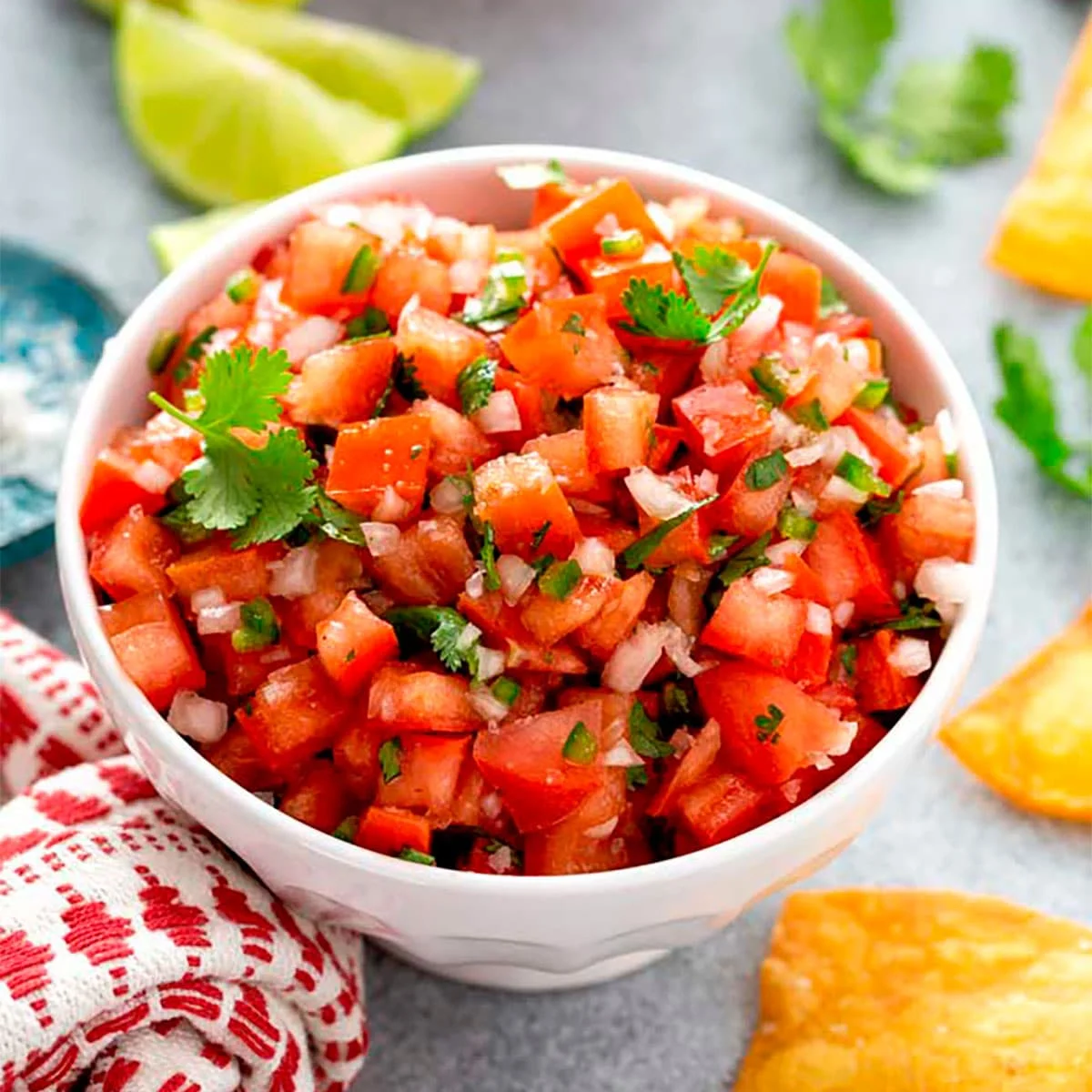
Classic pico de gallo, also called salsa fresca, is a bright Mexican mix of diced tomatoes, onion, chilli, coriander and lime. It takes just 15 minutes to prepare and works as a dip, topping or fresh side.
Ingredients
- 680 g (1 1/2 pounds; about 6–8 medium)ripe tomatoes, deseeded and diced
- 1/2 medium (about 120 ml)white onion, finely chopped
- 1jalapeño or serrano chilli, halved, deseeded and finely chopped
- 120 ml (1/2 cup)coarsely chopped coriander leaves and tender upper stems
- 2–3 tbspfreshly squeezed lime juice
- to taste (about 3/4 tsp)kosher or sea salt
Instructions
- 1
Mix the ingredients
Put the tomatoes, onion, chilli, coriander, lime juice and salt in a bowl. Toss until evenly combined.
- 2
Let flavours develop
For the best flavour, leave the salsa to rest for 5–10 minutes, or for up to 30 minutes, before serving.
What is pico de gallo?
Pico de gallo, also known as salsa fresca, is a Mexican salsa made from chopped fresh ingredients rather than a cooked tomato base. Its name is often used for a chunky mixture that brings freshness, acidity and chilli heat to a meal.
This version keeps the ingredient list simple: ripe tomatoes, onion, chilli, coriander, lime and salt. Cutting the vegetables small and giving them a brief rest helps the flavours mingle while the salsa keeps its fresh texture.
Nutrition and macros by portion
The nutrition label shows one serving as written: 26 calories, 1g protein, 6g carbs, 1g fat.
| Portion | Adjustment | kcal | Protein | Carbs | Fat |
|---|---|---|---|---|---|
| Lighter | Serve with cucumber sticks | 18 kcal | 1g | 4g | 1g |
| This serving | As written | 26 kcal | 1g | 6g | 1g |
| Hungry | Add a larger scoop | 39 kcal | 2g | 9g | 2g |
Tomatoes provide most of the carbohydrates, while this salsa contains very little fat and only a small amount of protein. For a more filling plate, serve it with beans, avocado or another protein-rich dish, and use tortilla chips if you want a more substantial snack.
Choosing the ingredients
Tomatoes: Use ripe tomatoes that still hold their shape when diced. Removing the seeds helps keep the finished salsa from becoming too watery.
Chilli: Jalapeño gives a moderate kick, while serrano is often hotter. Deseed it for a gentler result, or leave some seeds in if you prefer more heat.
Coriander and lime: Include the tender upper stems along with the leaves for extra flavour. Freshly squeezed lime gives the salsa its clean, sharp finish.
Getting the texture right
Even pieces: Dice the tomatoes and chop the onion and chilli finely so each bite has a balanced mix. Avoid crushing the tomatoes as you toss everything together.
Manage moisture: Deseeding the tomatoes reduces excess liquid, but some juice will collect as the salsa rests. A slotted spoon is useful if you want to lift it out without the liquid.
Balancing the flavour
Salt: Start with a little, toss, then taste before adding more. Salt draws out moisture and brings the tomato flavour forward.
Lime: The listed 2–3 tablespoons allow some adjustment to the ripeness of the tomatoes and your taste. Add it gradually if you prefer a less tangy salsa.
Why the resting time matters
Resting: Leave the bowl for 5–10 minutes before serving so the lime and salt can season the vegetables. You can let it stand for up to 30 minutes, as the recipe suggests.
Serve promptly: This is a fresh, uncooked salsa, so it is best enjoyed while the vegetables are still crisp. Stir once before serving to redistribute any juices.
Ways to serve it
As a dip: Serve it with tortilla chips as a snack or appetiser. If the salsa has released a lot of liquid, drain off a little first.
As a topping: Spoon it over tacos, grilled vegetables or beans, or serve it alongside a main meal for a fresh, citrusy contrast.
Recipe notes & tips
- Use a sharp knife to cut the vegetables cleanly without crushing the tomatoes.
- Taste the salsa after it rests, then adjust the salt or lime if needed.
- If your tomatoes are especially juicy, remove their seeds thoroughly.
- Chop the chilli carefully and wash your hands afterwards.
- Keep the pieces fairly uniform so the salsa is easy to scoop.
Variations
- Adjust the heat: Use less chilli for a milder salsa or include some seeds for extra kick.
- Try red onion: Swap it for the white onion for a sharper, more colourful version.
- Add avocado: Fold in diced avocado just before serving for a softer texture.
- Use lemon: Replace some or all of the lime juice with lemon juice for a different citrus note.
- Make it fruitier: Add a little diced mango for a sweet contrast to the chilli and lime.
Common mistakes to avoid
- Watery salsa: Deseed the tomatoes well and drain excess liquid before serving.
- Uneven bites: Chop the onion and chilli finely so they mix evenly with the tomato.
- Too much heat: Remove the chilli seeds and taste before adding extra chilli.
- Over-salting: Add salt gradually and taste after the resting period.
- Flat flavour: Give the mixture 5–10 minutes to rest before serving.
How to store
Store leftovers in a covered container in the fridge and use within 1–2 days for the best texture. The tomatoes will soften and release liquid as it sits; stir and drain excess juice before serving, and do not reheat.
Frequently asked questions
Can I make pico de gallo ahead of time?
You can prepare it up to 30 minutes before serving, as in the recipe. For the crispest texture, make it close to serving time and keep it chilled if it needs to wait.
How do I make it less spicy?
Remove the chilli seeds and inner ribs, or use less chilli. You can also leave the chilli out and add a little at a time to taste.
Why is my pico de gallo watery?
Ripe tomatoes release juice, especially after salt is added. Deseed them before chopping and drain some liquid if needed.
What can I serve with pico de gallo?
It is commonly served with tortilla chips, or used as a topping for tacos and other savoury dishes. It also works as a fresh side alongside beans or grilled food.
Can I use dried coriander?
Fresh coriander is preferable here because it contributes a bright, fresh flavour and texture. Dried coriander will not give quite the same result.
Can I use lemon instead of lime?
Yes. Lemon juice can replace the lime, though the flavour will be slightly different; add it gradually and taste as you go.
Cook it from the original
This recipe comes from lemonblossoms.com. Their page has the author’s own photos, notes and tips — the best place to cook it from.
Open the recipe on lemonblossoms.com