
Japchae with prawns
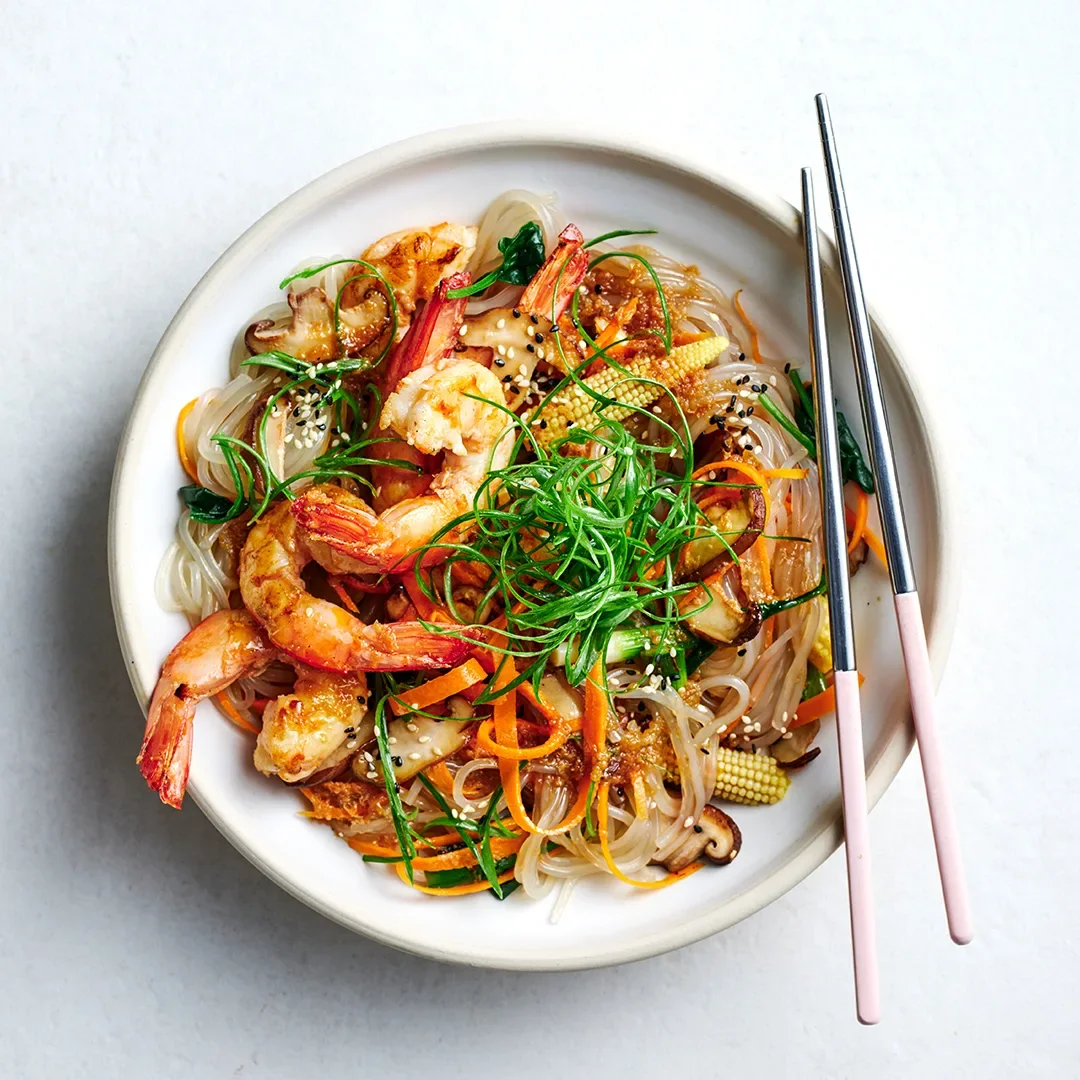
Japchae is a Korean stir-fry of springy sweet potato noodles, vegetables and a savoury-sweet seasoning. This quick prawn version brings together colourful vegetables, ginger and sesame for a satisfying meal.
Ingredients
- 200 gsweet potato starch noodles
- 30 ml (2 tbsp)vegetable oil
- 10uncooked prawns, peeled, tails intact
- 2spring onions, cut into 5 cm batons
- 8baby corn spears, halved lengthways
- 1 smallcarrot, peeled and cut into julienne
- 100 gshiitake mushrooms, thinly sliced
- 1 clovegarlic, crushed
- 10 ml (2 tsp)fresh ginger, finely grated
- 60 g (2 loosely packed cups)baby spinach
- 30 ml (2 tbsp)soy sauce
- 3 tspbrown sugar
- 10 ml (2 tsp)sesame oil
- 60 ml (¼ cup)water
- To servetoasted sesame seeds
- To servespring onions, thinly sliced
Instructions
- 1
Cook the noodles
Bring a large saucepan of water to the boil and cook the noodles until tender, for 7–8 minutes. Drain them and set aside.
- 2
Stir-fry prawns
Heat 15 ml (1 tbsp) of the vegetable oil in a wok or frying pan over high heat until smoking. Add the prawns and stir-fry for about 2 minutes, until just cooked through. Remove them from the pan and set aside.
- 3
Cook the vegetables
Heat the remaining oil in the pan. Add the spring onion batons, baby corn, carrot and shiitake mushrooms; stir-fry for 3 minutes, until tender and beginning to colour. Add the garlic and ginger and stir-fry for 30 seconds to 1 minute, until fragrant. Add the spinach and cook for 1 minute, until wilted.
- 4
Combine and serve
Add the soy sauce, brown sugar and 60 ml water. Stir occasionally for 2–3 minutes, until the liquid has reduced by half. Add the prawns, noodles and sesame oil, then toss to combine. Serve topped with sesame seeds and thinly sliced spring onions.
What is japchae?
Japchae is a Korean dish of stir-fried glass noodles, commonly made from sweet potato starch, with vegetables and seasoning. It is served for celebrations and family meals, and can be enjoyed warm or at room temperature.
Here, prawns make it a quick main course, while the mixture of mushrooms, greens and crisp-tender vegetables gives each forkful variety. Soy, sugar and sesame oil bring the familiar savoury-sweet finish.
Nutrition and macros by portion
The nutrition label shows one serving as written: 620 calories, 25g protein, 91g carbs, 17g fat.
| Portion | Adjustment | kcal | Protein | Carbs | Fat |
|---|---|---|---|---|---|
| Lighter | Less oil, more spinach | 434 kcal | 18g | 64g | 12g |
| This serving | As written | 620 kcal | 25g | 91g | 17g |
| Hungry | Add more noodles | 930 kcal | 38g | 137g | 26g |
The noodles provide most of the carbohydrate, while the vegetable oil, sesame oil and sesame garnish contribute much of the fat. Prawns supply most of the protein; serve with extra vegetables or a fresh side salad to balance the plate.
Sweet potato noodles
The starch noodles turn translucent and springy when cooked, giving japchae its distinctive texture. Follow the packet guidance if it differs from the stated 7–8 minutes, and drain as soon as they are tender.
Cook in stages
Prawns: sear them first over high heat and take them out as soon as they are just cooked. Returning them at the end helps keep them tender.
Vegetables: stir-fry the firmer vegetables before adding the garlic, ginger and spinach. This gives the corn, carrot and mushrooms time to soften and colour without burning the aromatics.
Reduce the seasoning
Sauce: let the soy, brown sugar and water bubble until the liquid has reduced by half, as directed. This concentrates the seasoning and helps it coat the noodles.
Finish: toss in the sesame oil with the noodles and prawns once the sauce has reduced. It adds a fragrant note without needing prolonged cooking.
Texture and timing
The noodles should be tender but still pleasantly chewy, and the vegetables should retain some bite. Keep the pan hot and avoid leaving the prawns in it while the sauce reduces.
The recipe’s timing depends on preparing the vegetables while the noodles cook. Have everything sliced and measured before you start stir-frying, since the cooking stages move quickly.
Serving ideas
Serve the noodles straight from the pan with toasted sesame seeds and sliced spring onion for a nutty, fresh finish. A simple side of kimchi or another lightly dressed vegetable makes a lively contrast.
For a fuller spread, offer japchae alongside other Korean-inspired dishes, keeping this noodle dish as the warm, substantial centrepiece.
Recipe notes & tips
- Prepare and measure all the vegetables before heating the wok, as the stir-fry cooks quickly.
- Use a large wok or frying pan so the vegetables can colour rather than crowd and steam.
- Cook the noodles only until tender, then drain them promptly to prevent them becoming too soft.
- Remove the prawns as soon as they are cooked through; they will be warmed again when tossed with the noodles.
- Taste the finished dish before serving and adjust the soy seasoning to suit your preference.
Variations
- Use chicken: Replace the prawns with thin strips of chicken and cook them through before setting aside.
- Make it vegetarian: Leave out the prawns and add extra shiitake mushrooms or firm tofu.
- Add heat: Stir chilli flakes or sliced fresh chilli into the pan with the garlic and ginger.
- Use other vegetables: Swap the baby corn for thinly sliced pepper or courgette, adding it with the other vegetables.
- Boost the sesame: Add extra toasted sesame seeds at the table for more crunch.
Common mistakes to avoid
- Overcooking the prawns: They turn firm and rubbery; stir-fry only until just cooked and return them at the end.
- Crowding the pan: The vegetables may steam instead of colour; use a wide pan and keep it over high heat.
- Overcooking the noodles: They can become mushy; drain them as soon as they are tender.
- Burning the garlic: It can turn bitter; add it after the vegetables have started to soften and stir only until fragrant.
- Skipping the reduction: The seasoning may stay watery; simmer it until reduced by half before adding the noodles.
How to store
Refrigerate leftovers in an airtight container and eat within 2 days. Reheat in a frying pan over medium heat with a small splash of water, stirring until piping hot; the noodles may soften slightly.
Frequently asked questions
Can I use a different type of noodle?
Sweet potato starch noodles give japchae its characteristic chewy texture. Other noodles can work, but follow their packet cooking instructions and expect a different result.
How do I know when the prawns are cooked?
They should be opaque and just firm throughout, rather than translucent. The recipe gives about 2 minutes of stir-frying, but size and pan heat can affect the timing.
Can I prepare the vegetables ahead?
Yes. Slice the vegetables and prepare the garlic and ginger ahead, then keep them covered in the refrigerator until you are ready to cook.
Can japchae be served cold?
It can be eaten at room temperature, though this version is served after cooking. If chilled, let it stand briefly or warm it gently so the noodles loosen.
What can I use instead of shiitake mushrooms?
Use another sliced mushroom, such as chestnut or oyster mushrooms. The flavour will differ, but they will still add savoury depth.
Cook it from the original
This recipe comes from gourmettraveller.com.au. Their page has the author’s own photos, notes and tips — the best place to cook it from.
Open the recipe on gourmettraveller.com.au