
Wiener schnitzel
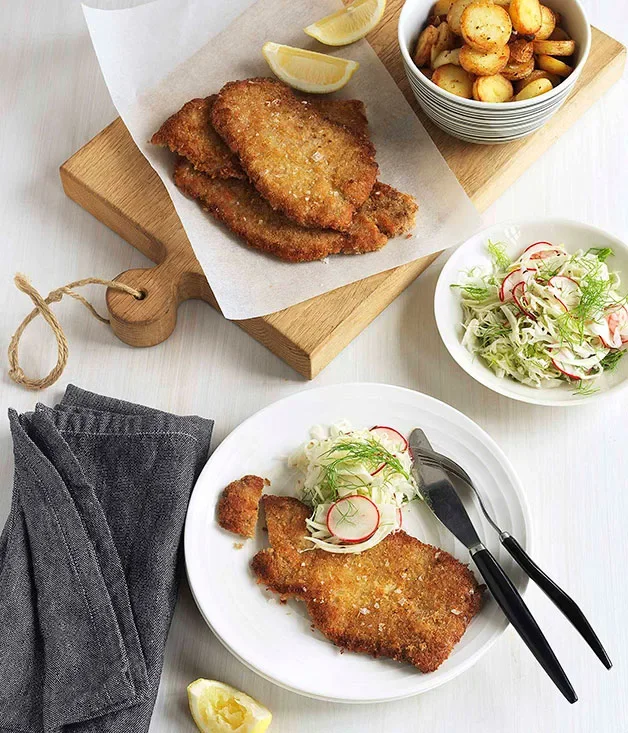
Wiener schnitzel pairs crisp, crumb-coated veal with speck-fried potatoes and a lightly pickled fennel, radish and cabbage slaw. It makes a satisfying meal for six, with fresh lemon to cut through the rich coating.
Ingredients
- 6 (about 160 g each)veal schnitzels
- 75 gplain flour
- 2eggs, lightly beaten
- 200 gfresh fine breadcrumbs
- 60 gbutter or lard, coarsely chopped
- to servelemon wedges
- 1 kgsmall kipfler potatoes
- 70 gspeck, cut into lardons
- 6radishes, trimmed and thinly sliced
- 2fennel bulbs, thinly sliced, fronds reserved
- 300 gwhite cabbage, finely shredded
- 60 ml (¼ cup)white wine vinegar
- 55 g (¼ cup)caster sugar
- 2 tspcaraway seeds
- 1 tbspextra-virgin olive oil
Instructions
- 1
Cook the potatoes
For the fried potatoes, boil the kipflers in salted water for 15–20 minutes, until just tender. Drain, cool, peel and slice them 5 mm thick. Heat a large frying pan over medium-high heat, add the speck and cook for 3–5 minutes, until it starts to colour. Add the potatoes and turn occasionally for 5–7 minutes, until golden. Season to taste, take off the heat and keep warm.
- 2
Make the slaw
Put the radish in a small non-reactive bowl and the fennel and cabbage in another. In a saucepan, combine the vinegar, sugar and 60 ml water; bring to the boil over high heat. Pour one-quarter of the liquid over the radish and the rest over the fennel mixture, then leave to cool. Dry-roast the caraway seeds for 2–3 minutes, until fragrant. Drain and discard the pickling liquid, combine the vegetables in a bowl, then add the caraway, olive oil and fennel fronds. Season to taste, toss and set aside.
- 3
Crumb the veal
Set out the flour, eggs and breadcrumbs in separate shallow bowls. Coat each piece of veal in flour, then egg, then breadcrumbs, shaking off the excess between each layer. Repeat with the remaining veal and set aside.
- 4
Fry the schnitzels
Heat a large frying pan over medium-high heat and add half the butter. Once it is foaming, cook half the schnitzels, turning once, for 3–5 minutes, until golden and cooked through. Transfer to a plate and keep warm. Wipe the pan with absorbent paper, then repeat with the remaining butter and schnitzels. Serve straight away with the slaw, potatoes and lemon wedges.
What is Wiener schnitzel?
Wiener schnitzel is a classic Austrian dish of thin veal coated in breadcrumbs and fried until crisp. It is closely associated with Viennese cooking, though schnitzel-style cutlets are also popular across German-speaking Europe.
This version serves the veal with speck-fried potatoes and a pickled fennel, radish and cabbage slaw. The tangy vegetables and lemon balance the buttery crumb.
Nutrition and macros by portion
The nutrition label shows one serving as written: 760 calories, 46g protein, 77g carbs, 31g fat.
| Portion | Adjustment | kcal | Protein | Carbs | Fat |
|---|---|---|---|---|---|
| Lighter | More slaw, less butter | 532 kcal | 32g | 54g | 22g |
| This serving | As written | 760 kcal | 46g | 77g | 31g |
| Hungry | Larger schnitzel portion | 1140 kcal | 69g | 116g | 47g |
The veal supplies most of the protein, while the potatoes, breadcrumbs, flour and sugar contribute much of the carbohydrate. Butter or lard, speck and olive oil account for much of the fat. Pair a schnitzel with a generous serving of slaw and potatoes, or add extra vegetables if you want a more produce-focused plate.
The veal and crumb coating
Thin veal: even slices cook quickly and make the coating-to-meat balance work. If a piece is uneven, gently flatten its thicker areas before breading.
Three bowls: flour helps the egg adhere, and the egg gives the fine breadcrumbs something to cling to. Shake off excess at each stage so the coating stays light rather than clumpy.
Pickling the slaw
Separate bowls: the recipe gives the radish one-quarter of the hot vinegar mixture and the fennel and cabbage the rest. This lets each group soften and take on the sweet-sour dressing before they are combined.
Caraway: dry-roasting the seeds for 2–3 minutes releases their aroma. Drain the vegetables before tossing with the oil and fennel fronds so the finished slaw is bright, not watery.
Getting the potatoes golden
Just tender: boil the kipflers for 15–20 minutes, stopping when a knife meets little resistance but the potatoes still hold their shape. Cooling them before peeling and slicing helps keep the 5 mm rounds intact.
Speck first: cook it until it begins to colour, then add the potatoes. Turning them occasionally gives the slices time to develop golden patches without breaking them up.
Frying and doneness
Foaming butter: add the first batch of schnitzels when the butter is foaming in the hot pan. Cook for 3–5 minutes, turning once, until the crumb is golden and the veal is cooked through.
Work in batches: frying half at a time avoids crowding the pan. Keep the first batch warm while you wipe out the pan and cook the rest in fresh butter.
Serving the plate
Serve the schnitzels immediately, while their breadcrumb coating is crisp. Add the warm speck-fried potatoes and the cool slaw alongside.
Lemon: squeeze it over the veal just before eating for a fresh, sharp contrast to the buttery crumb. The fennel fronds add a final anise-like note to the slaw.
Recipe notes & tips
- Keep the sliced potatoes intact by boiling them only until just tender.
- Use shallow bowls wide enough to coat each schnitzel without folding it.
- Shake excess flour and egg off the veal before adding the next coating layer.
- Have the slaw and potatoes ready before frying so the schnitzels can be served hot.
- Use a large pan and cook in batches to give the schnitzels room to brown.
Variations
- Use lard: choose it instead of butter for frying the schnitzels.
- Change the potatoes: use another small, waxy potato if kipflers are unavailable.
- Adjust the slaw: vary the balance of radish, fennel and cabbage while keeping the total vegetables.
- Add more lemon: serve extra wedges for a sharper finish at the table.
Common mistakes to avoid
- Overcooking the potatoes: stop when they are just tender so the slices stay whole in the pan.
- Skipping the pickling cool-down: let the vegetables cool in the vinegar mixture before draining and tossing.
- Leaving excess coating: shake the veal between flour, egg and crumbs to avoid a heavy, uneven crust.
- Crowding the pan: cook the schnitzels in two batches so they can brown rather than steam.
- Using the same pan without wiping it: remove browned crumbs before frying the second batch to prevent them scorching.
How to store
Refrigerate leftover schnitzel, potatoes and slaw separately in airtight containers for up to 2 days. Reheat the schnitzel in a hot oven until warmed through to help the coating crisp; warm the potatoes in a frying pan, and serve the slaw chilled.
Frequently asked questions
Can I prepare any of this ahead?
You can make the slaw and cook the potatoes ahead, then refrigerate them separately. For the crispest coating, crumb and fry the schnitzels close to serving.
How do I know when the veal is cooked?
The coating should be golden, and the veal should be cooked through after 3–5 minutes, turning once. The exact time depends on the thickness of the slices.
Can I use another cut of meat?
The recipe is written for veal schnitzels. Another thin cutlet can be crumbed in the same way, but its cooking time may differ.
Why is my schnitzel coating not crisp?
A crowded pan can lower the heat and leave the crumb less crisp, so fry in batches. Serve soon after cooking rather than letting the schnitzels sit covered.
Can I make the slaw without caraway?
Yes. Leave it out if you prefer; the pickled fennel, radish and cabbage will still provide a sharp, fresh contrast.
Cook it from the original
This recipe comes from gourmettraveller.com.au. Their page has the author’s own photos, notes and tips — the best place to cook it from.
Open the recipe on gourmettraveller.com.au