
Tiramisù doughnuts
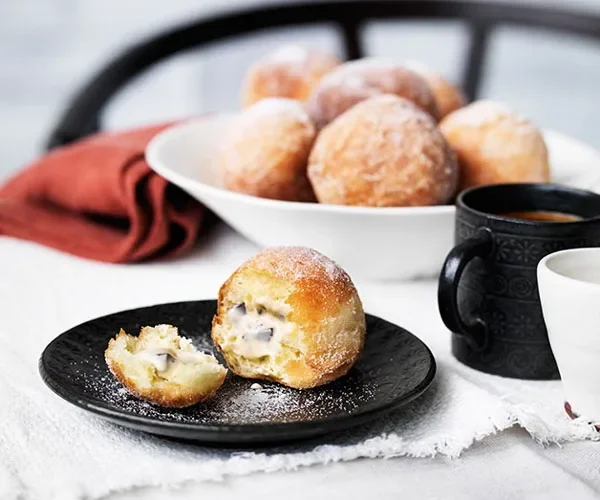
These enriched, fried doughnuts are filled with a coffee- and Marsala-infused custard folded with mascarpone and dark chocolate. They take some planning because the dough rests overnight, but the result is a soft centre with a crisp, sugared exterior.
Ingredients
- 5 gdried yeast
- 75 mlwarm water
- 300 g (2 cups)plain flour
- 30 g, plus extra for dustingcaster sugar
- 2eggs
- finely grated rind of 1lemon
- 1 tspfine sea salt flakes
- 130 gbutter, softened
- for deep-fryingvegetable oil
- 500 ml (2 cups)milk
- 100 gcoffee beans
- 50 mlMarsala
- 1, split, seeds scrapedvanilla bean
- 130 gcaster sugar
- 6egg yolks
- 50 g (1/3 cup)plain flour
- 50 gmascarpone
- 50 gdark chocolate (55% cocoa solids), finely chopped
Instructions
- 1
Make the dough
Stir the yeast into 75 ml warm water in a jug until dissolved. Put the flour, 30 g sugar, eggs, lemon rind and 1 tsp fine sea salt flakes in an electric mixer with a dough hook. Add the yeast mixture and knead on low until smooth and elastic, 6–8 minutes. Add the butter a quarter at a time, mixing well after each addition. Transfer to a lightly floured bowl, cover with plastic wrap and leave until doubled in size, about 1½ hours. Knock back the dough, cover again and refrigerate overnight.
- 2
Prepare the cream
Warm the milk, coffee beans, Marsala and vanilla in a saucepan over medium heat, then leave to infuse for 30 minutes. Whisk the sugar and egg yolks in a bowl until pale and fluffy, 3–4 minutes; whisk in the flour and set aside. Bring the milk mixture back to just below the boil and strain it through a fine sieve into a large jug. Whisk continuously as you pour the hot milk in a thin, steady stream through a fine sieve into the yolk mixture. Return everything to a clean saucepan and whisk over medium heat until thick, 6–8 minutes. Transfer to a large bowl, cover the surface closely with plastic wrap and refrigerate until cold. Fold in the mascarpone and chocolate, then transfer the cream to a piping bag fitted with a 1 cm nozzle and refrigerate until needed.
- 3
Shape the doughnuts
Divide the dough into 45 g pieces and roll each into a golf ball-sized ball. Arrange them on a lightly buttered oven tray with room to rise. Cover with a tea towel and leave until doubled in size, 45 minutes to 1 hour.
- 4
Fry and fill
Heat the oil to 180°C. Fry the doughnuts in batches for 2–3 minutes, until golden and cooked through. Drain on absorbent paper and leave to cool. Insert the piping nozzle into the centre of each doughnut and pipe in a little tiramisù cream. Dust with sugar and serve.
What are tiramisù doughnuts?
They bring together two familiar treats: yeast-raised doughnuts and tiramisù, the Italian dessert traditionally built around coffee and creamy filling. This Australian Gourmet Traveller version puts those flavours inside fried dough rather than layering them in a dish.
Coffee beans infuse the custard with flavour, while Marsala, vanilla, mascarpone and dark chocolate make the filling reminiscent of tiramisù. Lemon in the dough adds a fresh note to the rich centre.
Nutrition and macros by portion
The nutrition label shows one serving as written: 390 calories, 8g protein, 45g carbs, 21g fat.
| Portion | Adjustment | kcal | Protein | Carbs | Fat |
|---|---|---|---|---|---|
| Lighter | Smaller doughnuts, lighter dusting | 273 kcal | 6g | 31g | 15g |
| This serving | As written | 390 kcal | 8g | 45g | 21g |
| Hungry | Two doughnuts per portion | 585 kcal | 12g | 68g | 32g |
The flour, sugar and milk contribute most of the carbohydrates, while butter, frying oil, egg yolks, mascarpone and chocolate provide much of the fat. Eggs, milk and mascarpone also supply protein. Serve one doughnut with fresh fruit or berries for a lighter accompaniment.
Building an enriched dough
Yeast and water: Stir the yeast into warm water until it dissolves before mixing it with the other dough ingredients.
Butter: Knead it in gradually, a quarter at a time, so it incorporates evenly into the dough.
Resting: The dough rises once before an overnight rest in the fridge, then rises again after shaping. Allow time for both stages rather than trying to rush them.
Infusing the cream
Coffee and Marsala: Warming the beans with the milk and Marsala, then letting them steep for 30 minutes, flavours the custard base. Straining removes the beans before the liquid meets the yolks.
Egg yolks: Whisk them with the sugar until pale and fluffy, then add the flour. Pour the hot milk in slowly while whisking continuously to combine it smoothly.
Mascarpone and chocolate: Fold these into the custard only after it has cooled. Chilling the finished filling makes it easier to pipe.
Proofing and shaping
Even pieces: Divide the dough into 45 g portions so the doughnuts are similar in size and cook at a similar pace.
Room to rise: Leave space between the balls on the tray and cover them with a tea towel. They are ready for frying when doubled in size, usually after 45 minutes to 1 hour.
Frying to the right colour
Oil temperature: Heat the oil to 180°C before frying. Work in batches so the doughnuts have room in the pan.
Doneness: Fry for 2–3 minutes, looking for a golden exterior and a cooked-through centre. Drain on absorbent paper and let them cool before filling.
Serving and filling
Pipe the chilled cream through the centre of each cooled doughnut using the 1 cm nozzle. Add only a little filling at a time, stopping when it begins to show at the opening.
Dust with sugar just before serving. The doughnuts are best enjoyed fresh, when the outside is still at its crispest.
Planning the timing
The 85-minute total time does not capture the overnight dough rest, so begin the day before you plan to serve them. The custard also needs time to cool before the mascarpone and chocolate are folded in.
Prepare the filling while the dough is resting or rising, then keep it chilled until needed. This leaves frying and piping for the final stretch.
Recipe notes & tips
- Weigh the dough into 45 g portions for evenly sized doughnuts.
- Keep the cream chilled until the doughnuts have cooled and are ready to fill.
- Use a thermometer to bring the frying oil to 180°C.
- Fry in batches, leaving enough space for the doughnuts to move freely.
- Dust with caster sugar just before serving.
Variations
- Chocolate finish: Dust with finely grated dark chocolate along with the sugar.
- Cocoa dusting: Replace some of the finishing sugar with cocoa powder.
- Espresso note: Use finely ground espresso in place of the coffee beans for a more direct coffee flavour.
- Citrus change: Use finely grated orange rind instead of lemon in the dough.
- Marsala-free cream: Leave out the Marsala and infuse the milk with the coffee and vanilla.
Common mistakes to avoid
- Adding butter all at once: Work it into the dough a quarter at a time so it mixes in evenly.
- Skipping the overnight rest: Refrigerate the dough overnight as directed; it is part of the method.
- Filling warm doughnuts: Let them cool first so the cream holds its shape.
- Crowding the pan: Fry in batches to give each doughnut room to cook evenly.
- Rushing the infusion: Leave the milk mixture for the full 30 minutes to absorb the coffee flavour.
How to store
Keep filled doughnuts covered in the refrigerator and eat within 1 day; the exterior will soften over time. For the best texture, serve freshly fried and filled rather than reheating filled doughnuts.
Frequently asked questions
Can I make the dough ahead?
Yes. The method includes an overnight rest in the refrigerator after the first rise. Shape and prove the doughnuts the following day.
Can I make the cream ahead?
Yes. Chill the custard until cold, fold in the mascarpone and chocolate, then keep it in the piping bag in the refrigerator until needed.
How do I know the doughnuts are cooked?
They should be golden and cooked through after 2–3 minutes of frying at 180°C. If unsure, check one from the first batch before frying the rest.
Can I fill them before frying?
No. Fry the doughnuts first, drain and cool them, then pipe the cream into the centres.
What if I do not have a piping bag?
The method calls for a piping bag fitted with a 1 cm nozzle. A makeshift bag with a small opening can work, though filling may be less tidy.
Can I use ground coffee instead of beans?
The recipe specifies whole coffee beans, which are strained out after infusing. Ground coffee is harder to strain cleanly and may leave sediment in the cream.
Cook it from the original
This recipe comes from gourmettraveller.com.au. Their page has the author’s own photos, notes and tips — the best place to cook it from.
Open the recipe on gourmettraveller.com.au