
Dulce de leche flan
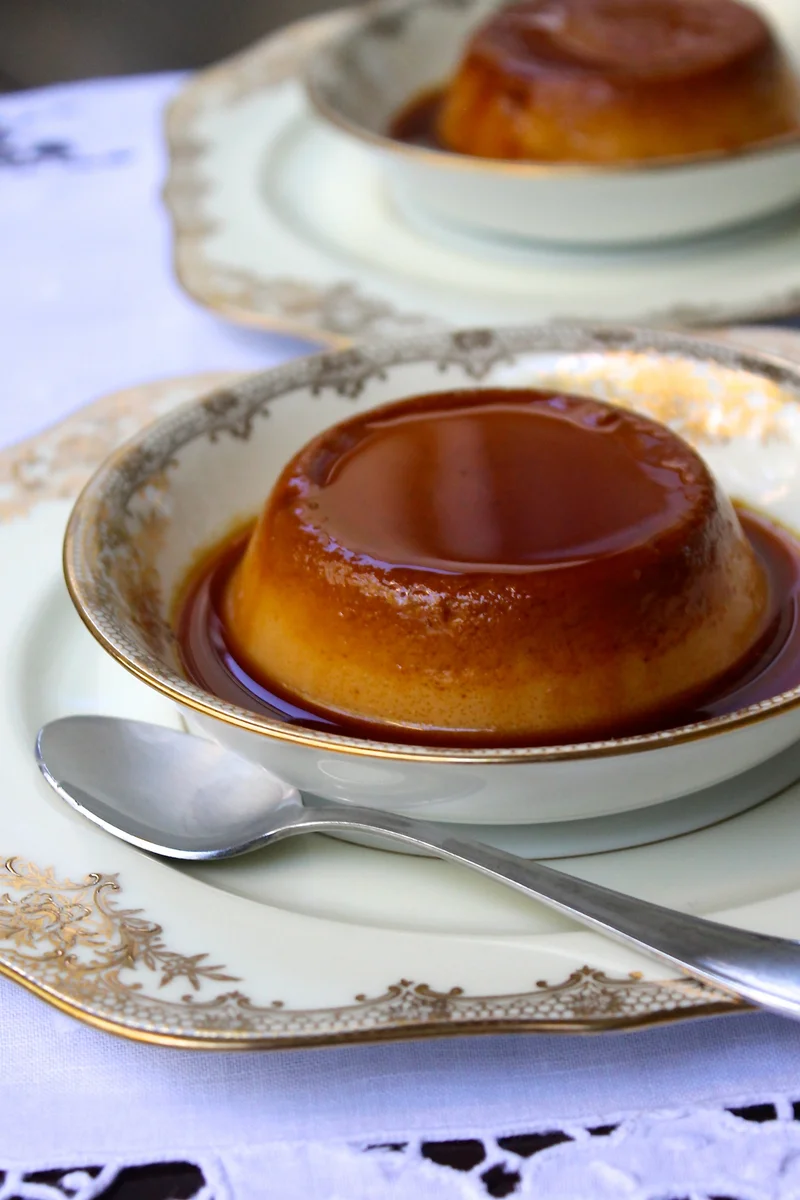
This Venezuelan-style flan combines a dark caramel coating with a dense, creamy custard made with dulce de leche. It is a make-ahead dessert, since chilling helps it set and makes it easier to turn out.
Ingredients
- 150 g (¾ cup)caster sugar
- 2 cansevaporated milk
- 380 g (13.4 oz)dulce de leche
- 6eggs
Instructions
- 1
Preheat the oven
Heat the oven to 175°C (350°F).
- 2
Make the caramel
Put the sugar in a small saucepan over a medium-low heat. Cook until it dissolves and becomes a dark caramel.
- 3
Coat the moulds
Carefully divide the hot caramel between glass flan moulds. Rotate each mould with equal care so the caramel coats the sides.
- 4
Mix the custard
In a bowl, use an electric whisk to beat the milk, eggs and dulce de leche until smooth and evenly combined.
- 5
Fill the moulds
Pour the mixture into the flan moulds and place them in a deep baking tray.
- 6
Cover the moulds
Cover the flan moulds with aluminium foil.
- 7
Add the water
Pour warm water into the baking tray to make a bain-marie.
- 8
Bake the flans
Bake for 45–50 minutes, or until a smooth-bladed knife inserted into the centre of a flan comes out clean.
- 9
Cool and chill
Remove the flans from the tray and cool them on a wire rack. Refrigerate for at least 4 hours before serving; chilling overnight is even better.
- 10
Turn out to serve
Before serving, loosen the sides of each flan with a small spatula or smooth-bladed knife, then carefully turn it out onto a dessert plate.
What is dulce de leche flan?
Flan is a set custard dessert served with a layer of caramel, found in many parts of Latin America and beyond. This Venezuelan-style version uses dulce de leche in the custard as well as caramel on the outside.
Dulce de leche gives the custard a dense texture and a deep caramel flavour. Baking it gently in a water bath helps it cook evenly.
Nutrition and macros by portion
The nutrition label shows one serving as written: 340 calories, 14g protein, 52g carbs, 13g fat.
| Portion | Adjustment | kcal | Protein | Carbs | Fat |
|---|---|---|---|---|---|
| Lighter | Serve a smaller slice | 238 kcal | 10g | 36g | 9g |
| This serving | As written | 340 kcal | 14g | 52g | 13g |
| Hungry | Serve a larger slice | 510 kcal | 21g | 78g | 20g |
Most of the carbohydrates come from the sugar and dulce de leche, while the evaporated milk and eggs contribute protein. The eggs, milk and dulce de leche also provide most of the fat. Serve a slice with fresh fruit for a simple way to balance the dessert.
The caramel coating
Dark caramel: Cooking the sugar until it turns a deep colour gives the flan a more pronounced caramel edge. Watch it closely as it can darken quickly once it starts to colour.
Coating the moulds: Work carefully with the hot caramel and rotate each glass mould to cover its sides before the caramel sets.
Getting a smooth custard
Even mixing: Beat the evaporated milk, eggs and dulce de leche until the mixture looks uniform. Scrape the bowl if needed so no thick streaks of dulce de leche remain.
Gentle handling: Pour the mixture into the caramel-coated moulds, then cover them with foil as directed. The foil helps keep the tops from drying during baking.
Why use a water bath?
Steady heat: The warm water surrounding the moulds softens the oven's direct heat and helps the custard set more evenly. Place the moulds in the deep tray before adding the water.
Water level: Add enough warm water to make the bain-marie, taking care not to splash any into the flans.
When is the flan ready?
Doneness cue: After 45 minutes, test the centre with a smooth-bladed knife. If it comes out clean, the flan is ready; if not, continue baking and check again within the stated 45–50 minute window.
Chilling time: The flans need at least 4 hours in the fridge before serving, and the method recommends chilling them overnight for best results.
Serving and turning out
Loosen the edges: Run a small spatula or smooth-bladed knife around the sides before turning out each flan. This helps release the custard without tearing its edges.
Serve the flan on a dessert plate so the caramel can run over the custard. The recipe is rich, so a small slice of fresh fruit alongside can balance the plate.
Recipe notes & tips
- Use care when handling the hot caramel, especially while rotating the glass moulds.
- Have the flan moulds ready before you start cooking the sugar, as caramel sets quickly.
- Use warm water for the bain-marie, as specified in the method.
- Check the centre with a smooth-bladed knife rather than relying only on the top's appearance.
- Chill the flans overnight if you have time before serving.
Variations
- Individual portions: Divide the mixture between individual glass flan moulds as in the method.
- Deeper caramel: Cook the sugar to a darker shade, taking care not to let it burn.
- Fruit accompaniment: Serve each portion with fresh fruit for a bright contrast.
- Make-ahead dessert: Prepare and chill the flans overnight before turning them out.
Common mistakes to avoid
- Burnt caramel: Keep the sugar over a medium-low heat and watch it closely as it darkens.
- Uneven coating: Rotate each mould while the caramel is still liquid so it reaches the sides.
- Lumpy mixture: Beat the milk, eggs and dulce de leche until no visible streaks remain.
- Water in the custard: Pour the warm water into the tray carefully after placing the moulds inside.
- Flan sticking to the mould: Loosen the sides with a small spatula or smooth-bladed knife before turning it out.
- Rushing the chill: Refrigerate for at least 4 hours, or preferably overnight, before serving.
How to store
Cover and refrigerate the flans, and serve them chilled. The recipe specifies a minimum chilling time of 4 hours but gives no storage duration; avoid leaving the custard at room temperature for extended periods.
Frequently asked questions
Can I make dulce de leche flan the day before?
Yes. The method says to refrigerate it for at least 4 hours and notes that chilling overnight is even better.
How do I know when the flan is baked?
Insert a smooth-bladed knife into the centre. It should come out clean after 45–50 minutes of baking.
Why does this flan bake in a water bath?
The bain-marie surrounds the moulds with warm water, helping the custard cook more gently and evenly.
Can I use one large mould instead of individual flan moulds?
The method calls for flan moulds and does not specify an alternative mould or different baking time. If using a different size, check doneness with the knife test.
How do I turn the flan out without breaking it?
Chill it well, loosen the sides with a small spatula or smooth-bladed knife, then carefully invert it onto a dessert plate.
Cook it from the original
This recipe comes from enrilemoine.com. Their page has the author’s own photos, notes and tips — the best place to cook it from.
Open the recipe on enrilemoine.com