
Braised duck with grapes, duck-fat potatoes and watercress
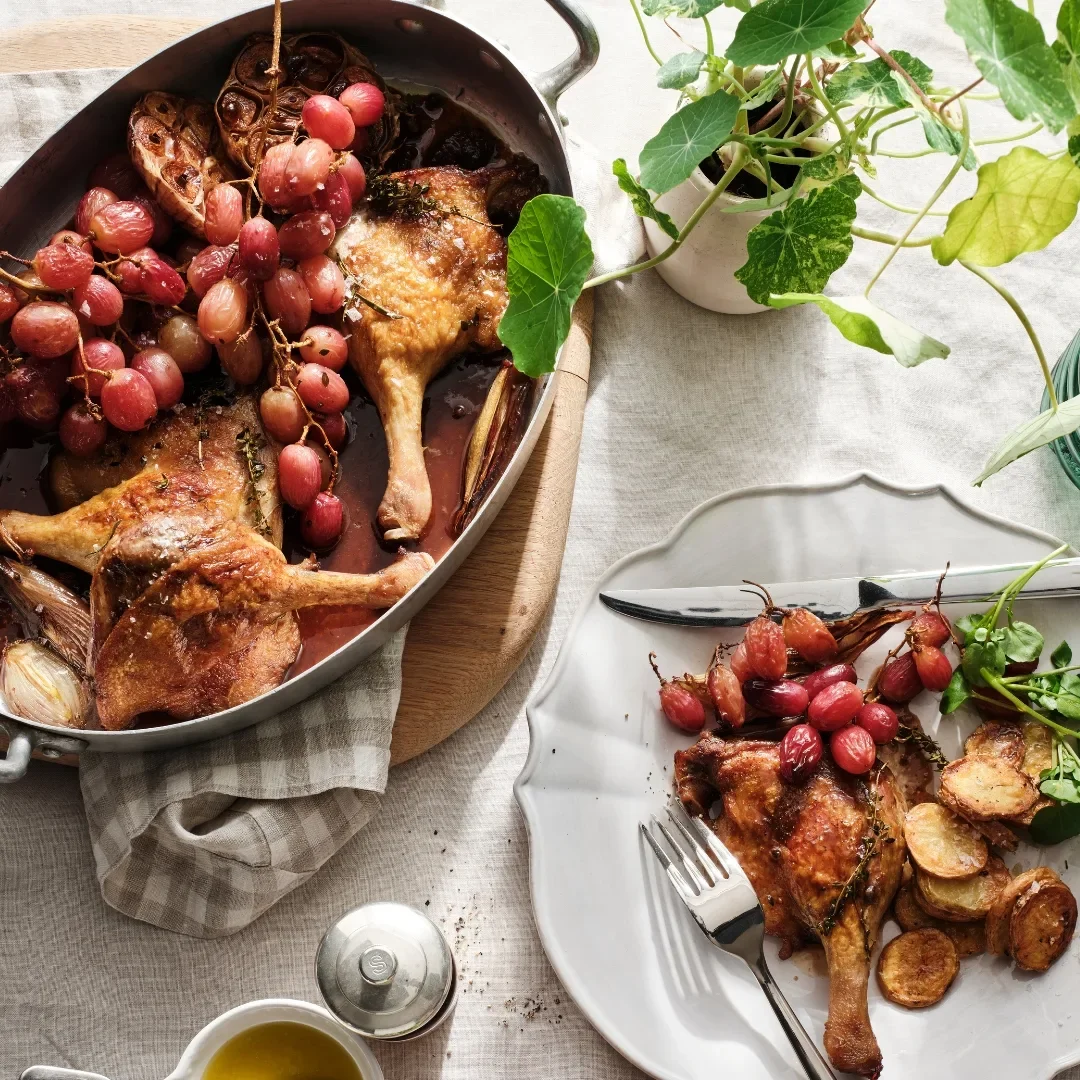
Duck Marylands are braised with port, red wine, fig conserve and grapes, then served with crisp potatoes cooked in reserved duck fat and a sharp watercress salad. It is a generous centrepiece for a relaxed meal, with the sauce balancing the rich duck.
Ingredients
- 4 (about 1 kg)duck Marylands, at room temperature
- 6banana shallots, peeled and halved
- 3 eachrosemary and thyme sprigs
- 2bay leaves
- 1 headgarlic, halved horizontally
- 1 kgkipfler potatoes, scrubbed and cut into 1 cm-thick slices
- 250 ml (1 cup)port
- 125 ml (1/2 cup)red wine
- 250 ml (1 cup)chicken stock
- 80 g (1/4 cup)fig conserve
- 2 tsppink peppercorns
- 500 gred grapes, cut into clusters
- 2 tbspextra-virgin olive oil
- 1 1/2 tbsplemon juice
- 1 tspDijon mustard
- 1 tsphoney
- 1 small clovegarlic, crushed
- 1 bunchwatercress, leaves picked
- to tastesalt and pepper
Instructions
- 1
Brown the duck
Preheat the oven to 220°C fan-forced. Prick the duck skin all over with a skewer and season. Heat a large shallow casserole over medium-high heat, then cook the duck skin-side down for 6–7 minutes, until golden. Remove the duck and drain the fat into a large bowl to reserve for the potatoes. Add the shallots, herbs and halved garlic to the casserole, sit the duck on top skin-side up and transfer to the oven. Reduce the temperature to 170°C fan-forced and roast for 30 minutes.
- 2
Roast the potatoes
Meanwhile, carefully toss the potatoes with the reserved duck fat in the bowl; the fat will be hot. Season, spread them on a large baking-paper-lined oven tray and roast for 40–50 minutes, turning occasionally, until golden and crisp.
- 3
Make the sauce
While the potatoes cook, bring the port and red wine to a simmer in a saucepan. Reduce by half for 6–8 minutes, then add the stock, fig conserve and pink peppercorns. Simmer for a further 4–5 minutes, until slightly reduced. Remove the casserole from the oven and lower the oven to 150°C fan-forced. Pour the sauce around the duck, arrange the grapes on top and return the casserole to the oven. Roast uncovered for 45 minutes to 1 hour, until the duck is golden and tender and the sauce has reduced slightly.
- 4
Rest the duck
Transfer the duck and grapes to a plate and leave to rest for 15 minutes. Skim excess fat from the pan juices, then return the duck and grapes to the casserole.
- 5
Dress the salad
Whisk the olive oil, lemon juice, Dijon mustard, honey and crushed garlic in a large bowl until combined. Season, add the watercress leaves and toss to dress.
- 6
Serve the meal
Serve the braised duck with the roast potatoes and dressed watercress on the side.
What is braised duck with grapes?
Braised duck pairs slowly cooked meat with liquid that becomes a savoury, concentrated sauce. This version brings together port, red wine and fig conserve, with grapes adding a fresh fruit note.
The combination has a classic feel: rich duck and reduced wine sauce alongside crisp potatoes and peppery greens. Browning the duck first builds colour before it finishes cooking gently in the oven.
Nutrition and macros by portion
The nutrition label shows one serving as written: 1150 calories, 45g protein, 100g carbs, 65g fat.
| Portion | Adjustment | kcal | Protein | Carbs | Fat |
|---|---|---|---|---|---|
| Lighter | More watercress, fewer potatoes | 805 kcal | 31g | 70g | 46g |
| This serving | As written | 1150 kcal | 45g | 100g | 65g |
| Hungry | Larger potato portion | 1725 kcal | 68g | 150g | 98g |
The potatoes, grapes, port and fig conserve contribute most of the carbohydrates, while duck and duck fat make up much of the protein and fat. For a more balanced plate, serve a generous helping of watercress alongside the duck and potatoes.
Why use port and fig conserve?
Port: its sweetness and depth give the sauce body, while red wine adds a drier, sharper edge. Reducing both before adding stock concentrates their flavour.
Fig conserve: it rounds out the wine and complements the grapes. Stir it into the hot liquid so it dissolves before the sauce goes into the casserole.
Getting crisp duck-fat potatoes
Hot fat: carefully coat the sliced potatoes in the reserved duck fat, which will still be warm from the duck. Spread them out on the lined tray so they roast rather than steam.
Even browning: turn the potatoes occasionally during their 40–50 minutes in the oven. They are ready when golden and crisp at the edges.
How to tell when the duck is done
Tenderness: the duck should be golden and tender after 45 minutes to 1 hour at 150°C fan-forced. The recipe also relies on the sauce reducing slightly during this final roast.
Resting: leave the duck and grapes on a plate for 15 minutes before returning them to the pan. Skim excess fat from the juices while they rest.
Timing the different parts
Start the potatoes while the duck has its first roast, then prepare and reduce the sauce as they cook. The potatoes need 40–50 minutes, while the duck's final roast takes 45 minutes to 1 hour.
The oven temperature changes from 220°C to 170°C and then 150°C, all fan-forced. Check that the oven is at the lower setting before the final braise.
Serving the meal
Watercress: dress it just before serving so the leaves stay fresh and perky. Its peppery bite helps balance the rich duck and potatoes.
On the plate: serve a Maryland with potatoes, grapes and some of the pan sauce, with the salad alongside. Spoon the sauce around the duck rather than over the crisp potato crust.
Recipe notes & tips
- Bring the duck to room temperature before cooking, as directed, for more even browning.
- Prick only the skin when preparing the duck so fat can render as it browns.
- Pour the rendered fat into a heatproof bowl carefully before tossing the potatoes.
- Give the potatoes room on the tray and turn them occasionally for even crisping.
- Reduce the port and wine by half before adding the stock and fig conserve.
- Skim the pan juices after resting, when the duck is out of the casserole.
Variations
- Use black grapes: swap them for the red grapes while keeping the same quantity.
- Change the herbs: use the same number of sprigs of another woody herb in place of rosemary or thyme.
- Try another conserve: use a similar fruit conserve in place of fig for a different sweet note.
- Add orange zest: grate a little into the reduced sauce for a bright citrus note.
- Swap the potatoes: use another roasting potato, sliced to the same thickness.
Common mistakes to avoid
- Crowding the potato tray: the slices may soften instead of crisping; spread them out on a large tray.
- Skipping the duck browning: the skin misses the golden colour developed in the casserole; brown it skin-side down first.
- Adding the sauce too soon: it will not have reduced as directed; simmer the port and wine by half before adding the other sauce ingredients.
- Cooking at the wrong oven setting: the duck’s stages depend on changing temperatures; reduce the oven to 170°C and then 150°C fan-forced as directed.
- Leaving excess fat in the pan juices: the sauce can feel greasy; skim the fat after the duck rests.
How to store
Refrigerate leftover duck, sauce, potatoes and salad separately in airtight containers for up to 3 days. Reheat the duck and sauce gently in a covered ovenproof dish until hot, and warm the potatoes in the oven to help restore their crispness; dress fresh watercress just before serving.
Frequently asked questions
Can I make the sauce ahead?
You can reduce the port and wine, then add the stock, fig conserve and peppercorns ahead of time. Reheat the sauce before pouring it around the duck for its final roast.
How do I know the duck is tender?
After the final roast, the meat should be tender and the duck golden, with the sauce slightly reduced. The recipe gives a final cooking time of 45 minutes to 1 hour.
Can I use another type of potato?
Yes. Choose a roasting potato and cut it into slices about 1 cm thick so it cooks in a similar timeframe.
Can I use seedless grapes?
Yes. Use 500 g of red seedless grapes, still arranged over the duck for the final roast.
Can I prepare the watercress salad in advance?
Whisk the dressing ingredients ahead, but add and dress the watercress just before serving so the leaves remain fresh.
Cook it from the original
This recipe comes from gourmettraveller.com.au. Their page has the author’s own photos, notes and tips — the best place to cook it from.
Open the recipe on gourmettraveller.com.au