
Almond and chocolate skillet cake with roast oranges
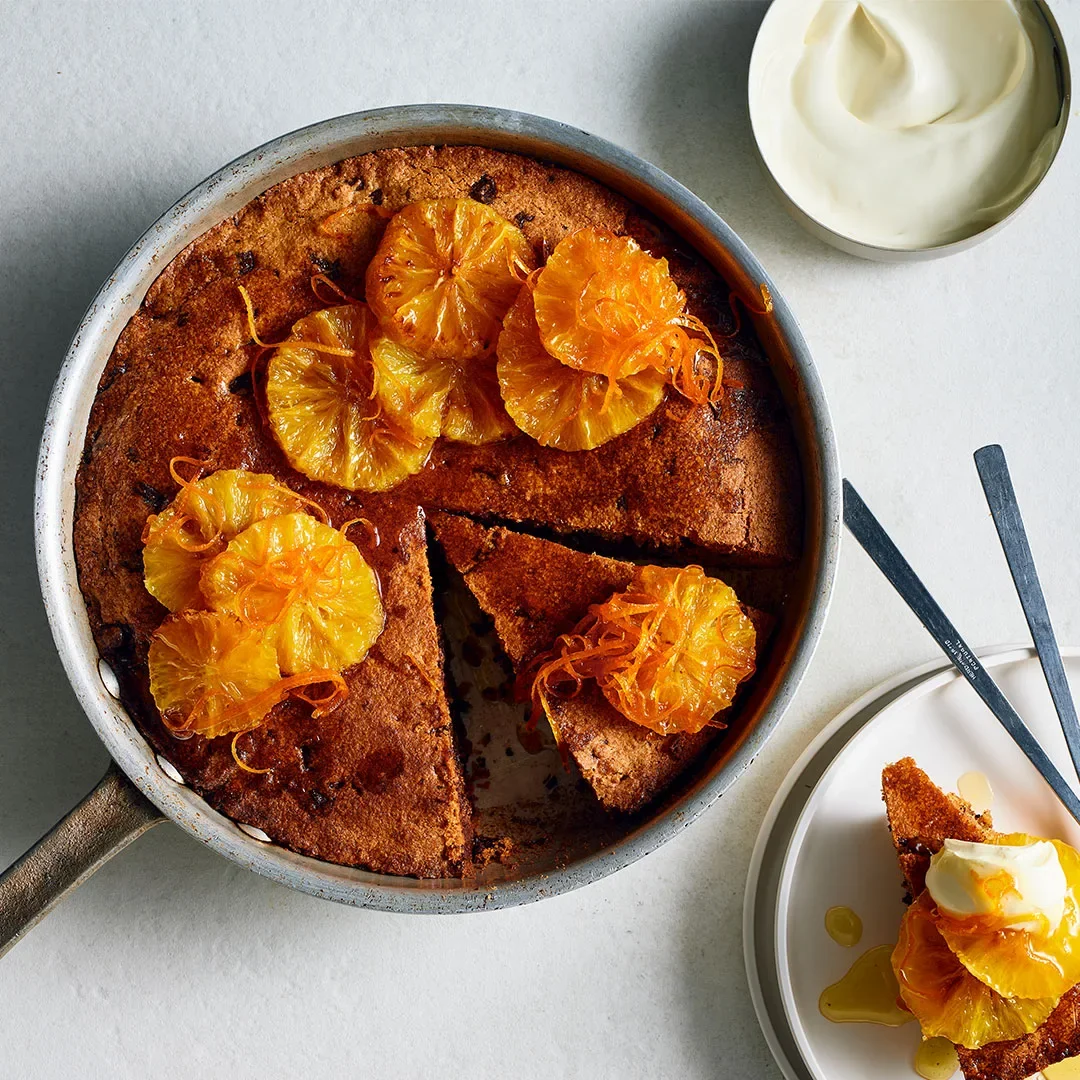
This almond and chocolate skillet cake is baked until golden, then served warm with cardamom-scented roast oranges and crème fraîche. It makes an easy centrepiece when you want a rich cake with bright citrus alongside.
Ingredients
- 185 g (1 1/4 cups)self-raising flour
- 1/2 tspground cardamom
- 1/2 tspbicarbonate of soda
- 120 g (1 cup)almond meal
- 270 g (1 1/4 cups)caster sugar
- 125 gdark chocolate (85% cocoa solids), coarsely chopped
- 125 gunsalted butter, melted and cooled
- 3eggs
- Finely grated zest of 1/2orange
- To servecrème fraîche
- 170 g (3/4 cup)caster sugar
- 125 ml (1/2 cup)orange juice (about 2 oranges)
- 2 tbsporange liqueur, such as Grand Marnier
- 6cardamom pods, bruised
- 2oranges, rind removed and cut into fine strips, then peeled and cut into 1 cm-thick rounds
Instructions
- 1
Mix the cake
Heat the oven to 200°C fan-forced. Grease a 21 cm skillet, measured across its base, and line the base with baking paper. Sift the flour, ground cardamom and bicarbonate of soda into a large bowl. Stir in the almond meal and sugar, then the chocolate and a pinch of sea salt flakes. Whisk the melted, cooled butter, eggs and orange zest together in a jug, then stir them into the dry ingredients until just combined. Spoon the mixture into the pan and smooth the top.
- 2
Bake and cool
Bake for 25–30 minutes, until golden and a skewer inserted into the centre comes out clean; cover with foil if the top is browning too quickly. Leave the cake to cool briefly in the pan for 5–10 minutes. Meanwhile, combine the roast-orange sugar, orange juice, liqueur, cardamom and zest in a shallow 22 cm baking tin. Add the orange rounds and toss to coat, then roast for 30–35 minutes, until the syrup forms and the oranges are lightly golden.
- 3
Serve warm
Top the cake with the roast oranges and zest. Cut into slices and serve warm, with crème fraîche on the side.
What is almond and chocolate skillet cake?
This is a simple, oven-baked cake made in a skillet, with almond meal and dark chocolate in the batter. It pairs a rich, tender crumb with citrus cooked in a cardamom-scented syrup.
The recipe combines familiar baking ingredients with the warm spices and orange flavours often found in European-style desserts. Almond meal adds moisture and a nutty flavour, while roast oranges make the finished cake feel bright and aromatic.
Nutrition and macros by portion
The nutrition label shows one serving as written: 1300 calories, 18g protein, 170g carbs, 60g fat.
| Portion | Adjustment | kcal | Protein | Carbs | Fat |
|---|---|---|---|---|---|
| Lighter | Less crème fraîche | 910 kcal | 13g | 119g | 42g |
| This serving | As written | 1300 kcal | 18g | 170g | 60g |
| Hungry | A larger cake slice | 1950 kcal | 27g | 255g | 90g |
The flour, sugar and oranges supply most of the carbohydrates, while butter, chocolate and almond meal contribute much of the fat. Eggs, almonds and chocolate provide some protein. Serve a slice with crème fraîche and consider adding fresh fruit alongside for a more balanced plate.
Why use almond meal?
Almond meal gives the cake a close, soft texture and a rounded nut flavour. It works alongside the self-raising flour rather than replacing it, so keep both in the mix.
Dark chocolate: Coarsely chopped pieces give the cake pockets of chocolate rather than an entirely uniform flavour. The 85% cocoa chocolate also keeps the sweetness from coming only from the batter.
Mix the batter gently
Dry ingredients: Sifting the flour, cardamom and bicarbonate of soda helps distribute the raising agents and spice before the heavier almond meal and sugar are stirred in.
Wet ingredients: Whisk the butter, eggs and orange zest together first, then fold them through the dry mixture only until combined. Avoid prolonged mixing, which can make the cake denser.
Watch the cake as it bakes
Doneness: The top should be golden and a skewer pushed into the centre should come out clean. Start checking towards the 25-minute mark, as ovens and skillets can vary.
Browning: If the surface gets dark before the centre is ready, cover the cake with foil and continue baking. A short rest of 5–10 minutes in the pan makes it easier to serve while still warm.
Roast the oranges until glossy
Arrange the orange rounds in the shallow tin and turn them in the sugar, juice, liqueur and cardamom mixture so they are coated. During roasting, the liquid reduces into a syrup and the fruit should become lightly golden.
Keep an eye on the syrup near the end of the 30–35-minute roasting time. It should look syrupy rather than dry; take care when moving the hot tin.
Serve with crème fraîche
The cake is intended to be served warm, topped with the roast oranges and their syrup. Add crème fraîche at the table so each person can choose how much to spoon alongside.
A little extra orange zest over the top reinforces the citrus aroma. The cool, lightly tangy crème fraîche balances the sweet fruit and rich chocolate.
Recipe notes & tips
- Measure the skillet across its base to check it is 21 cm wide.
- Let the melted butter cool before whisking it with the eggs.
- Stir the batter only until the dry ingredients are incorporated.
- Check the centre with a skewer from 25 minutes onwards.
- Use foil if the cake is browning too quickly.
- Serve the cake warm so the chocolate and orange syrup are at their best.
Variations
- Skip the liqueur: Replace it with an equal amount of orange juice for a liqueur-free syrup.
- Change the spice: Use ground cinnamon in place of the cardamom in the cake for a warmer flavour.
- Add toasted almonds: Scatter toasted flaked almonds over the finished cake for extra crunch.
- Use another citrus: Try blood oranges when they are available, keeping the slices about 1 cm thick.
- Adjust the chocolate: Use a less intense dark chocolate if you prefer a sweeter, gentler chocolate flavour.
Common mistakes to avoid
- Overmixing the batter: Stir only until combined to help keep the cake tender.
- Using hot butter: Cool it before adding it to the eggs so the mixture combines smoothly.
- Skipping the skewer check: Look for a clean skewer in the centre before taking the cake out.
- Letting the top overbrown: Cover with foil if it darkens before the cake is cooked through.
- Leaving the orange syrup too long: Check towards the end of roasting so it remains syrupy rather than drying out.
How to store
Store leftover cake and roast oranges in separate airtight containers in the fridge for up to 3 days. Warm the cake gently in a low oven or microwave, and warm the oranges and syrup separately before serving with fresh crème fraîche.
Frequently asked questions
Can I make the cake without a skillet?
Use an ovenproof round cake tin of a similar 21 cm base measurement, greased and lined as directed. Check the cake for doneness using the same skewer cue.
Can I prepare the roast oranges ahead?
Yes. Roast them ahead and refrigerate them with their syrup, then warm gently before serving.
How can I tell when the oranges are ready?
They should be lightly golden and the liquid should have reduced to a syrup. The recipe gives a roasting time of 30–35 minutes.
Can I leave out the orange liqueur?
Yes. Replace it with the same amount of orange juice to keep the syrup mixture liquid.
Can I serve the cake cold?
You can, though the recipe is designed to be served warm. Warm the cake gently and serve the crème fraîche alongside.
Cook it from the original
This recipe comes from gourmettraveller.com.au. Their page has the author’s own photos, notes and tips — the best place to cook it from.
Open the recipe on gourmettraveller.com.au