
France-Soir’s Onglet À l’échalote: Hanger steak with eschallots
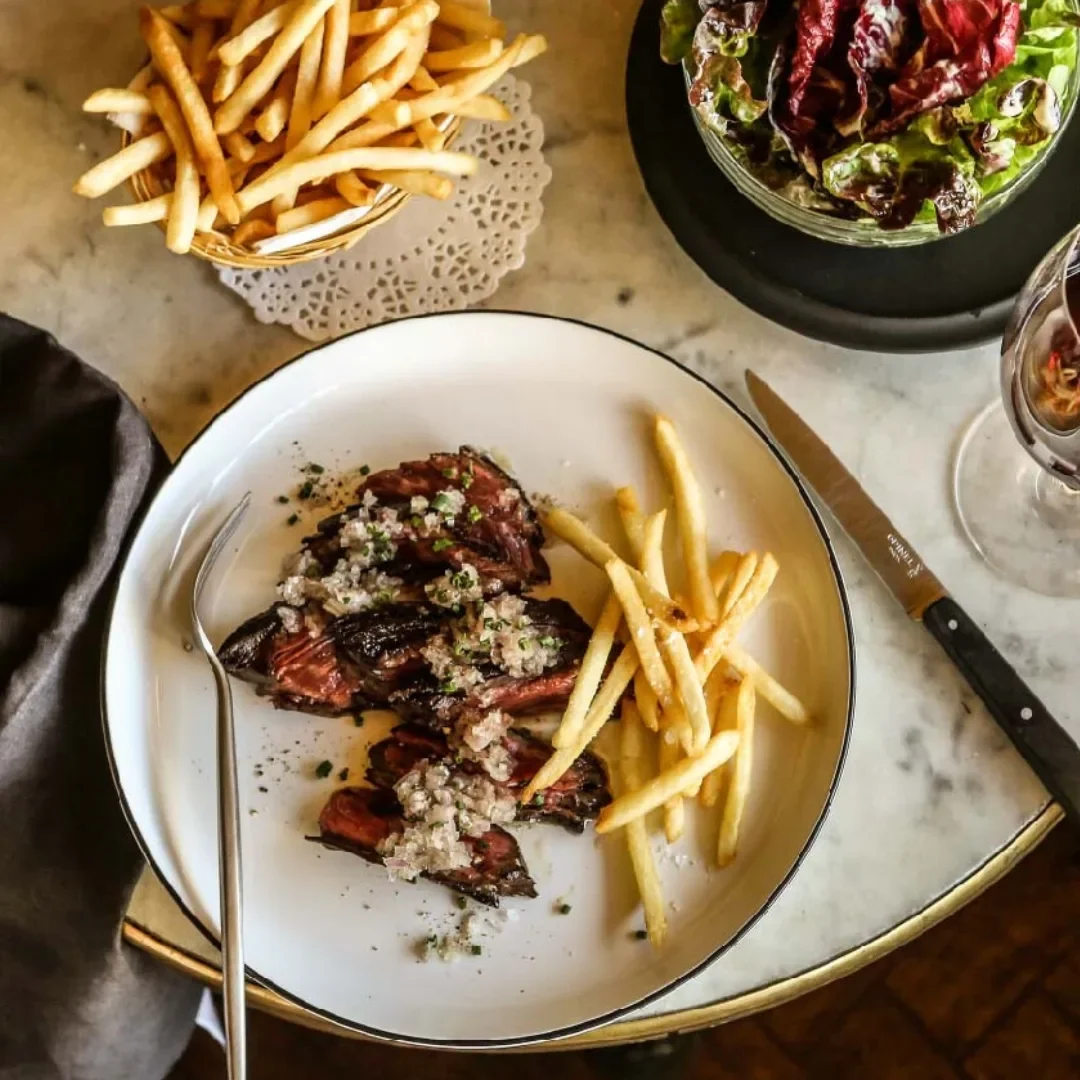
Onglet à l’échalote pairs seared hanger steak with a sharp, fragrant shallot-and-oil dressing. Serve it with potato frites and dressed mesclun for a French bistro-style meal at home.
Ingredients
- 4golden shallots, finely chopped
- 120 mlvegetable oil
- 4 (220 g)beef hanger or flat-iron steaks, at room temperature
- To servefinely chopped chives, potato frites and dressed mesclun
Instructions
- 1
Infuse the shallots
Combine the chopped shallots with 100 ml of the oil in a bowl and season. Leave for 15 minutes so the flavours can develop.
- 2
Cook the steaks
Season the steaks generously. Heat the remaining oil in a large, heavy-based frying pan over high heat. Cook the steaks, turning once, until browned: allow 3–4 minutes per side for medium-rare, or cook to your liking. Transfer to a plate, spoon the shallot oil over the steaks and cover with an upturned bowl. Rest for 10 minutes.
- 3
Slice and serve
Slice the steaks thickly and divide them and the frites among plates. Spoon the shallot mixture and any resting juices over the steaks, scatter with chives and season with pepper. Serve with potato frites and dressed mesclun on the side.
What is onglet à l’échalote?
Onglet à l’échalote is a French steak dish built around onglet, or hanger steak, and a shallot dressing. It draws on the straightforward style of French bistro cooking, where a well-seared cut of beef is served with punchy, simple accompaniments.
Here, finely chopped shallots soften in oil before they are spooned over the rested steak. Frites and dressed mesclun complete the plate with crisp, fresh contrasts.
Nutrition and macros by portion
The nutrition label shows one serving as written: 700 calories, 57g protein, 5g carbs, 52g fat.
| Portion | Adjustment | kcal | Protein | Carbs | Fat |
|---|---|---|---|---|---|
| Lighter | More mesclun, fewer frites | 490 kcal | 40g | 4g | 36g |
| This serving | As written | 700 kcal | 57g | 5g | 52g |
| Hungry | Add extra frites | 1050 kcal | 86g | 8g | 78g |
The steak supplies most of the protein, while the vegetable oil carries much of the fat and the potatoes in the frites provide most of the plate’s carbohydrates. Pairing the frites with dressed mesclun makes a more balanced plate; the calorie estimate depends on how much of the oil and frites is served.
Choosing the steak
Hanger steak: this is the cut named in the dish, prized for its strong beef flavour. Flat-iron steak is the listed alternative and also suits quick cooking in a hot pan.
Room temperature: letting the steaks lose their chill before cooking helps them cook more evenly. Pat their surfaces dry if they are damp so they can brown well.
Make the shallot dressing
Shallots: chop them finely so they soften and their flavour spreads through the oil. The 15-minute stand gives the mixture time to develop before it goes over the steak.
Oil: reserve 20 ml for the pan and use the other 100 ml with the shallots. Spoon the dressing over the meat after cooking, as directed, rather than using it to cook the steaks.
Get a good sear
Hot pan: heat the heavy-based frying pan over high heat before adding the steaks. Leave space between them; if the pan is crowded, work in batches so the meat browns rather than steams.
One turn: cook each side for 3–4 minutes for medium-rare, turning once. Since steak thickness and pans vary, use the recipe’s timing as a guide and cook further if you prefer it more done.
Rest before slicing
Resting: cover the plated steaks with an upturned bowl for 10 minutes. This gives the meat time to settle and collects juices that can be spooned over the slices.
Slicing: cut the steaks thickly and serve soon after resting. Add the shallot mixture and resting juices at the end so their flavour stays prominent.
Build the plate
Frites: serve them alongside the steak for a crisp, hearty accompaniment. Keep them separate from the shallot oil until serving so they retain their texture.
Mesclun: dressed leaves bring a fresh counterpoint to the rich beef and oil. Add the chives and a final seasoning of pepper just before serving.
Recipe notes & tips
- Finely chop the shallots so they sit evenly in the oil.
- Have the steaks at room temperature before they go into the pan.
- Preheat the pan thoroughly to encourage browning.
- Turn the steaks once, then leave them undisturbed while they sear.
- Rest the steaks for the full 10 minutes and keep the juices for serving.
- Serve the frites and dressed mesclun alongside rather than covering them with the shallot oil.
Variations
- Use flat-iron steak: cook it in the same way, adjusting the time to suit its thickness.
- Add parsley: scatter chopped parsley over the steak with the chives.
- Make the shallots sharper: add a little vinegar to the shallot mixture.
- Change the greens: serve with another lightly dressed salad in place of mesclun.
- Swap the frites: serve with boiled or roasted potatoes instead.
Common mistakes to avoid
- Crowded pan: the steaks may steam instead of brown, so cook them in batches if needed.
- Cool pan: the meat can colour poorly, so let the pan heat fully before adding the steaks.
- Overcooking: hanger steak can become firm, so begin checking at the stated medium-rare timing.
- Skipping the rest: juices can run out when slicing, so leave the steaks covered for 10 minutes.
- Slicing too thinly: the steak can cool quickly, so cut it thickly as directed.
- Adding dressing too early: the frites can lose their crispness, so spoon the shallot mixture over the steak at the table.
How to store
Refrigerate leftover steak and shallot mixture in a covered container for up to 3 days. Reheat the steak gently in a pan until warmed through; keep leftover frites separate and re-crisp them in the oven or air fryer.
Frequently asked questions
Can I use flat-iron steak instead of hanger steak?
Yes. Flat-iron steak is the alternative specified in the recipe. Adjust the cooking time to its thickness and your preferred doneness.
How long should I cook the steak for medium-rare?
The recipe gives 3–4 minutes per side in a hot pan. The exact time can vary with steak thickness and pan heat.
Why does the shallot mixture need to stand?
The 15-minute rest gives the chopped shallots time to flavour the oil before it is spooned over the cooked steak.
Do I need to rest the steak?
Yes. Rest it covered for 10 minutes, then spoon the collected juices over the sliced meat.
What should I serve with onglet à l’échalote?
The recipe suggests potato frites and dressed mesclun, with chopped chives scattered over the steak.
Cook it from the original
This recipe comes from gourmettraveller.com.au. Their page has the author’s own photos, notes and tips — the best place to cook it from.
Open the recipe on gourmettraveller.com.au