
Apple Compote French Toast
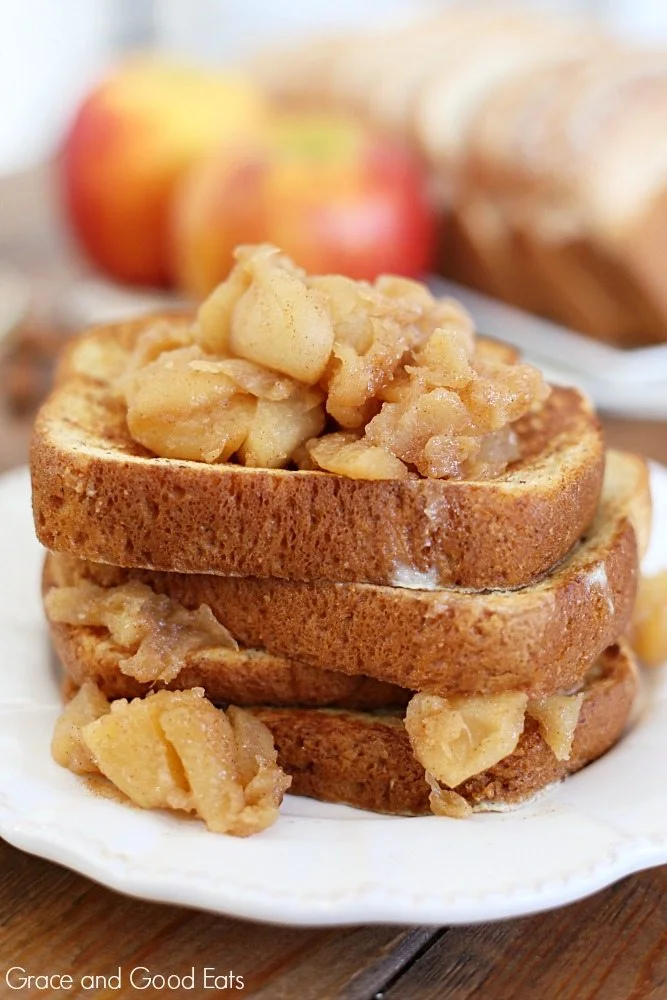
This American-style French toast pairs golden, egg-dipped bread with a gently cooked Honeycrisp apple compote. It makes a cosy breakfast or brunch, with the apples bringing sweetness and a soft, chunky texture to each slice.
Ingredients
- 3Honeycrisp apples, peeled, cored and chopped
- 42 g (3 tbsp)unsalted butter
- 50 g (1/4 cup)brown sugar
- 1/2 tspcinnamon
- 2eggs
- 80 ml (1/3 cup)whole milk
- 1/4 tspcinnamon
- 1 tspvanilla extract
- 8 slicesSara Lee® Artesano™ Golden Wheat Bread
Instructions
- 1
Cook the apples
Put the chopped apples, butter, brown sugar and 1/2 tsp cinnamon in a medium saucepan over low heat. Simmer for 20–30 minutes, until the apples mash easily into a rough paste but still have some chunks.
- 2
Cool the compote
Take the saucepan off the heat and leave the apple mixture to cool slightly.
- 3
Mix the egg
As the apples cool, beat the eggs, milk, 1/4 tsp cinnamon and vanilla together in a shallow bowl.
- 4
Dip the bread
Dip each slice gently into the egg mixture, coating both sides.
- 5
Cook the toast
Cook the coated bread on a griddle or in a large pan over medium heat until golden brown, about 2–3 minutes per side.
- 6
Top and serve
Serve the French toast straight away with the apple compote on top. Add syrup if you like.
What is apple compote French toast?
French toast is bread dipped in an egg-and-milk mixture and cooked until browned; it is a familiar breakfast in the United States. The name suggests a French origin, but versions of soaked bread cooked with egg have a much longer history across different cuisines.
This version adds a simple stovetop compote made from apples, butter, brown sugar and cinnamon. Cooking the topping separately keeps the toast golden while giving it a soft, fruity contrast.
Nutrition and macros by portion
The nutrition label shows one serving as written: 398 calories, 9g protein, 61g carbs, 13g fat.
| Portion | Adjustment | kcal | Protein | Carbs | Fat |
|---|---|---|---|---|---|
| Lighter | Use less butter | 279 kcal | 6g | 43g | 9g |
| This serving | As written | 398 kcal | 9g | 61g | 13g |
| Hungry | Add another slice | 597 kcal | 14g | 92g | 20g |
The bread and brown sugar supply most of the carbohydrates, while butter and whole milk contribute much of the fat. Eggs provide some protein, though the overall serving is not especially protein-rich; serve it with plain yoghurt if you want a more balanced plate.
Why Honeycrisp apples work
Honeycrisp apples bring a sweet-tart flavour and hold some of their shape as they cook. Chopping them before simmering helps them soften evenly, while the final mash leaves a mixture of paste and tender pieces.
Keep the compote gently simmering
Low heat gives the apples time to soften without scorching the sugar or butter. Stir and check them as they cook; the exact time depends on the size of the pieces and how quickly your pan heats.
Dip without soaking
Coat both sides of each slice, but handle the bread gently so it does not become difficult to lift. A shallow bowl makes it easier to turn the slices and distribute the egg mixture.
Look for a golden finish
Cook the bread over medium heat for about 2–3 minutes per side. It is ready when the outside is golden and the egg mixture has set; lower the heat if the surface browns before the centre is cooked.
Serve it straight away
The toast is at its best just after cooking, topped with the slightly cooled compote. Serve it on its own or alongside plain yoghurt or fresh fruit for a more balanced breakfast.
Recipe notes & tips
- Cut the apples into similarly sized pieces so they soften at roughly the same rate.
- Keep the compote at a gentle simmer and stir occasionally to prevent sticking.
- Use a shallow bowl wide enough to dip the bread without bending it.
- Cook in batches if needed, leaving space between slices in the pan.
- Warm the serving plates while the final slices cook to help keep breakfast hot.
Variations
- Add nutmeg: Use a small pinch alongside the cinnamon in the compote.
- Mix the apples: Combine Honeycrisp with another firm apple variety for a different balance of sweet and tart.
- Add a topping: Scatter chopped toasted pecans over the compote just before serving.
- Use maple syrup: Drizzle a little over the finished toast if you prefer extra sweetness.
- Choose thicker bread: Use thick-cut slices and dip them briefly on each side so they hold their shape.
Common mistakes to avoid
- High heat for the apples: The sugar can catch before the fruit softens; keep the saucepan over low heat.
- Overcooking the compote: It can lose all its texture; stop when it mashes easily but still has chunks.
- Soaking the bread: It may tear when lifted; dip gently and coat each side without leaving it submerged.
- Crowding the pan: The slices can cook unevenly; work in batches if they do not fit with space around them.
- Turning too soon: The bread may break before it browns; wait until the first side is golden and set.
How to store
Refrigerate leftover compote and French toast separately in airtight containers for up to 3 days. Reheat the toast in a pan or toaster oven and warm the compote gently in a saucepan or microwave.
Frequently asked questions
Can I make the apple compote ahead?
Yes. Cook it in advance, cool it, then refrigerate it in a covered container for up to 3 days. Reheat gently before serving.
Can I use a different type of apple?
Yes. Choose an apple that keeps some texture as it cooks, and check the compote as it simmers since different varieties soften at different rates.
How do I know when the French toast is cooked?
The outside should be golden brown and the egg mixture should be set. The recipe allows about 2–3 minutes per side over medium heat.
Can I use stale bread?
Yes, slightly stale bread can work well for French toast. Dip it carefully so it takes on the egg mixture without becoming too fragile.
Can I freeze leftovers?
The cooked toast can be frozen, though its texture may soften when reheated. Freeze it separately from the compote, then reheat the toast until hot throughout.
Cook it from the original
This recipe comes from graceandgoodeats.com. Their page has the author’s own photos, notes and tips — the best place to cook it from.
Open the recipe on graceandgoodeats.com