
France-Soir’s moules marinière: Mussels in white wine and cream
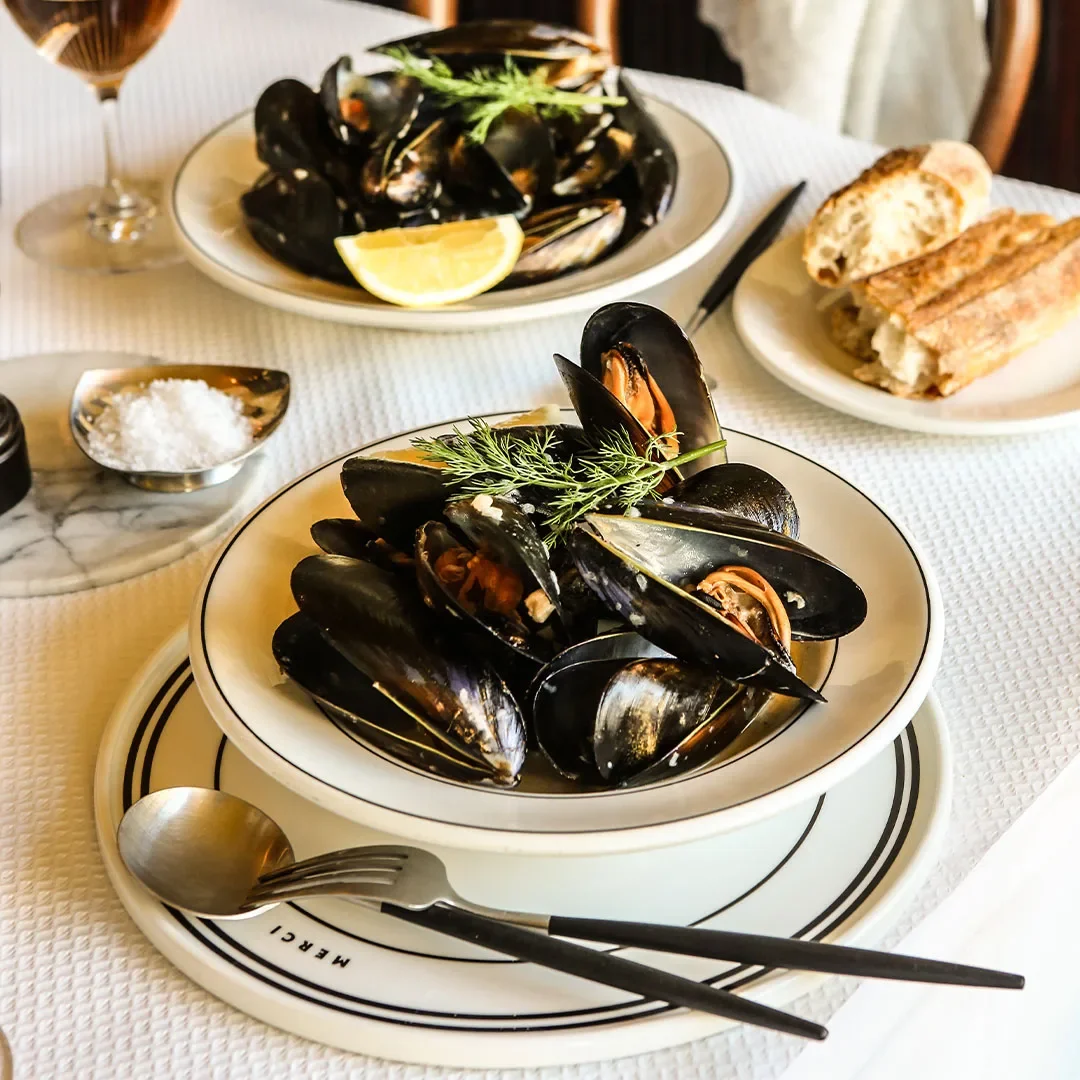
Mussels are steamed until open and served in a creamy white-wine sauce softened with onions and herbs. It is a generous, traditional-style northern French meal, with lemon and baguette to serve alongside.
Ingredients
- 2 tbspvegetable oil
- 2 kgmussels, cleaned and beards removed
- to tastedill sprigs, lemon wedges and baguette, to serve
- 80 gunsalted butter, chopped
- 600 g (about 6)small onions, thinly sliced
- 2 tspdried mixed herbs
- 1bay leaf
- 1 tbspplain flour
- 200 mlwhite wine
- 250 mlfish stock
- 250 mlthickened cream
Instructions
- 1
Make the onion sauce
For the onion sauce, melt the butter in a saucepan over medium-low heat. Add the onions, dried herbs and bay leaf; cook, stirring occasionally, for 10–12 minutes until softened. Raise the heat to medium-high, stir in the flour and cook for 2 minutes. Pour in the wine to deglaze the pan and reduce it by half, about 1–2 minutes. Add the stock, bring to a simmer and cook, stirring occasionally, until reduced by half, about 4–5 minutes. Stir in the cream and bring back to a simmer, then take the pan off the heat. The sauce can be refrigerated for up to 3 days.
- 2
Cook the mussels
Heat the oil in a large saucepan over high heat. Add the mussels, cover tightly and cook for 2 minutes, shaking the pan occasionally, until they begin to open. Add the onion sauce and bring to a simmer, stirring occasionally, for 2–3 minutes, until the mussels have opened.
- 3
Serve with dill
Divide the mussels among serving bowls and scatter over dill. Serve with lemon wedges and baguette on the side.
What are moules marinière?
Moules marinière is a French preparation of mussels cooked in a seasoned liquid, commonly involving wine and aromatics. It is associated with the north of France, where mussels are often served as a hearty meal with bread.
This version makes a soft, creamy onion sauce first, then simmers the mussels in it. The separate sauce-making step gives the onions time to soften and the wine and stock time to reduce before the shellfish goes in.
Nutrition and macros by portion
The nutrition label shows one serving as written: 420 calories, 18g protein, 17g carbs, 34g fat.
| Portion | Adjustment | kcal | Protein | Carbs | Fat |
|---|---|---|---|---|---|
| Lighter | Less cream, more mussels | 294 kcal | 13g | 12g | 24g |
| This serving | As written | 420 kcal | 18g | 17g | 34g |
| Hungry | Larger portion with baguette | 630 kcal | 27g | 26g | 51g |
The mussels provide most of the protein, while the baguette supplies much of the meal's carbohydrate if served. Butter, oil and thickened cream account for much of the fat in the sauce. For a more balanced plate, serve with a green salad or extra vegetables alongside.
Build the onion sauce
Onions: cook them slowly with the butter, herbs and bay leaf until soft rather than browned. This makes a mellow base that works well with the briny mussels.
Wine and stock: reduce each by half as directed, allowing the sauce to concentrate before adding cream. Keep the pan at a steady simmer so it reduces without catching.
Choose and check the mussels
Fresh mussels: use cleaned mussels with their beards removed, as specified. Discard any with cracked shells, and before cooking discard mussels that remain open when tapped.
After cooking: the shells should open as the mussels heat through. Discard any that remain closed after cooking rather than trying to prise them open.
Get the texture right
Creamy sauce: bring the cream just to a simmer, then remove the sauce from the heat before it is added to the mussels. Once everything is together, simmer gently rather than boiling hard.
Tender mussels: follow the short cooking times and keep the lid on for the first stage. Overcooking can make the meat tough, so take the pan off the heat once the shells have opened.
Plan the timing
Sauce ahead: the onion sauce can be made up to 3 days in advance and refrigerated. Reheat it until simmering before adding it to the mussels.
Cook to serve: mussels cook quickly, so prepare the bowls, dill, lemon and baguette before putting them in the pan. Serve promptly while the shells and sauce are hot.
Serve with bread and lemon
Baguette: offer plenty for dipping into the buttery, creamy sauce. A simple green salad can also bring a fresh contrast to the rich sauce.
Lemon and dill: add them at the table or scatter the dill over the bowls just before serving. Their bright, herbal notes lift the flavour of the mussels.
Recipe notes & tips
- Have the sauce and serving bowls ready before you start cooking the mussels.
- Use a large pan with enough room for the mussels to heat evenly.
- Shake the covered pan occasionally so the mussels cook more evenly.
- Keep the sauce at a gentle simmer once it is combined with the mussels.
- Serve the baguette while it is fresh so it is ready for dipping.
Variations
- Fresh herbs: replace the dried mixed herbs with a similar amount of fresh herbs.
- More garlic: add finely chopped garlic to the butter with the onions for a more aromatic sauce.
- Extra brightness: offer additional lemon wedges at the table.
- Herb finish: add chopped parsley with the dill for a different fresh-herb note.
- Wine choice: use a dry white wine that you would be happy to drink with the meal.
Common mistakes to avoid
- Browning the onions: keep the heat medium-low and stir occasionally so they soften without taking on colour.
- Skipping the reductions: reduce the wine and stock by half as directed so the sauce does not stay thin.
- Boiling the cream hard: bring it only to a simmer, then take the sauce off the heat.
- Crowding a small pan: use a large saucepan so the mussels have room to heat and open.
- Overcooking the mussels: remove the pan from the heat as soon as they have opened.
- Keeping closed mussels: discard any that remain closed after cooking.
How to store
The onion sauce can be refrigerated for up to 3 days, as specified. Cooked mussels are best eaten straight away; refrigerate leftovers promptly and reheat gently until piping hot, discarding any mussels that have not opened.
Frequently asked questions
Can I make the sauce ahead?
Yes. The onion sauce can be refrigerated for up to 3 days. Reheat it until simmering before adding it to the mussels.
How can I tell when the mussels are cooked?
They are ready when their shells have opened. Discard any that remain closed after cooking.
Can I use frozen mussels?
This method is written for cleaned, fresh mussels in their shells. If using frozen mussels, follow the pack instructions and adjust the cooking method accordingly.
What should I serve with moules marinière?
Baguette is served alongside in this recipe and is useful for soaking up the sauce. Lemon wedges and dill finish the dish; a simple salad also works well.
Can I leave out the cream?
You can, but the result will no longer have the creamy character of this version. The sauce will be lighter and more wine- and stock-led.
Cook it from the original
This recipe comes from gourmettraveller.com.au. Their page has the author’s own photos, notes and tips — the best place to cook it from.
Open the recipe on gourmettraveller.com.au