
Vitello tonnato
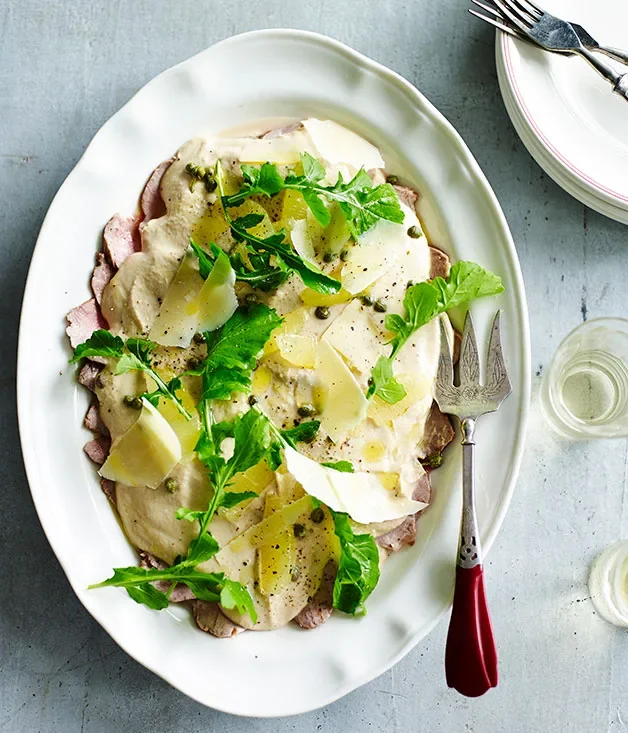
Vitello tonnato pairs thin slices of poached veal with a smooth tuna, egg and caper sauce. Make it ahead and let it rest overnight so the flavours mingle; serve at room temperature with lemon, rocket and Parmesan.
Ingredients
- To servethinly shaved Parmigiano-Reggiano and trimmed rocket leaves
- 2lemons, segmented
- 1 1/2 tbspolive oil
- 2 (1.2 kg)veal girello (see note)
- 1onion, chopped
- 2celery stalks, thinly sliced
- 1carrot, thinly sliced
- 2anchovy fillets
- 3 eachcloves and juniper berries
- 750 mldry white wine
- 250 ml (1 cup)white wine vinegar
- 2fresh bay leaves
- 5eggs, at room temperature
- 500 gcanned tuna
- 1 tbsp, plus extra to servesalted baby capers, rinsed
- 1lemon, juiced
- 60 ml (1/4 cup), plus extra to serveextra-virgin olive oil
Instructions
- 1
Brown the veal
Heat the olive oil in a wide casserole over high heat. Sear the veal on every side until browned, about 3–5 minutes, then lift it out and set aside.
- 2
Cook the vegetables
Add the onion, celery, carrot, anchovies, cloves and juniper berries to the pan. Cook over medium heat, stirring occasionally, until just tender, 6–8 minutes.
- 3
Add the liquid
Return the veal to the pan and deglaze with the white wine and vinegar. Add the bay leaves and enough water to cover the meat.
- 4
Poach the veal
Bring to the boil, then simmer over low heat, turning the veal occasionally, until cooked pink, about 10–15 minutes. It should feel firm but spring back when pressed. Remove the meat and leave it to cool to room temperature.
- 5
Reduce the liquid
Simmer the cooking liquid over high heat until reduced by three-quarters, about 30–40 minutes. Strain it and leave it to cool.
- 6
Hard-boil the eggs
Boil the eggs for 9 minutes. Cool them in cold water, then peel and set aside.
- 7
Blend the sauce
Blend the tuna, capers, lemon juice, extra-virgin olive oil and peeled eggs until smooth.
- 8
Thin the sauce
With the blender running, gradually add enough cooled, reduced cooking liquid—about 160 ml—to give the sauce a slightly runny mayonnaise consistency.
- 9
Slice the veal
Cut the cooled veal thinly across the grain and set the slices aside.
- 10
Layer and chill
Spread tuna sauce over a serving plate and arrange a single layer of veal on top. Spoon on more sauce to cover, then repeat the layers, finishing with a generous layer of sauce. Cover with plastic wrap and refrigerate overnight. Before serving, bring to room temperature and top with capers, lemon segments, rocket and Parmesan shavings, then drizzle with extra-virgin olive oil.
What is vitello tonnato?
Vitello tonnato is an Italian dish of cold, thinly sliced veal dressed with a creamy tuna sauce. It is often served as an antipasto or as part of a celebratory meal.
This version, credited to Australian chef Guy Grossi, poaches the veal with wine, vinegar and aromatics, then uses some of that reduced cooking liquid to season and loosen the sauce.
Nutrition and macros by portion
The nutrition label shows one serving as written: 620 calories, 78g protein, 5g carbs, 30g fat.
| Portion | Adjustment | kcal | Protein | Carbs | Fat |
|---|---|---|---|---|---|
| Lighter | Use less finishing oil | 434 kcal | 55g | 4g | 21g |
| This serving | As written | 620 kcal | 78g | 5g | 30g |
| Hungry | Add bread and salad | 930 kcal | 117g | 8g | 45g |
The veal and tuna provide most of the protein, while the wine, carrot and onion contribute some carbohydrates. Olive oil, eggs and Parmesan contribute much of the fat. For a balanced plate, serve a moderate slice of the dish with plenty of rocket or other salad vegetables.
Why poach girello?
The recipe uses veal girello, a lean, compact cut that can be sliced neatly once cooled. Searing it first gives the cooking liquid a savoury base.
Keep the poach gentle after bringing it to the boil, and use the stated firmness and spring-back test to judge when the veal is ready.
Build the tuna sauce
Tuna, hard-boiled eggs, capers, lemon and olive oil make a thick, tangy dressing. Blend until smooth before adjusting its texture.
Reduced cooking liquid adds flavour as well as moisture. Pour it in gradually so the sauce stays thick enough to coat the veal.
Slice across the grain
Let the meat cool fully before slicing; warm veal is harder to cut into even, thin pieces. Cut across the grain to make each slice easier to eat.
A sharp knife and steady strokes help keep the slices intact. If the meat feels soft, chill it briefly before cutting.
Layer and rest overnight
Spread sauce beneath and between the veal slices so each layer is coated, then finish with sauce on top. The overnight rest gives the dressing time to settle into the meat.
The total time is 90 minutes, but allow for the separate overnight chilling period before serving.
Serve at room temperature
Take the dish out of the fridge in time for it to lose its chill before serving. Finish with the lemon segments, rocket, shaved Parmesan, extra capers and a drizzle of olive oil.
Serve it as a starter or alongside a crisp green salad and bread to make a more substantial meal.
Recipe notes & tips
- Use a wide casserole so the veal can sit in the cooking liquid without being tightly packed.
- Keep the poaching liquid at a gentle simmer after it comes to the boil.
- Cool the reduced cooking liquid before adding it to the tuna mixture.
- Add the liquid to the blender in small amounts and stop once the sauce is pourable but still coats a spoon.
- Chill the assembled dish overnight, then bring it to room temperature before serving.
- Use a sharp knife to cut the veal into thin, even slices across the grain.
Variations
- More lemon: Add extra lemon juice to the sauce for a sharper finish.
- Extra capers: Scatter additional rinsed capers over the finished dish.
- Herb garnish: Add chopped parsley alongside the rocket before serving.
- Salad plate: Serve the veal over a bed of rocket for a more generous salad-style presentation.
- Different tuna: Use tuna packed in spring water or oil, draining it well before blending.
Common mistakes to avoid
- Boiling hard throughout: A rolling boil can make the veal cook unevenly; lower the heat to a gentle simmer.
- Overcooking the veal: It can become dry and firm; check for a firm texture that springs back when pressed.
- Adding liquid too quickly: The sauce may turn too thin; blend in the reduced liquid gradually.
- Slicing warm meat: The slices can tear; cool the veal to room temperature first.
- Skipping the rest: The layers have less time to meld; refrigerate the assembled dish overnight.
- Serving straight from the fridge: The flavours and texture can seem muted; bring it to room temperature first.
How to store
Keep the assembled dish covered in the fridge and eat within 2 days. Bring only the amount you plan to serve to room temperature; this dish is best served chilled slightly or at room temperature rather than reheated.
Frequently asked questions
Can I make vitello tonnato ahead?
Yes. Assemble it, cover it and refrigerate overnight as directed. Add the fresh garnishes just before serving.
How do I know when the veal is cooked?
The recipe aims for veal cooked pink; it should feel firm but spring back when pressed. Follow the stated 10–15 minute poaching time as a guide.
What consistency should the tuna sauce be?
It should be smooth and slightly runny, like mayonnaise that can be spread over the meat. Add the cooled cooking liquid a little at a time to reach that texture.
Can I use another cut of veal?
Girello is the specified cut because it cooks as a compact piece and slices neatly. If using another cut, choose one suitable for poaching and check it carefully for doneness.
Can I serve it cold?
Yes, but the recipe recommends letting it come to room temperature before serving. Keep it refrigerated until shortly before the meal.
What can I serve with it?
Rocket and lemon are part of the suggested finish. Bread or a simple green salad also makes a good accompaniment.
Cook it from the original
This recipe comes from gourmettraveller.com.au. Their page has the author’s own photos, notes and tips — the best place to cook it from.
Open the recipe on gourmettraveller.com.au