
1 Dough= Crescent Rolls & Cinnamon Rolls
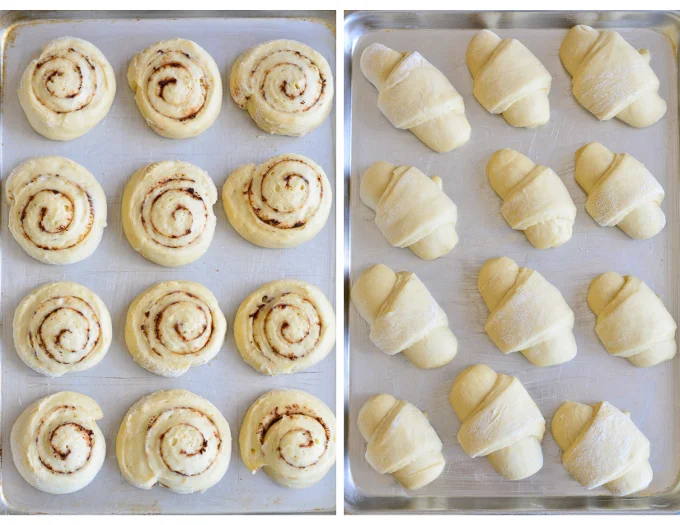
One enriched yeast dough makes both soft crescent dinner rolls and cinnamon rolls with a sweet vanilla glaze. It is a useful batch-baking recipe when you want two different rolls from one dough.
Ingredients
- 2 packetsdried yeast
- 475 ml (2 cups), at 43–46°C (110–115°F)warm water
- 225 g (1 cup plus 2 tablespoons), dividedsugar
- 311 g (1 cup plus 6 tablespoons), melted and no hotter than 46°C (115°F), dividedbutter
- 6eggs, beaten
- 7.5 ml (1½ teaspoons)salt
- 1.125 kg (9 cups)plain flour
- About 100 g (½ cup)sugar
- About 20 ml (4 teaspoons)ground cinnamon
- 180 ml (¾ cup)double cream
- 84 g (6 tablespoons)butter
- 7.5 ml (1½ teaspoons)vanilla extract
- 480–720 g (4–6 cups)icing sugar
Instructions
- 1
Mix the dough
In a large bowl, stir the yeast with 2 tablespoons of the sugar and the warm water; leave until it starts to foam. Add 1 cup of melted butter, ensuring it is no hotter than 46°C (115°F), then whisk in the remaining 1 cup of sugar and the beaten eggs. Mix in 4 cups of flour and the salt, then use a wooden spoon to stir in another 4½ cups until combined; the dough will remain slightly sticky. Scrape down the bowl as needed, cover, and leave to rise until doubled, about 2 hours. Punch it down, then either continue with shaping or cover and refrigerate for up to 4 days.
- 2
Prepare crescent trays
For crescent rolls, grease 4 large baking sheets. Melt the remaining 6 tablespoons of butter in a dish and set it aside.
- 3
Shape crescents
Use the remaining ½ cup of flour to dust the work surface. Divide the dough into 4 portions and work with one portion at a time, dusting it enough to prevent sticking. Roll each portion into a circle about 6–8 mm (¼–⅓ inch) thick, keeping flour underneath. Brush with some melted butter and cut into 12 wedges. Starting at each wide end, roll a wedge towards its point. Arrange the rolls point-side down on a greased baking sheet, cover loosely with a thin towel or plastic wrap and leave to rise for about 2 hours.
- 4
Prepare cinnamon trays
For cinnamon rolls, grease 2 large baking sheets. Melt the remaining 6 tablespoons of butter in a dish and set aside.
- 5
Shape cinnamon rolls
Dust the work surface with the remaining ½ cup of flour and divide the dough in half. Roll each half into a rectangle 6–8 mm (¼–⅓ inch) thick, keeping enough flour underneath to prevent sticking. Brush with melted butter, then sprinkle lightly with sugar and cinnamon, using about ¼ cup of sugar and 2 teaspoons of cinnamon per half. Roll each rectangle from a long edge to the other. With the seam underneath, mark out 12 even rolls if desired, then use a doubled piece of thread to cut through the dough by crossing and pulling the ends upwards.
- 6
Proof the rolls
Place the cinnamon rolls on greased baking sheets, 12 per sheet, and leave them to rise for 2 hours.
- 7
Make both kinds
To make both types, grease 3 large baking sheets and melt the remaining 6 tablespoons of butter. Divide the dough in half: use one half to make 12 cinnamon rolls, then divide the remaining dough in half again to make two circles of crescent rolls, for 24 crescents.
- 8
Bake the rolls
Heat the oven to 200°C (400°F) with a rack in the middle. Bake one tray at a time for 10 minutes, until lightly browned; rotate the tray halfway through if your oven browns unevenly.
- 9
Finish and glaze
Brush the crescent rolls with melted butter as soon as they come out of the oven. For the glaze, microwave the cream and butter together until the butter melts. Add the vanilla, then beat in icing sugar until the glaze reaches your preferred consistency. Glaze the cinnamon rolls while warm and serve.
What are crescent and cinnamon rolls?
Crescent rolls are shaped from wedges of yeast dough, while cinnamon rolls are rolled into a log, sliced and topped with icing. Both belong to a broad tradition of enriched, yeasted baking found in many European and North American kitchens.
This recipe uses one soft, egg-and-butter dough for both shapes. That makes it practical for a mixed batch: savoury-leaning dinner rolls alongside sweet, spiced rolls.
Nutrition and macros by portion
The nutrition label shows one serving as written: 239 calories, 3g protein, 35g carbs, 9g fat.
| Portion | Adjustment | kcal | Protein | Carbs | Fat |
|---|---|---|---|---|---|
| Lighter | Use less glaze | 167 kcal | 2g | 25g | 6g |
| This serving | As written | 239 kcal | 3g | 35g | 9g |
| Hungry | Serve an extra roll | 359 kcal | 5g | 53g | 13g |
The flour and sugars provide most of the carbohydrates, while butter, eggs and cream account for much of the fat; eggs and flour also contribute protein. Balance a roll with a source of protein and fruit or vegetables, such as eggs and sliced fruit at breakfast.
The enriched dough
Yeast: Let it foam in warm water with a little sugar before adding the other ingredients. The water should be warm rather than hot, since excessive heat can impair the yeast.
Flour and eggs: The eggs and butter give the dough richness, while the flour provides structure. The dough is meant to stay a little sticky, so resist adding lots of extra flour during mixing.
Rolling and shaping
Crescent wedges: Roll each portion into a thin circle, cut it into 12 wedges and roll each wedge from its broad end towards the point. Keep the point underneath on the tray so the roll is less likely to unfurl.
Cinnamon spirals: Roll the dough into rectangles and spread on butter before adding cinnamon and sugar. Cutting with thread can help avoid squashing the spirals as a knife might.
Proofing takes time
First rise: The dough needs about 2 hours to double in bulk, though the exact time depends on the warmth of the room. Look for a visibly expanded, airy dough rather than relying on the clock alone.
Second rise: The shaped rolls also rise for about 2 hours. Leave space between them on the trays, as they will expand before and during baking.
Baking and doneness
Bake one tray at a time at 200°C (400°F) for 10 minutes, as the method directs. The rolls should be lightly browned; if your oven has hot spots, rotate the tray halfway through.
Brush the crescents with melted butter straight after baking. Glaze the cinnamon rolls while they are still warm so the icing settles over the spirals.
Serving ideas
Serve the crescents warm with soup, a salad or a roast dinner. Their buttery flavour also works with cheese or a savoury spread.
The cinnamon rolls are sweet enough to serve as a breakfast treat or alongside tea or coffee. If serving both at once, offer the crescents first with the meal and the iced rolls afterwards.
Recipe notes & tips
- Keep the melted butter for the dough below 46°C (115°F) before mixing it in.
- Dust the rolling surface lightly and add more flour only if the dough begins to stick.
- Use a pizza cutter to divide crescent circles neatly into wedges.
- Use doubled thread to slice cinnamon rolls without pressing down on their shape.
- Bake one tray at a time and check for light browning at the 10-minute mark.
- Add icing sugar gradually to the glaze so you can control its thickness.
Variations
- More cinnamon: Add a little extra ground cinnamon to the filling for a more pronounced spice flavour.
- Less glaze: Drizzle a smaller amount of icing over the warm cinnamon rolls.
- Citrus glaze: Replace the vanilla with a little finely grated lemon zest.
- Plain crescents: Leave the crescent rolls unbrushed after baking for a less buttery finish.
- Mixed batch: Shape some of the dough as crescents and the rest as cinnamon rolls, following the recipe's divided-dough method.
Common mistakes to avoid
- Hot water: Water that is too hot can impair the yeast; check that it is within the specified 43–46°C range.
- Too much flour: Extra flour can make the rolls dense; keep the dough slightly sticky and flour the surface sparingly.
- Dough sticking: Add a light dusting beneath the dough and on the rolling pin rather than working in a large amount of flour.
- Loose crescent point: Place each roll point-side down on the tray to help it stay in place.
- Squashed spirals: Cut cinnamon rolls with doubled thread, pulling it through instead of pressing hard with a knife.
- Overbaking: Check at 10 minutes and take the rolls out when lightly browned.
How to store
The unshaped dough can be covered and refrigerated for up to 4 days, as specified in the method. Store baked rolls in an airtight container at room temperature for up to 2 days; warm briefly in a low oven before serving. Keep glazed cinnamon rolls covered, as the icing can become sticky.
Frequently asked questions
Can I make the dough ahead?
Yes. After the first rise, punch it down, cover it and refrigerate for up to 4 days. Bring it out when you are ready to shape the rolls.
How do I know the yeast is active?
After mixing it with warm water and sugar, it should begin to foam. If it does not, check the yeast and water temperature before continuing.
Why is the dough sticky?
The method says the dough will still be a little sticky after mixing. Use flour to dust the work surface and dough while rolling rather than adding a lot to the dough itself.
Can I make only crescent rolls or only cinnamon rolls?
Yes. Follow the relevant shaping instructions and use the dough for one style. The recipe's listed quantities are designed to make a large batch.
How do I cut cinnamon rolls evenly?
Mark the log at even intervals first if helpful, then cut with doubled thread. Cross the thread over the dough and pull the ends through.
Can I freeze the baked rolls?
Freeze the baked rolls in an airtight container or freezer bag. Defrost them and warm briefly in the oven; adding the glaze after reheating helps keep it from becoming messy.
Cook it from the original
This recipe comes from garnishandglaze.com. Their page has the author’s own photos, notes and tips — the best place to cook it from.
Open the recipe on garnishandglaze.com