
Tsukemen ramen with chashu pork and black garlic-miso bomb
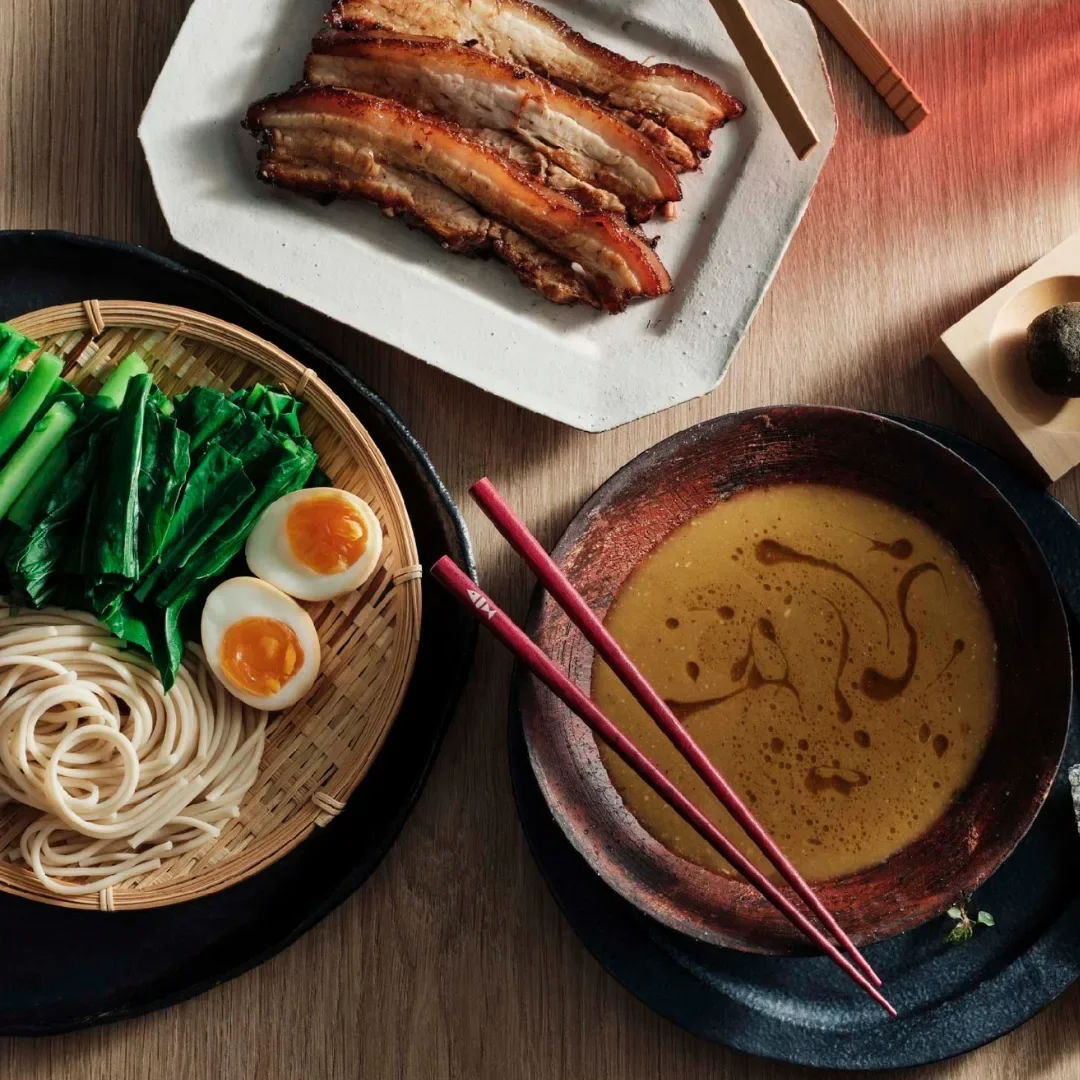
Tsukemen is a Japanese dipping-noodle dish: chilled, springy ramen is served separately from a rich, hot broth. This version pairs pork chashu and classic toppings with a savoury black garlic and miso paste stirred into each bowl.
Ingredients
- 15 ml (1 tbsp)grapeseed oil
- 500 gthick frozen ramen noodles (see note)
- for drizzlingsesame oil
- 1 bunchChinese broccoli, trimmed, cut into 10 cm lengths and blanched
- 4ajitama (see recipe), halved
- 2 sheetstoasted nori, quartered
- 2spring onions, thinly sliced
- —Chashu pork
- 2garlic cloves, crushed
- 20 gginger, finely grated
- 15 ml (1 tbsp) eachmirin and sake
- 110 mlkoikuchi shoyu (Japanese dark soy; see note)
- 60 ml (1/4 cup)usukuchi shoyu (Japanese light soy; see note)
- 15 ml (1 tbsp)caster sugar
- 750 gboneless pork belly, skin on
- —Black garlic-miso bomb
- 1 sheetnori, toasted and torn
- 30 ml (2 tbsp)roasted white sesame seeds
- 5 ml (1 tsp)dashi powder (see note)
- 1 headblack garlic
- 30 ml (2 tbsp)white miso paste
- 1.25 ml (1/4 tsp)ground white pepper
- —Tsukemen broth
- 15 ml (1 tbsp)neutral-flavoured oil
- 500 gcoarsely minced pork
- 1onion, finely chopped
- 1 largeGranny Smith apple, grated
- 2garlic cloves, crushed
- 30 ml (2 tbsp)ginger, finely grated
- 2 litrespork stock
- 8 g eachdried shiitake mushrooms and katsuobushi (bonito flakes; see note), ground to a powder in a spice grinder
Instructions
- 1
Braise the pork
For the chashu, put all the chashu ingredients in a large saucepan. Cover with cold water and bring to the boil. Turn the heat down low, cover and braise for 2–2½ hours, until the pork is tender. Leave it to cool in the braising liquid, then refrigerate until chilled. Slice the pork 5 mm thick.
- 2
Mix the garlic paste
For the black garlic-miso bombs, grind the nori, sesame seeds and dashi powder finely in a spice grinder. Halve the black garlic horizontally and squeeze the cloves from their skins into a bowl. Stir in the miso, ground nori mixture and white pepper. Shape into 4 balls and set aside.
- 3
Make the broth
Heat the oil in a large saucepan over high heat. Add the pork mince and cook for 10–12 minutes, breaking up any lumps with a wooden spoon, until deeply browned. Lower the heat to medium, add the onion, apple, garlic and ginger, and cook for 4–5 minutes, stirring, until lightly caramelised. Add the pork stock and bring to the boil. Lower the heat to medium-high and simmer for 25–30 minutes, until reduced to 1 litre. Take the pan off the heat and strain the broth through a fine sieve into a clean saucepan, pressing the solids to extract their flavour. Whisk in the shiitake-bonito powder.
- 4
Char the chashu
Heat the oil in a large frying pan over medium-high heat. Add the pork belly slices and cook for 2–3 minutes, turning once, until lightly charred and warmed through. Remove from the pan.
- 5
Cook the noodles
Meanwhile, cook the noodles in a large saucepan of boiling water for 1–2 minutes, until cooked but still firm. Drain and rinse under cold running water.
- 6
Serve the bowls
Bring the broth to a gentle simmer and divide it between small serving bowls. Add one black garlic-miso bomb to each bowl and whisk to combine, then drizzle with sesame oil. Serve the hot broth alongside the noodles, chashu, Chinese broccoli, ajitama, nori and spring onion.
What is tsukemen?
Tsukemen is a Japanese ramen style in which noodles and concentrated dipping broth are served separately. Diners dip the noodles into the broth rather than eating them in a bowl of soup.
This version builds a robust pork broth and serves it with chashu, egg, greens and nori. The black garlic-miso bomb melts into the hot broth, adding a deep, savoury finish.
Nutrition and macros by portion
The nutrition label shows one serving as written: 1060 calories, 57g protein, 59g carbs, 65g fat.
| Portion | Adjustment | kcal | Protein | Carbs | Fat |
|---|---|---|---|---|---|
| Lighter | Less pork belly, more greens | 742 kcal | 40g | 41g | 46g |
| This serving | As written | 1060 kcal | 57g | 59g | 65g |
| Hungry | Add extra ramen noodles | 1590 kcal | 86g | 89g | 98g |
The noodles and apple supply most of the carbohydrate, while pork belly and minced pork contribute much of the fat and protein. For a more balanced plate, serve a generous amount of the Chinese broccoli alongside the noodles and pork.
Why the pork has two roles
Chashu: Pork belly braises gently in water with garlic, ginger, mirin, sake, sugar and two kinds of soy. Cooling it in its cooking liquid helps keep the meat moist before it is sliced and briefly charred.
Broth: Minced pork is browned separately to give the stock a roasted, meaty base. Onion, apple, garlic and ginger are cooked until lightly caramelised before the stock goes in.
Build flavour in stages
Brown first: Give the minced pork time to take on a deep colour, breaking it up as it cooks. This step is key to a full-bodied broth.
Reduce next: Simmer the stock until it measures 1 litre, then strain and add the ground shiitake and bonito. The reduction concentrates the broth, while the powdered ingredients bring a further savoury note.
Get the texture right
Noodles: Cook them just until firm, then rinse under cold water to stop the cooking and keep them springy. Thick frozen ramen needs only 1–2 minutes in boiling water according to this method.
Chashu: Slice the chilled pork to 5 mm thickness, then fry it briefly until warmed and lightly charred. Avoid cooking it for too long in the pan, which can dry the edges.
The black garlic-miso bomb
Ground nori, sesame and dashi are mixed with black garlic, white miso and pepper, then shaped into four portions. Whisk one into each bowl of hot broth just before serving so it dissolves evenly.
The paste is prepared separately from the broth, making it easy to distribute the same seasoning to each serving. Keep the broth at a gentle simmer when you add it.
Set up the toppings
Prepare the Chinese broccoli and ajitama before bringing the broth back to a simmer. Slice the spring onions and quarter the toasted nori so everything is ready to serve.
Arrange the noodles and toppings beside the small bowls of broth. This keeps the noodles separate until each bite is dipped.
A meal to plan ahead
The chashu needs 2–2½ hours to braise and time to cool and chill, while the broth takes a further 25–30 minutes to reduce. Make those components ahead if you want to keep the final cooking and serving steps short.
Cook and rinse the noodles shortly before serving. Reheat the broth gently and warm the sliced pork in the frying pan as directed.
Recipe notes & tips
- Let the chashu cool completely in its braising liquid before chilling and slicing.
- Brown the mince in a roomy pan so it can develop colour instead of steaming.
- Measure the broth after reducing to check that it has reached 1 litre.
- Rinse the cooked noodles under cold running water to keep them firm.
- Whisk each garlic-miso bomb into a bowl of hot broth just before serving.
- Keep the noodles and broth separate until you are ready to eat.
Variations
- Extra greens: Serve with additional blanched Chinese broccoli alongside the listed toppings.
- More heat: Add chilli oil to the broth at the table.
- Mushroom accent: Add sliced shiitake mushrooms to the toppings for a more pronounced mushroom flavour.
- Noodle swap: Use another thick ramen noodle, adjusting the cooking time to its packet directions.
- Topping change: Replace the spring onion garnish with finely sliced leek.
Common mistakes to avoid
- Skipping the chill: Warm chashu is harder to slice neatly; cool it in the braising liquid and refrigerate before cutting.
- Under-browning the mince: Pale mince gives the broth less depth; cook it until deeply browned before adding the vegetables.
- Over-reducing the broth: A smaller volume can become too concentrated; stop when it reaches 1 litre.
- Overcooking the noodles: Soft noodles lose their spring; cook only until firm and rinse promptly.
- Serving the noodles in the broth: They can soften while sitting; keep them separate and dip as you eat.
How to store
Refrigerate the chashu and broth separately in covered containers for up to 3 days. Reheat the broth gently and warm the pork in a frying pan; cook and rinse the noodles fresh for the best texture. Store cooked noodles separately and use within 1 day.
Frequently asked questions
Can I make the chashu ahead?
Yes. Braise it, cool it in the cooking liquid and refrigerate it until chilled, as directed. Slice and briefly char it when you are ready to serve.
Why are the noodles rinsed after cooking?
Rinsing under cold running water stops them cooking and helps them stay firm and springy. That texture suits dipping into hot broth.
Can I use fresh ramen noodles?
The recipe specifies thick frozen ramen noodles. If using fresh noodles, follow their packet cooking instructions and stop when they are cooked but still firm.
What does the black garlic-miso bomb do?
It seasons the broth with black garlic, miso, nori, sesame, dashi and white pepper. Whisk one of the four balls into each serving bowl.
How do I know when the broth is reduced enough?
The method calls for simmering until the broth has reduced from 2 litres of stock to 1 litre. Measure it if you are unsure.
Cook it from the original
This recipe comes from gourmettraveller.com.au. Their page has the author’s own photos, notes and tips — the best place to cook it from.
Open the recipe on gourmettraveller.com.au