
Gluten-Free Orange Chicken
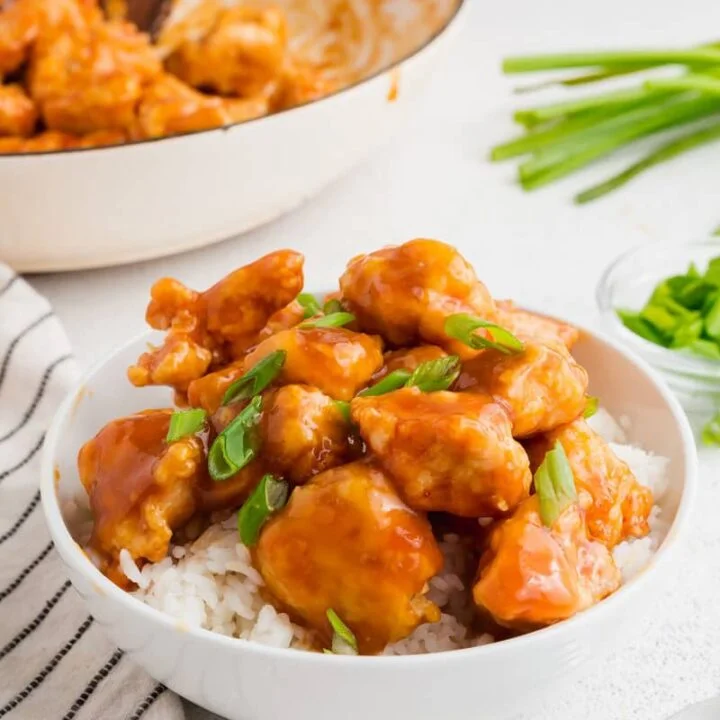
Gluten-free orange chicken pairs crisp, battered chicken pieces with a sweet, tangy orange sauce. Make it at home when you want a takeout-style meal, served hot over rice.
Ingredients
- 240 ml (1 cup)orange juice, from 1 large orange (zest it first)
- 67 g (⅓ cup)granulated sugar
- 30 ml (2 tablespoons)rice vinegar or white vinegar
- 45 ml (3 tablespoons)gluten-free soy sauce or tamari
- ½ teaspoonground ginger
- ½ teaspoongarlic powder
- 8 g (1 tablespoon)cornflour
- Zest from 1 orangeorange zest
- 4skinless chicken breasts, cut into 2.5 cm (1-inch) pieces
- 3eggs, whisked
- 60 g (½ cup)all-purpose gluten-free flour blend
- 64 g (½ cup)cornflour
- 30 ml (2 tablespoons)water
- As neededhigh-smoke-point oil, such as avocado oil, for frying
Instructions
- 1
Start the sauce
Put the orange juice, sugar, vinegar, gluten-free soy sauce, ginger and garlic powder in a large pan or wok. Heat over a medium heat for 3–5 minutes.
- 2
Mix the slurry
In a small bowl, whisk 1 tablespoon of cornflour with 2 tablespoons of water to make a smooth paste. Whisk it into the orange sauce.
- 3
Thicken the sauce
Cook the sauce for a further 5 minutes, until it starts to thicken.
- 4
Add the zest
Take the thickened sauce off the heat and stir in the orange zest. Set it aside.
- 5
Mix the coating
Stir the gluten-free flour blend and ½ cup of cornflour together in a shallow dish.
- 6
Whisk the eggs
Whisk the eggs in a separate shallow dish.
- 7
Coat the chicken
Dip each piece of chicken in the egg, covering all sides, then coat it in the flour mixture. Put the coated pieces on a separate plate and repeat with the remaining chicken.
- 8
Heat the oil
Pour 5–7.5 cm (2–3 inches) of oil into a heavy-based pan and heat over a medium-high heat. If the oil starts to smoke, lower the heat.
- 9
Fry in batches
Add chicken pieces to the pan in batches, taking care not to crowd them.
- 10
Cook until browned
Cook each batch for 3–4 minutes, turning the pieces halfway through, until browned on all sides and cooked through.
- 11
Drain the chicken
Transfer the cooked chicken to a plate lined with kitchen paper. Repeat until all the chicken is cooked.
- 12
Coat in sauce
When all the chicken is cooked, add it to the pan with the orange sauce and toss to coat.
- 13
Serve hot
Serve the orange chicken hot over rice.
What is orange chicken?
Orange chicken is a takeout-style dish associated with American Chinese cooking: crisp chicken is coated in a sweet, citrusy sauce. This version uses a gluten-free flour blend and gluten-free soy sauce or tamari.
Sauce first: simmering the orange juice and seasonings, then thickening them with cornflour, gives the chicken a glossy coating. Adding the zest off the heat keeps its bright orange aroma.
Nutrition and macros by portion
The nutrition label shows one serving as written: 518 calories, 33g protein, 65g carbs, 13g fat.
| Portion | Adjustment | kcal | Protein | Carbs | Fat |
|---|---|---|---|---|---|
| Lighter | Less coating, more vegetables | 363 kcal | 23g | 46g | 9g |
| This serving | As written | 518 kcal | 33g | 65g | 13g |
| Hungry | Larger chicken portion | 777 kcal | 50g | 98g | 20g |
The chicken and eggs provide most of the protein, while the flour coating, sugar and rice served alongside contribute carbohydrates. Frying oil and eggs contribute fat. Serve a moderate portion over rice with vegetables on the side to balance the plate.
Build the orange sauce
Citrus base: juice from a large orange supplies the sauce's fruity flavour, while sugar and vinegar balance sweetness with tang. Rice vinegar is the listed choice, though white vinegar can be used instead.
Thickener: whisk the tablespoon of cornflour with water until smooth before adding it to the pan. This helps it blend into the sauce rather than forming lumps.
Get the coating right
Egg layer: dip each chicken piece into the whisked egg and cover every side. This gives the flour blend and cornflour something to cling to.
Dry coating: combine the gluten-free flour blend with the larger portion of cornflour in a shallow dish. Coat the pieces thoroughly, then set them aside on a separate plate before frying.
Fry in manageable batches
Oil depth: the method calls for 5–7.5 cm of oil in a heavy-based pan. Keep an eye on it as it heats and turn the heat down if it begins to smoke.
Batch size: leave space around the chicken pieces rather than crowding the pan. Fry each batch for 3–4 minutes, turning halfway, until the pieces are browned and cooked through.
Keep the chicken crisp
Drain first: lift the cooked pieces onto a kitchen-paper-lined plate so excess oil can drain while the remaining batches cook.
Sauce at the end: toss the chicken with the sauce only after all the pieces are cooked. Serve promptly over rice for the best contrast between the coating and the glossy sauce.
What to serve with it
Rice: serve the chicken over rice as directed, which catches any extra orange sauce. Plain steamed rice keeps the citrus flavour in focus.
Vegetables: add a side of steamed broccoli or lightly cooked green vegetables if you want a more varied plate. Keep the chicken and sauce as the main event.
Recipe notes & tips
- Zest the orange before juicing it, as the recipe directs.
- Use a shallow dish for each coating step to make dipping and covering the chicken easier.
- Whisk the cornflour slurry until smooth before adding it to the sauce.
- Fry the chicken in batches so the pan is not overcrowded.
- Lower the heat if the oil starts to smoke.
- Toss the chicken in the sauce just before serving.
Variations
- Use tamari: choose it instead of gluten-free soy sauce if that is your preferred option.
- Change the vinegar: use white vinegar in place of rice vinegar.
- Add chilli: stir a little chilli into the sauce for a spicy variation.
- Serve with noodles: use cooked noodles instead of rice under the chicken.
- Add vegetables: serve with steamed broccoli or another green vegetable.
Common mistakes to avoid
- Lumpy sauce: whisk the cornflour with water into a smooth paste before adding it.
- Patchy coating: cover all sides of each piece in egg, then in the flour mixture.
- Crowded pan: fry in batches so the chicken has room in the oil.
- Smoking oil: reduce the heat if the oil begins to smoke.
- Soggy coating: wait until all the chicken is cooked before tossing it in the sauce.
- Uneven browning: turn the chicken halfway through the 3–4 minute cooking time.
How to store
Refrigerate leftovers in a covered container for up to 3 days. Reheat until piping hot; the coating may soften once stored with the sauce.
Frequently asked questions
Can I use tamari instead of gluten-free soy sauce?
Yes. The recipe lists gluten-free soy sauce or tamari as alternatives.
Can I use white vinegar?
Yes. White vinegar can replace the rice vinegar in the sauce.
How do I know when the chicken is cooked?
Follow the recipe's cue: after 3–4 minutes, the pieces should be browned on all sides and cooked through.
Why does the sauce need cornflour?
The cornflour slurry thickens the orange sauce so it can coat the chicken.
Can I prepare the sauce ahead?
You can make the sauce ahead and keep it covered in the fridge. Reheat it before tossing it with freshly fried chicken.
What should I serve with orange chicken?
Serve it hot over rice, as the recipe suggests. A side of steamed vegetables also works well.
Cook it from the original
This recipe comes from glutenfreepalate.com. Their page has the author’s own photos, notes and tips — the best place to cook it from.
Open the recipe on glutenfreepalate.com