
Pavlova Dessert
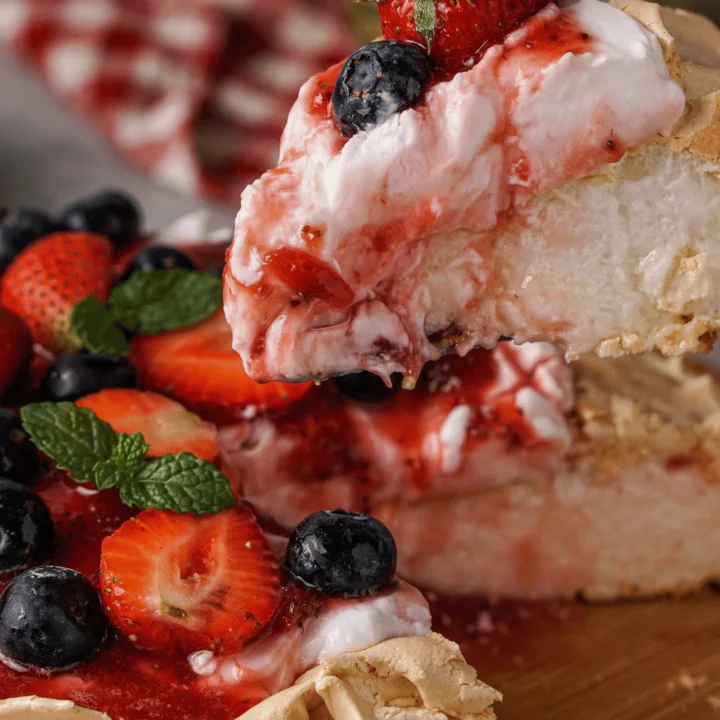
Pavlova is a crisp, delicate meringue with a soft, marshmallow-like centre, finished here with whipped cream, berries, strawberry sauce and mint. It makes a striking summer dessert, and most of the baking time is hands-off.
Ingredients
- 5egg whites
- 200 g (1 cup)fine granulated sugar
- 5 ml (1 tsp)pure vanilla extract
- 10 ml (2 tsp)lemon juice
- 15 ml (1 tbsp)cornflour
- 360 ml (1½ cups)sweetened whipped cream
- 120 ml (½ cup)strawberry sauce
- about 38 g (¼ cup)fresh strawberries
- about 38 g (¼ cup)fresh blueberries
- to tastemint leaves
Instructions
- 1
Prepare the oven
Heat the oven to 135°C (275°F). Line a half-sheet pan with baking parchment or a silicone baking mat.
- 2
Whip the whites
In a large mixing bowl, whisk the egg whites at medium-high speed with a hand mixer.
- 3
Build the meringue
Add the sugar gradually, one tablespoon at a time, leaving about 20–30 seconds between additions. When all the sugar is incorporated, add the vanilla extract and lemon juice, then whisk until stiff peaks form. Fold the cornflour into the meringue.
- 4
Shape the pavlova
Spoon the mixture onto the lined tray. If you like, use the back of a large spoon to make decorative peaks, keeping the edges fairly high and forming a dip in the centre.
- 5
Bake until dry
Bake for 90 minutes, or until the pavlova feels firm and dry in the centre without browning on top.
- 6
Cool completely
Leave the pavlova to cool completely before serving; this takes at least another hour.
- 7
Add the toppings
Pipe or spoon the whipped cream over the cooled pavlova, then add the fresh berries, strawberry sauce and mint leaves. Serve immediately.
What is pavlova?
Pavlova is a meringue dessert associated with Australia and New Zealand, named after the Russian ballerina Anna Pavlova. Its hallmark is a crisp shell surrounding a soft, marshmallow-like middle.
This version pairs the sweet meringue with whipped cream, strawberry sauce, fresh strawberries, blueberries and mint. The fruit adds freshness and colour, while the central dip holds the toppings.
Nutrition and macros by portion
The nutrition label shows one serving as written: 265 calories, 4g protein, 56g carbs, 3g fat.
| Portion | Adjustment | kcal | Protein | Carbs | Fat |
|---|---|---|---|---|---|
| Lighter | Less cream and sauce | 186 kcal | 3g | 39g | 2g |
| This serving | As written | 265 kcal | 4g | 56g | 3g |
| Hungry | Larger pavlova slice | 398 kcal | 6g | 84g | 5g |
Most of the carbohydrates come from the sugar in the meringue, sweetened cream and strawberry sauce; the cream also supplies much of the fat, while egg whites provide most of the protein. Balance a slice with extra fresh fruit, or serve it after a meal with plenty of vegetables and a source of protein.
Getting the meringue right
Egg whites: Use a clean, dry bowl and keep the whites free of yolk, as grease can make them harder to whip into a stable foam.
Sugar: Add it slowly, allowing time between spoonfuls. This helps it dissolve into the whites rather than leaving a grainy mixture.
Why add lemon and cornflour?
Lemon juice: It is mixed in after the sugar and helps give the meringue structure and a gentle tang.
Cornflour: Fold it in gently at the end so the whipped mixture stays airy. It contributes to the characteristic soft centre beneath the crisp exterior.
Shaping and baking
Raised edges: Shape the meringue with a higher rim and a shallow hollow in the middle. This gives the cream and fruit somewhere to sit after baking.
Low heat: Bake at 135°C (275°F) for 90 minutes, watching for a pale top and a firm, dry centre. Avoid opening the oven unnecessarily while it bakes.
Cooling before serving
Gentle cooling: Let the pavlova cool completely, for at least another hour as directed. The shell can crack as it cools, so handle it carefully and do not worry about small breaks.
Last-minute topping: Add cream and fruit only once the meringue is cool. Assemble just before serving to preserve its crisp edges.
Choosing the toppings
Cream and fruit: Sweetened whipped cream softens the contrast between the shell and centre, while berries provide a fresh counterpoint. Spoon or pipe the cream into the hollow rather than spreading it all the way to the edge.
Strawberry sauce and mint: Drizzle the sauce over the cream and fruit, then add mint leaves to finish. Keep the sauce to hand so guests can add more if they wish.
Serving the pavlova
Serve it soon after topping, ideally as the final course of a summer meal. Cut with a sharp knife and expect the crisp shell to break into irregular pieces.
The dessert is rich and sweet, so modest portions of pavlova can sit alongside fresh berries or a light fruit salad.
Recipe notes & tips
- Separate each egg while it is cold, then let the whites come to room temperature before whipping.
- Use a clean, grease-free bowl and beaters to help the egg whites form a stable foam.
- Add the sugar a tablespoon at a time, keeping the stated 20–30-second pause between additions.
- Fold in the cornflour gently to avoid knocking too much air out of the meringue.
- Wait until the pavlova is completely cool before adding the cream and fruit.
- Top it just before serving so the meringue stays as crisp as possible.
Variations
- Mixed berries: Replace or supplement the strawberries and blueberries with other fresh berries.
- Passion fruit: Spoon passion fruit pulp over the cream for a tangy topping.
- Citrus finish: Add finely grated lemon zest to the fruit just before serving.
- Dairy-free topping: Use a dairy-free whipped topping in place of the sweetened whipped cream.
- Different sauce: Swap the strawberry sauce for raspberry sauce, keeping the fresh fruit topping.
Common mistakes to avoid
- Greasy bowl: Any fat can hinder the egg whites from whipping; wash and dry the bowl and beaters thoroughly.
- Sugar added too quickly: The mixture may remain grainy; add each tablespoon slowly and leave 20–30 seconds between additions.
- Soft peaks: The meringue may not hold its shape; continue whisking until the peaks stand stiffly.
- Overmixing the cornflour: Vigorous folding can deflate the foam; fold it in gently.
- Topping while warm: Heat can make the cream slump and soften the meringue; cool the pavlova completely first.
- Assembling too early: Moist toppings soften the shell; add them shortly before serving.
How to store
Keep the cooled, untopped pavlova in an airtight container at room temperature for up to 2 days, away from humidity. Refrigerate leftovers once topped and eat within a day; the meringue will soften, and reheating is not recommended.
Frequently asked questions
Can I make the pavlova base ahead?
Yes. Cool it completely, then store it untopped in an airtight container at room temperature for up to 2 days. Add the cream and fruit shortly before serving.
Why has my pavlova cracked?
Some cracking is common as the meringue cools and does not prevent serving. Let it cool fully before moving it, and use the cream and fruit to cover larger cracks if you like.
How can I tell when it is baked?
The centre should feel firm and dry, and the top should remain pale rather than brown. Follow the 90-minute bake as a guide and check the texture.
Can I use ready-whipped cream?
Yes. The ingredient list calls for sweetened whipped cream, so ready-whipped cream can be spooned or piped onto the cooled base.
Why should I add the toppings just before serving?
Cream and fruit release moisture that softens the meringue. Assemble the dessert at the last moment for the best contrast between crisp shell and soft centre.
Cook it from the original
This recipe comes from glutenfreepalate.com. Their page has the author’s own photos, notes and tips — the best place to cook it from.
Open the recipe on glutenfreepalate.com