
Taro Fries
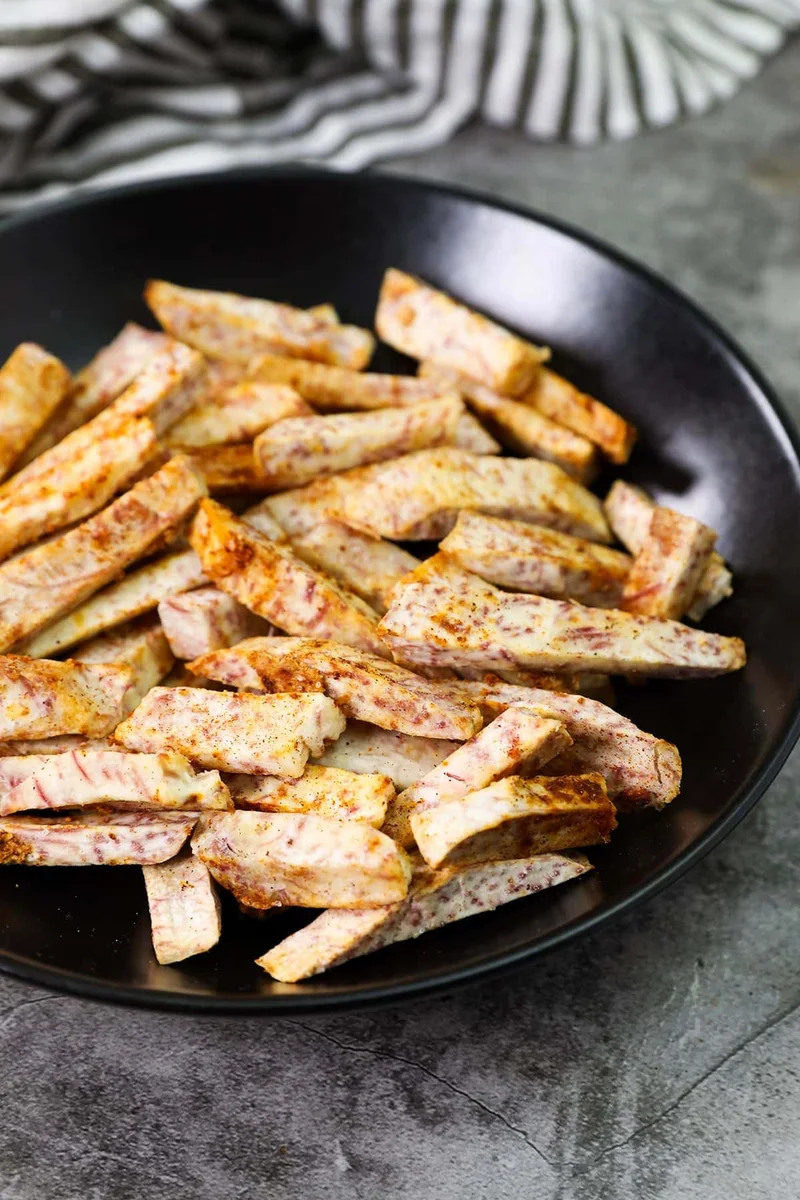
Taro fries are oven-baked strips of taro tossed with avocado oil, garlic and smoked paprika. They make a crisp-edged Caribbean-inspired alternative to potato fries, with a brief boil helping prepare the taro before baking.
Ingredients
- 907 g (2 pounds)taro
- 30 ml (2 tablespoons)avocado oil
- 2.5 ml (1/2 teaspoon)garlic powder
- 2.5 ml (1/2 teaspoon)smoked paprika
- A pinchcayenne pepper
- 2.5 ml (1/2 teaspoon), or to tastesalt
Instructions
- 1
Heat the oven
Preheat the oven to 200°C (400°F). Line a baking sheet with parchment paper and spray or brush it with oil.
- 2
Cut the taro
Peel and wash the taro, then cut it into strips about 1.3 cm (1/2 inch) thick.
- 3
Boil the water
Bring a large pot of water to the boil.
- 4
Briefly cook
Add the taro and cook for 1 minute. Take the pot off the heat, drain the taro in a colander and gently pat it dry.
- 5
Season the strips
Put the taro in a large bowl and toss it with the avocado oil, garlic powder, smoked paprika, cayenne and salt.
- 6
Bake the first side
Arrange the taro in a single layer on the prepared baking sheet and bake for 10 minutes.
- 7
Turn and finish
Flip the fries and bake for a further 10–15 minutes, until their edges are crisp.
What are taro fries?
Taro fries are a variation on potato fries, made with the starchy root also known as dasheen in parts of the Caribbean. Taro is widely used in Caribbean cooking, where it may be boiled, stewed or fried.
Here, the strips are briefly boiled, coated in oil and spices, then oven-baked. That sequence keeps the preparation straightforward while giving the fries browned, crisp edges.
Nutrition and macros by portion
The nutrition label shows one serving as written: 448 calories, 5g protein, 86g carbs, 10g fat.
| Portion | Adjustment | kcal | Protein | Carbs | Fat |
|---|---|---|---|---|---|
| Lighter | Use less avocado oil | 314 kcal | 4g | 60g | 7g |
| This serving | As written | 448 kcal | 5g | 86g | 10g |
| Hungry | Add another serving | 672 kcal | 8g | 129g | 15g |
Most of the carbohydrates come from the taro, while the avocado oil supplies most of the fat. Taro contributes a little protein, but these fries are mainly a starchy side; pair them with a protein-rich main and vegetables for a more balanced plate.
Choosing and cutting the taro
Even strips: Cut the taro into pieces about 1.3 cm thick so they cook at a similar pace. Try to keep their lengths and thicknesses consistent.
Why the brief boil matters
One-minute blanch: The recipe gives the taro a short boil before baking, rather than cooking it through in the pot. Drain it well and pat it dry gently so the oil and seasoning can coat the surface.
Getting the seasoning to stick
Oil first: Toss the taro thoroughly with the avocado oil, garlic powder, smoked paprika, cayenne and salt. The oil helps distribute the dry seasonings over the strips.
Heat level: Cayenne brings a little heat, while smoked paprika adds a deeper savoury note. Use a small pinch of cayenne for a mild batch.
Spacing and crisp edges
Single layer: Leave space around the fries on the baking sheet instead of piling them up. Crowding can make the surfaces steam rather than brown.
Turn once: Flip the strips after the first 10 minutes so they bake on both sides. Start checking at the 10-minute mark of the second bake and continue up to 15 minutes, until the edges look crisp.
Serving the fries
Serve the fries hot as a side with a Caribbean-style meal, grilled vegetables or a simple salad. A tangy dipping sauce can balance the taro's starchy, savoury flavour.
Recipe notes & tips
- Cut the taro into evenly sized strips for more consistent baking.
- Pat the drained taro dry gently before adding the oil and seasonings.
- Spread the fries out so they sit in a single layer on the baking sheet.
- Turn the fries carefully after the first 10 minutes of baking.
- Check the edges during the final 10–15 minutes and take the tray out when they are crisp.
Variations
- More heat: Increase the cayenne slightly for a spicier batch.
- Herby finish: Toss the baked fries with chopped fresh herbs just before serving.
- Citrus lift: Add a squeeze of lime at the table for a bright contrast.
- Different seasoning: Swap the smoked paprika for ground cumin for a warmer flavour.
- Dipping sauce: Serve with a tangy sauce alongside the hot fries.
Common mistakes to avoid
- Uneven strips: Pieces of different thicknesses bake at different rates; aim for strips about 1.3 cm thick.
- Wet taro: Excess water can make the seasoning patchy; pat the drained strips dry gently.
- Crowded tray: Overlapping strips are less likely to crisp; arrange them in a single layer.
- Too much cayenne: A heavy pinch can overpower the other spices; start with a small pinch.
- Skipping the flip: The fries may brown unevenly; turn them after the first 10 minutes.
How to store
Keep leftover fries in an airtight container in the fridge for up to 3 days. Reheat in an oven or air fryer until hot and crisp; microwaving may soften them.
Frequently asked questions
Do I need to boil the taro before baking?
Yes. This recipe calls for a 1-minute boil before the taro is drained, dried and baked.
How thick should I cut the strips?
Cut them about 1.3 cm (1/2 inch) thick, keeping them as even as you can so they bake at a similar rate.
How can I tell when the fries are ready?
The recipe says to bake until the edges are crisp. Check them after the additional 10 minutes and continue for up to 15 minutes if needed.
Can I make these fries less spicy?
Yes. Use only a tiny pinch of cayenne or leave it out.
Can I prepare the taro ahead of time?
For the best texture, bake the fries close to serving time. You can peel and cut the taro shortly beforehand, then keep the strips from drying out until you are ready to cook.
Cook it from the original
This recipe comes from healthiersteps.com. Their page has the author’s own photos, notes and tips — the best place to cook it from.
Open the recipe on healthiersteps.com