
Gluten-Free Croissants
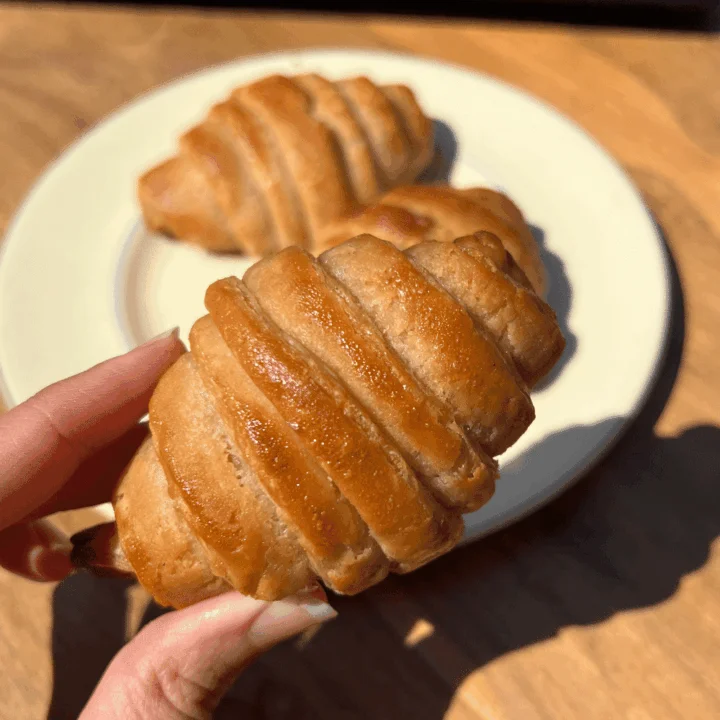
These gluten-free croissants use a yeasted dough enriched with butter, then a chilled butter block to create a tender, flaky finish. They take time to prepare, but the resting stages make the dough easier to handle.
Ingredients
- 420 gall-purpose gluten-free flour
- 129 gsugar
- 16 ginstant dried yeast
- 5 gsalt
- 17 gbaking powder
- 13 gpsyllium husk powder
- 56 gbutter, melted
- 301 gwarm water
- 175 gEuropean butter
- 1egg yolk
- 15 ml (1 tbsp)double cream
Instructions
- 1
Combine dry ingredients
Put the flour, sugar, yeast, salt, baking powder and psyllium husk powder in a large bowl.
- 2
Stir together
Stir the dry ingredients until evenly combined.
- 3
Add wet ingredients
Pour in the warm water and melted butter.
- 4
Knead the dough
Use a dough hook to knead until a sticky dough forms.
- 5
Adjust the dough
If the dough seems too dry, add a small splash of water.
- 6
Cover the bowl
Cover the bowl with cling film and a towel.
- 7
Proof the dough
Leave it in the oven with the light on for 2–3 hours.
- 8
Check the rise
The dough should double in size, though it is all right if it does not.
- 9
Chill the dough
Transfer the covered bowl to the fridge for 4 hours.
- 10
Shape the butter
Place the European butter between sheets of baking parchment and roll it into an 20 × 15 cm (8 × 6 inch) block. Chill for 4 hours.
- 11
Take off the chill
Leave both the dough and butter out at room temperature for 5 minutes.
- 12
Enclose the butter
Roll the dough into a 46 × 64 cm (18 × 25 inch) rectangle. Put the butter in the centre and fold the dough sides over it.
- 13
Roll the dough
Gently roll the folded dough out into a large rectangle.
- 14
Shape croissants
Trim the edges, cut the dough into triangles and roll each triangle into a croissant.
- 15
Chill and glaze
Freeze the shaped croissants for 20 minutes. Brush them with an egg wash made from the egg yolk and double cream.
- 16
Bake until golden
Bake at 175°C (350°F) for 20–30 minutes, until golden.
What are gluten-free croissants?
Croissants are a French-style laminated pastry, traditionally made by folding butter into dough in repeated layers. This version adapts the idea with gluten-free flour and psyllium husk powder, which helps the dough hold together.
The dough rests in the fridge before the butter is enclosed, giving both time to firm up. That chilled, buttery centre is what helps create layers as the croissants bake.
Nutrition and macros by portion
The nutrition label shows one serving as written: 292 calories, 1g protein, 18g carbs, 25g fat.
| Portion | Adjustment | kcal | Protein | Carbs | Fat |
|---|---|---|---|---|---|
| Lighter | Serve with fresh fruit | 204 kcal | 1g | 13g | 18g |
| This serving | As written | 292 kcal | 1g | 18g | 25g |
| Hungry | Add another croissant | 438 kcal | 2g | 27g | 38g |
The flour and sugar supply most of the carbohydrates, while the butter is the main source of fat. Protein is low in the listed per-serving figures; serve a croissant with yoghurt or eggs and some fruit to make a more balanced plate.
Why use psyllium husk?
Binding aid: gluten-free dough lacks the stretchy structure that wheat gluten provides, and psyllium helps it hold its shape as it is rolled and folded.
Dough feel: the mixture is meant to be sticky after kneading, so avoid adding extra flour unless needed to handle it.
Keep the butter cool
Butter block: roll the European butter between baking parchment into an even block, then chill it for the full 4 hours so it is firm when enclosed.
Brief rest: the recipe gives the dough and butter 5 minutes out of the fridge before rolling. If the butter starts to soften, return it to the fridge rather than forcing the dough.
Handle the dough gently
Rolling: use gentle, even pressure to make the large rectangle after enclosing the butter. Gluten-free dough can be more delicate, so patch any small tears with dough rather than stretching them wider.
Shaping: trim the edges, cut triangles and roll them into croissants without compressing the layers.
Watch the proof and bake
Proofing: leave the covered bowl in the oven with the light on for 2–3 hours, then chill the dough for 4 hours. The dough should double, but the recipe notes that it may not always do so.
Doneness: bake at 175°C for 20–30 minutes, checking for a golden surface. The range allows for differences in ovens and croissant size.
Serve them simply
Fresh from the oven, these buttery croissants work well with jam or fruit. For a more substantial breakfast, serve one alongside yoghurt or eggs.
Because the croissants are rich, a fresh, lightly dressed salad can also make a useful contrast if you serve them as part of a savoury meal.
Recipe notes & tips
- Measure the flour and psyllium accurately for a dough that holds together.
- Use butter that is chilled and firm when forming the butter block.
- Keep the dough covered during its rests so its surface does not dry out.
- Roll gently to avoid tearing the dough around the butter.
- Start checking the croissants at 20 minutes and continue baking until golden.
Variations
- Sweet filling: add a little chocolate or fruit preserve before rolling each triangle.
- Almond finish: scatter flaked almonds over the egg wash before baking.
- Savoury filling: add a small amount of cheese before rolling the dough.
- More golden tops: brush the croissants evenly with the egg-yolk-and-cream wash.
- Smaller pastries: cut smaller triangles and begin checking for doneness early.
Common mistakes to avoid
- Butter too soft: chill it until firm before enclosing it in the dough.
- Dough too dry: add a small splash of water, as directed, rather than kneading in a large amount at once.
- Rushing the chill: allow the dough and butter their stated fridge rests so they are easier to roll.
- Rolling too firmly: use gentle pressure to reduce the chance of tearing the dough.
- Uneven pieces: trim the edges and cut triangles as evenly as possible so they bake at a similar rate.
- Overbaking: check from 20 minutes and take the croissants out when golden.
How to store
Once cool, store the croissants in an airtight container at room temperature and eat within 1–2 days for the best texture. Reheat briefly in a low oven until warmed through; avoid microwaving if you want to retain a crisp exterior.
Frequently asked questions
Does the dough need to double during proofing?
It should double during the 2–3-hour proof, but the recipe says not to worry if it does not. Continue with the 4-hour fridge rest.
Can I skip chilling the butter block?
No. The recipe chills the block for 4 hours so it is firm enough to enclose and roll with the dough.
Why is the dough sticky?
The method describes a sticky dough as the expected result. If it seems too dry, add a small splash of water.
Can I prepare the dough ahead?
The recipe already includes long rests, including 4 hours in the fridge. Keep the bowl covered while the dough chills.
How do I know the croissants are baked?
Bake them at 175°C for 20–30 minutes, until golden. Begin checking at the earlier end of the time range.
Cook it from the original
This recipe comes from glutenfreepalate.com. Their page has the author’s own photos, notes and tips — the best place to cook it from.
Open the recipe on glutenfreepalate.com