
Basil Mint Pesto
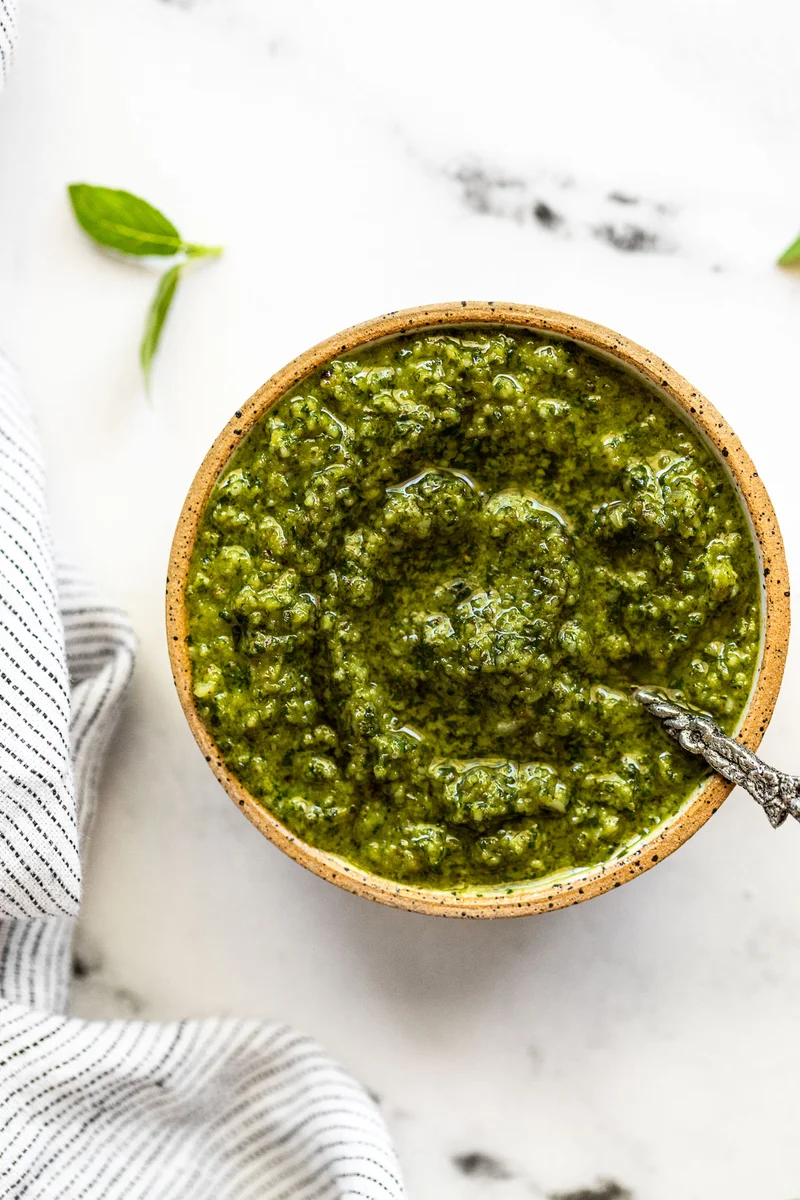
Basil mint pesto is a quick, herb-forward sauce with the savoury richness of Parmesan and walnuts. Make it in minutes to dress pasta, spread on sandwiches or serve alongside a cheeseboard.
Ingredients
- 60 g (½ cup)chopped walnuts
- 35 g (1½ cups), tightly packedfresh basil leaves
- 10 g (½ cup), tightly packedfresh mint leaves
- 3–5 clovesgarlic
- 50 g (½ cup)grated Parmesan cheese
- 120 ml (½ cup)extra-virgin olive oil
- To taste (about 2.5 g / ½ tsp)fine sea salt
Instructions
- 1
Toast the walnuts
Optional: place the walnuts in a small frying pan over low to medium heat. Toast for 3–5 minutes, until fragrant, taking care not to let them burn.
- 2
Chop the ingredients
Put the basil, mint, garlic, Parmesan and walnuts in a food processor. Pulse several times until finely chopped.
- 3
Add the oil
With the processor running, gradually drizzle in the olive oil until the sauce is combined. Add more oil if needed to reach your preferred consistency, then taste and add salt as desired.
- 4
Use or store
Use the pesto straight away, or transfer it to an airtight container and refrigerate for up to 5 days. To help prevent oxidation, cover the surface with a thin layer of olive oil or plastic wrap.
What is basil mint pesto?
Pesto is an Italian sauce traditionally associated with Genoa, made by combining herbs, cheese, nuts, garlic and oil. This version keeps basil at the centre and adds mint for a fresher, more aromatic flavour.
Walnuts bring a mellow nuttiness, while Parmesan gives the sauce savoury depth. A food processor makes this variation especially quick to prepare.
Nutrition and macros by portion
The nutrition label shows one serving as written: 196 calories, 4g protein, 2g carbs, 20g fat.
| Portion | Adjustment | kcal | Protein | Carbs | Fat |
|---|---|---|---|---|---|
| Lighter | Use less olive oil | 137 kcal | 3g | 1g | 14g |
| This serving | As written | 196 kcal | 4g | 2g | 20g |
| Hungry | Serve with more pasta | 294 kcal | 6g | 3g | 30g |
The olive oil and walnuts provide most of the fat, while Parmesan contributes some protein and fat. The herbs and garlic provide flavour with relatively little carbohydrate; pair the pesto with pasta, bread or vegetables and a protein-rich accompaniment to make a more complete plate.
Choosing the ingredients
Fresh herbs: Pack the basil and mint into their measuring cups, but use leaves that are fresh and not wilted for the cleanest flavour.
Walnuts and cheese: Parmesan lends saltiness and body, while walnuts make a softer, earthier alternative to the pine nuts used in many pesto recipes.
Garlic: The recipe allows 3–5 cloves, so choose the lower amount for a gentler sauce or the higher amount for a more pronounced garlic note.
Getting the texture right
Chopping: Pulse the herbs, garlic, cheese and walnuts until finely chopped rather than processing them for a long time. This keeps the texture lively instead of turning the mixture into a completely smooth paste.
Oil: Drizzle it in while the processor runs so it combines evenly. Add a little more only if you want a looser pesto.
Toasting the walnuts
Optional step: Toasting the walnuts for 3–5 minutes over low to medium heat brings out their aroma. Keep an eye on the pan and take them off as soon as they smell fragrant; burnt nuts can make the pesto taste bitter.
Cool the walnuts before adding them to the processor so they do not warm the herbs.
Seasoning and tasting
Salt: Parmesan is already savoury, so start with a small amount of salt and taste the finished pesto before adding more.
Consistency: The sauce should be easy to spoon or spread. Its final thickness depends on how tightly the herbs are packed and how much oil you add.
Ways to serve it
Pasta: Toss the pesto through cooked pasta, loosening it with a little pasta water if you want it to coat the strands more easily.
Beyond pasta: Spread it on sandwiches, use it as a flatbread pizza base or serve it with a cheeseboard. Its bright herb flavour also works as a finishing sauce for cooked vegetables.
Recipe notes & tips
- Measure the herbs after packing them firmly into the cups.
- Toast the walnuts in a dry pan and watch them closely.
- Pulse in short bursts so the herbs are chopped rather than overprocessed.
- Drizzle in the oil gradually to control the consistency.
- Taste before adding salt because Parmesan is already savoury.
- Cover the surface before refrigerating to limit exposure to air.
Variations
- More mint: Increase the mint relative to the basil for a sharper, fresher flavour.
- More basil: Use a greater share of basil for a more classic herb profile.
- Garlic-forward: Choose 5 cloves for a stronger garlic presence.
- Looser sauce: Add extra olive oil gradually until it reaches the consistency you want.
- Different nuts: Replace the walnuts with an equal amount of another pesto-friendly nut.
- Coarser texture: Pulse fewer times and leave the chopped nuts more noticeable.
Common mistakes to avoid
- Burnt walnuts: Toast over low to medium heat and remove them as soon as they smell fragrant.
- Overprocessing: Pulse in short bursts so the herbs do not become an overly smooth paste.
- Too much oil at once: Drizzle it in gradually and stop when the pesto reaches your preferred consistency.
- Over-salting: Taste after adding the Parmesan before seasoning further.
- Wilted herbs: Start with fresh leaves for a brighter-tasting sauce.
- Uncovered storage: Press a layer of oil or plastic wrap over the surface to help limit oxidation.
How to store
Keep the pesto in an airtight container in the fridge for up to 5 days. Cover its surface with a thin layer of olive oil or plastic wrap to help prevent oxidation.
Frequently asked questions
Can I skip toasting the walnuts?
Yes. Toasting is optional, and the pesto can be made with untoasted walnuts.
How much garlic should I use?
Use 3–5 cloves according to how prominent you want the garlic flavour to be.
How can I make the pesto thinner?
Drizzle in more olive oil a little at a time, processing between additions until the consistency suits you.
Can I use the pesto straight away?
Yes, it is ready to use as soon as the ingredients are combined and seasoned.
How long does homemade basil mint pesto keep?
Store it in an airtight container in the fridge for up to 5 days, with the surface covered as described.
What can I serve with basil mint pesto?
Toss it with pasta, spread it in a sandwich, use it on flatbread pizza or serve it with a cheeseboard.
Cook it from the original
This recipe comes from forkinthekitchen.com. Their page has the author’s own photos, notes and tips — the best place to cook it from.
Open the recipe on forkinthekitchen.com