
What does it take to make the best hot cross buns?
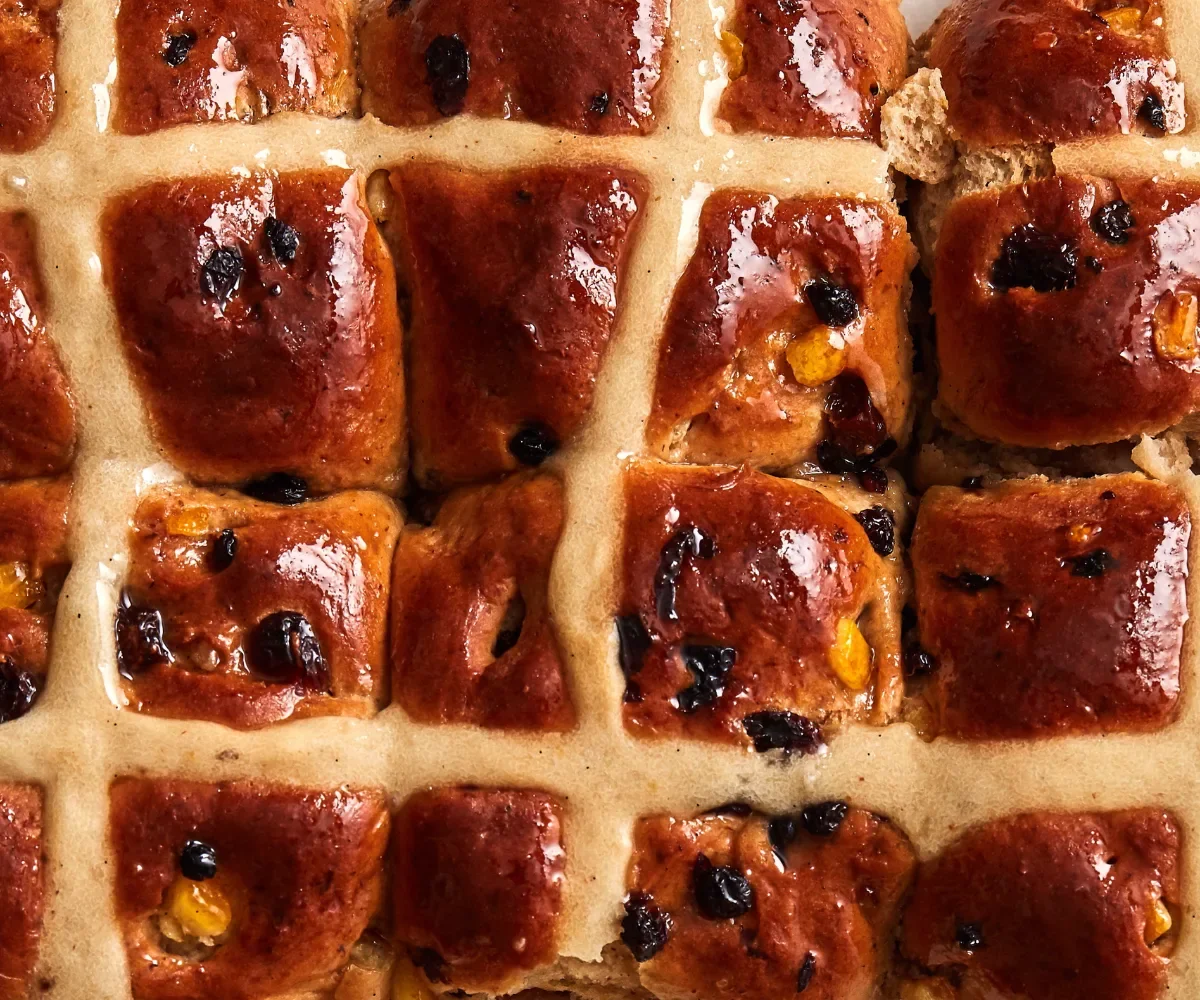
These spiced hot cross buns are enriched with butter, citrus-soaked currants and sultanas, and candied orange peel. The dough needs time to rise, but the crosses and glossy orange-vanilla glaze make the homemade result worth planning ahead for.
Ingredients
- 100 gcurrants
- 100 gsultanas
- Juice of 1orange
- 40 mlPedro Ximénez
- 50 gcandied orange peel, finely chopped
- 200 mlmilk
- 3 tspdried yeast
- 470 gstrong baker's flour
- 2½ tspground cinnamon
- 1½ tspground nutmeg
- ¾ tspground allspice
- ½ tspground cloves
- 60 glight brown sugar
- 1egg
- 60 g, plus extra for greasingsoftened unsalted butter
- Finely grated zest of ½orange
- 1 tspsunflower oil
- ¾ tspsalt
- 40 mlwater
- 150 gcaster sugar
- Juice of 1orange
- Seeds scraped from ½vanilla bean
Instructions
- 1
Soak the fruit
Combine the currants and sultanas with the orange juice and Pedro Ximénez in a bowl. Cover and leave to soak overnight. Stir in the candied peel and set aside.
- 2
Wake the yeast
Warm half the milk in a saucepan over low heat until just lukewarm. Put it in a bowl with the yeast and stir to combine.
- 3
Mix the dough
Put 420 g of the flour, the combined spices (reserving ¼ tsp), sugar, egg, yeast mixture, remaining milk and ¾ tsp salt in a stand mixer fitted with a dough hook. Mix on low for 5 minutes, until combined. Add the butter, zest and oil, and mix until incorporated. Drain the fruit, reserving the liquid, then mix the fruit into the dough just until distributed. Transfer the dough to a lightly buttered bowl, cover and leave to rise until doubled, about 2 hours.
- 4
Shape the buns
Line a baking tray with baking paper. Knock back the dough and divide it into 12 pieces. Roll each piece into a smooth ball, using a little flour if needed to prevent sticking, but avoid adding too much or the dough may become tough. Arrange the buns in even rows on the tray with 2 cm between them. Leave to rise until doubled, 30–40 minutes.
- 5
Pipe and bake
Preheat the oven to 180°C. Mix the remaining flour and reserved spice mixture with 40 ml water to make a paste. Transfer it to a piping bag, snip the tip and pipe crosses over the buns. Bake for 25–30 minutes, until golden and cooked through.
- 6
Glaze the buns
For the glaze, combine the sugar, orange juice, vanilla seeds and 1–2 tbsp of the reserved fruit liquid in a saucepan. Stir over low heat for 2–3 minutes, until the sugar dissolves and a syrup forms. Brush the syrup generously over the buns while they are hot. Let them cool slightly, then serve warm or at room temperature.
What are hot cross buns?
Hot cross buns are sweet, yeasted spiced buns traditionally associated with Easter in Britain and other parts of the Commonwealth. Their defining cross is piped onto the risen dough before baking.
This version layers dried fruit soaked in orange juice and Pedro Ximénez with candied peel, warm spices and a syrupy citrus glaze. The fruit soak adds flavour, while butter and milk give the dough a soft, enriched crumb.
Nutrition and macros by portion
The nutrition label shows one serving as written: 610 calories, 13g protein, 116g carbs, 11g fat.
| Portion | Adjustment | kcal | Protein | Carbs | Fat |
|---|---|---|---|---|---|
| Lighter | Serve one bun | 427 kcal | 9g | 81g | 8g |
| This serving | As written | 610 kcal | 13g | 116g | 11g |
| Hungry | Serve two buns | 915 kcal | 20g | 174g | 17g |
Most of the carbohydrates come from the flour, dried fruit and sugars, while butter and milk contribute much of the fat; the egg, milk and flour provide some protein. Pair a bun with plain yoghurt or an egg to add a savoury, protein-rich component to the plate.
Why soak the fruit?
Fruit soak: currants and sultanas take on orange and Pedro Ximénez flavours during their overnight rest. Stir in the candied peel after soaking so it stays distinct in the dough.
Reserved liquid: draining the fruit keeps excess soaking liquid out of the dough, but save it for the glaze, where a spoonful adds extra fruit and citrus notes.
Getting the dough right
Milk temperature: the milk should feel just lukewarm, not hot, when mixed with the yeast. Very hot milk can interfere with the yeast, while cool milk may slow the rise.
Flour and mixing: use strong baker’s flour and mix with the dough hook as directed. Add only a light dusting of flour when shaping; too much can make the buns firm.
Watch the rises
First rise: allow about 2 hours, using the dough’s doubled size as the cue rather than relying on the clock alone. Room temperature affects how quickly it rises.
Second rise: the shaped buns need another 30–40 minutes and should look puffy and roughly doubled before baking. The overnight fruit soak is additional preparation time, so plan ahead.
Piping the crosses
Paste consistency: mix the remaining flour, reserved spice and water into a smooth, pipeable paste. If it is too stiff to pipe, work it thoroughly before transferring it to the piping bag.
Even lines: pipe steadily over the rows of buns, keeping the crosses centred. Leave the 2 cm gaps between buns as specified so they have room to expand.
How to tell they are done
Bake the buns at 180°C for 25–30 minutes, looking for a golden surface and buns cooked through. If they colour before the centres are ready, check them carefully near the end of the baking time.
Brush on the glaze while the buns are hot so it coats the surface. Serve them warm or let them cool to room temperature.
Serving ideas
These buns are good on their own, with a cup of tea, or split and spread with a little butter. Their dried fruit and sweet glaze make them substantial enough for breakfast or an afternoon snack.
For a more balanced plate, pair a bun with plain yoghurt or an egg rather than serving several buns as the whole meal.
Recipe notes & tips
- Soak the currants and sultanas overnight so they are ready when you make the dough.
- Keep the milk just lukewarm when you combine it with the yeast.
- Reserve the fruit-soaking liquid before adding the drained fruit to the dough.
- Use only a little extra flour when shaping to help keep the buns tender.
- Check that the buns have doubled in size at both proving stages before moving on.
- Brush on the glaze while the buns are still hot for an even coating.
Variations
- Use another dried fruit: Replace the currants or sultanas with a similar amount of chopped raisins.
- Change the spirit: Use another sweet dessert wine in place of Pedro Ximénez.
- Add more citrus: Include extra finely grated orange zest in the dough.
- Make them without alcohol: Replace the Pedro Ximénez with additional orange juice.
- Serve with butter: Split warm buns and spread with a little butter just before eating.
Common mistakes to avoid
- Overheating the milk: Keep it just lukewarm before stirring in the yeast.
- Adding too much flour: Dust lightly when shaping so the dough does not become tough.
- Skipping the fruit drain: Drain the soaked fruit and reserve its liquid for the glaze.
- Rushing the proving: Wait for the dough and shaped buns to double rather than relying only on the stated time.
- Making stiff cross paste: Mix the flour, spices and water until the paste can be piped smoothly.
- Glazing after cooling: Brush the syrup on while the buns are hot so it coats them well.
How to store
Once cool, store the buns in an airtight container at room temperature and eat within 2 days. Warm briefly in a low oven or microwave before serving.
Frequently asked questions
Can I make the dough ahead?
The recipe calls for soaking the fruit overnight, but the dough method does not specify an overnight rise. Make the dough and prove it as directed, then bake and store the buns once cool.
How many buns does this make?
The method divides the dough into 12 buns. The recipe lists 4 servings, so that serving count may mean three buns per serving.
Can I leave out the Pedro Ximénez?
Yes. Replace it with additional orange juice to soak the fruit without alcohol.
Why is the reserved fruit liquid used in the glaze?
It adds some of the orange and Pedro Ximénez flavour from the soak. Drain the fruit first and save the liquid for the glaze.
Can I serve hot cross buns cold?
Yes. The recipe suggests serving them warm or at room temperature.
Cook it from the original
This recipe comes from gourmettraveller.com.au. Their page has the author’s own photos, notes and tips — the best place to cook it from.
Open the recipe on gourmettraveller.com.au