
Spaghetti alla carbonara
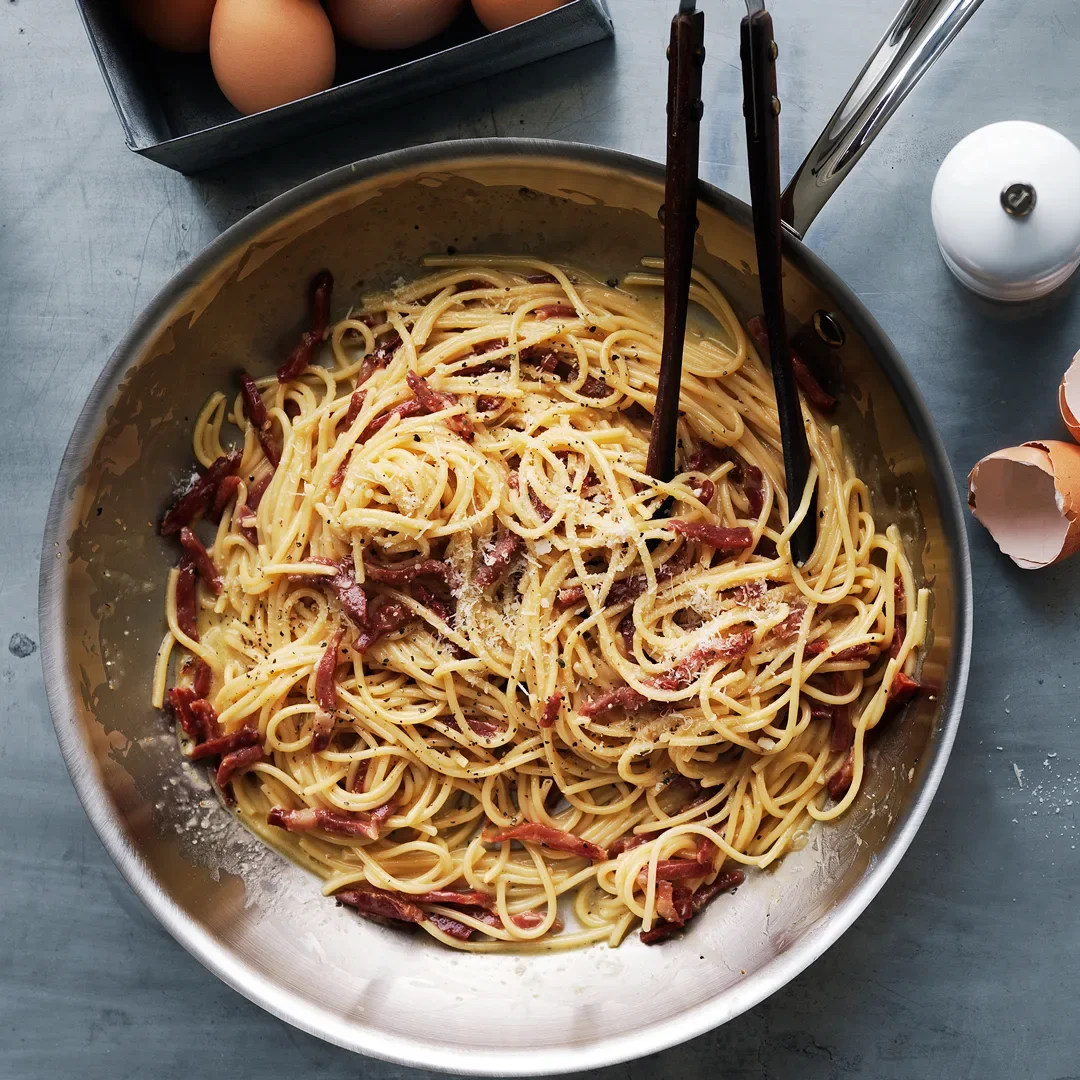
Spaghetti alla carbonara combines al dente pasta with crisp, savoury guanciale and a silky sauce made with eggs and pecorino. It is a quick Italian pasta dish, best served as soon as the sauce coats the spaghetti.
Ingredients
- 400 gdried spaghetti
- 60 ml (¼ cup)mild-flavoured extra-virgin olive oil
- 200 gguanciale or coppa, cut into lardons
- 4eggs, lightly beaten
- 20 g (¼ cup), plus extra to servefinely grated pecorino
- To tastesalt, for the pasta water
- To tastefreshly ground black pepper
- To serve, optionalflat-leaf parsley, coarsely chopped
Instructions
- 1
Cook the spaghetti
Bring a large saucepan of salted water to the boil. Cook the spaghetti until al dente, about 8–10 minutes.
- 2
Crisp the guanciale
Meanwhile, heat the oil in a frying pan over medium-high heat. Add the guanciale and sauté for 2–4 minutes, until it is starting to crisp. Set aside and keep warm.
- 3
Toss with sauce
Drain the spaghetti, reserving 2 tablespoons of the cooking water. Add the pasta to the guanciale with the eggs, pecorino, reserved water and freshly ground black pepper to taste. Toss for 20–30 seconds, until the pasta is coated and the sauce begins to thicken. Serve immediately with parsley, if using, and extra pecorino on the side.
What is spaghetti alla carbonara?
Carbonara is an Italian pasta dish traditionally made with pasta, eggs, cheese and cured pork. This version uses spaghetti, pecorino and guanciale or coppa for a rich, savoury coating.
Its short ingredient list makes the timing important: the warm pasta helps the eggs and cheese turn into a sauce, while a quick toss keeps the texture smooth.
Nutrition and macros by portion
The nutrition label shows one serving as written: 780 calories, 29g protein, 75g carbs, 39g fat.
| Portion | Adjustment | kcal | Protein | Carbs | Fat |
|---|---|---|---|---|---|
| Lighter | Use less oil and guanciale | 546 kcal | 20g | 53g | 27g |
| This serving | As written | 780 kcal | 29g | 75g | 39g |
| Hungry | Add extra spaghetti | 1170 kcal | 44g | 113g | 59g |
The spaghetti supplies most of the carbohydrates, while the guanciale and olive oil contribute much of the fat. Eggs and pecorino provide protein as well as additional fat. Pair a serving with a generous side of vegetables or salad to add freshness and balance the plate.
Choosing the ingredients
Pasta: Dried spaghetti holds its shape well and gives the sauce plenty of surface to cling to. Cook it just until al dente, as it will be tossed again with the other ingredients.
Cured pork: Guanciale brings richness and a distinctive savoury flavour; coppa is the alternative specified here. Cut it into lardons so the pieces cook evenly.
Cheese: Finely grated pecorino is easier to distribute through the pasta. Keep extra to serve at the table.
Get the pasta water ready
Reserve 2 tablespoons of the cooking water before draining. It adds moisture to the toss and helps the eggs and cheese coat the spaghetti.
Have the beaten eggs and grated pecorino ready before the pasta is drained, so you can combine everything while the spaghetti is still hot.
Toss for a silky coating
Once the pasta is added to the pan with the guanciale, work quickly: toss it with the eggs, pecorino and reserved water for 20–30 seconds. The method relies on the residual heat of the pasta to thicken the sauce.
Keep the mixture moving and serve as soon as the sauce begins to thicken. This helps the sauce cling to the strands rather than settling at the bottom.
Watch the texture
Pasta: Al dente spaghetti should be cooked through but still have a slight firmness at the centre. Start checking at 8 minutes, within the recipe’s 8–10-minute range.
Guanciale: Take it off the heat when it is starting to crisp, after 2–4 minutes. The pieces should remain savoury and meaty rather than becoming very dry.
Serve straight away
Carbonara is at its best immediately after tossing, while the sauce is still glossy and the pasta is hot. Offer extra pecorino alongside, and scatter over chopped flat-leaf parsley if you like.
A crisp green salad or simply dressed vegetables make a fresh contrast to the rich pasta. Serve them on the side rather than adding them to the pan.
Recipe notes & tips
- Cut the guanciale or coppa into similarly sized lardons so they cook at an even pace.
- Set aside the measured cooking water before draining the pasta.
- Grate the pecorino finely so it combines readily with the eggs.
- Have the sauce ingredients ready before the spaghetti finishes cooking.
- Toss continuously for the specified 20–30 seconds, then serve without delay.
Variations
- Use coppa: Swap it for the guanciale as an alternative in the recipe.
- Add more pecorino: Offer extra at the table for a stronger cheese flavour.
- Include parsley: Scatter over chopped flat-leaf parsley just before serving.
- Change the pasta: Use another long pasta shape that can be coated well with the sauce.
Common mistakes to avoid
- Overcooking the spaghetti: Start checking at 8 minutes and stop when it is al dente.
- Forgetting the pasta water: Reserve 2 tablespoons before draining to help the sauce coat the strands.
- Leaving the guanciale too long: Cook for 2–4 minutes, stopping when it starts to crisp.
- Letting the pasta sit: Combine it with the sauce as soon as it is drained so it remains hot.
- Tossing too slowly: Work for 20–30 seconds, until the sauce begins to thicken, then serve.
How to store
For the best texture, serve this dish immediately. If needed, refrigerate leftovers in a covered container for up to 2 days and reheat gently in a pan with a small splash of water; the sauce may be less silky after chilling.
Frequently asked questions
Can I use coppa instead of guanciale?
Yes. Coppa is given as an alternative in this recipe; cut it into lardons and sauté it until it starts to crisp.
How do I know when the pasta is al dente?
It should be cooked through but retain a slight firmness when bitten. Begin checking at 8 minutes.
Why reserve pasta water?
The recipe uses 2 tablespoons to add moisture as you toss the pasta with the eggs and pecorino, helping the sauce coat the spaghetti.
How long should I toss the pasta with the eggs?
Toss for 20–30 seconds, until the pasta is coated and the sauce starts to thicken.
Can I make carbonara ahead?
It is best tossed and served immediately, so prepare the ingredients in advance but cook and combine the pasta just before serving.
What can I serve with carbonara?
A green salad or simply prepared vegetables make a fresh side for the rich pasta.
Cook it from the original
This recipe comes from gourmettraveller.com.au. Their page has the author’s own photos, notes and tips — the best place to cook it from.
Open the recipe on gourmettraveller.com.au