
Pasta with aubergines and tomatoes
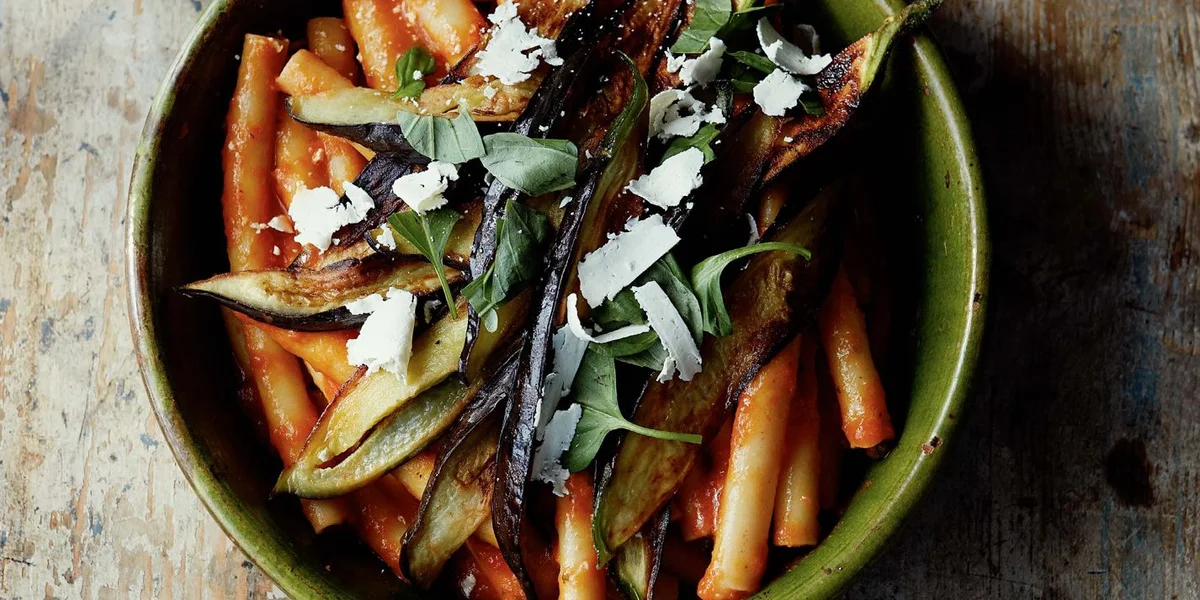
This Sicilian-inspired pasta alla Norma pairs a slow-cooked tomato and basil sauce with fried aubergine, anchovies, capers and two kinds of cheese. It takes time to build the sauce, but the result is a rich, savoury pasta dish with contrasting soft and crisp textures.
Ingredients
- 2 tbspolive oil
- 1garlic clove, finely chopped
- 8basil leaves, plus a few extra for garnish
- 10anchovy fillets, drained
- 1 tbspcapers
- 400 gzitoni pasta
- 1aubergine, halved lengthways
- 500 mlsunflower oil
- as neededplain flour, for dusting
- 2 tbsppecorino
- 2 tbspricotta, shaved
- 300 gwhite onion, very finely sliced
- 4 tbspextra virgin olive oil
- 1 kglarge ripe tomatoes
- 2garlic cloves, peeled but left whole
- 20basil leaves
- to tastesea salt
Instructions
- 1
Soften the onion
Start the tomato sauce by putting the onion and half the extra virgin olive oil in a saucepan. Sweat over low-medium heat for about 15 minutes, until soft but not coloured. If it begins to catch, add a splash of water.
- 2
Simmer the tomatoes
Add the tomatoes and season with salt. Simmer over low heat for about 45 minutes, until thick and rich; add a little water if the liquid reduces too much. Take the pan off the heat.
- 3
Infuse the oil
Put the remaining extra virgin olive oil and the whole garlic cloves in another pan over low-medium heat. When the garlic is almost golden, add the basil leaves and stir. Strain the infused oil into the cooked tomato sauce.
- 4
Strain the sauce
Whisk the sauce to break up the tomatoes, thinning it with a little water if it is too thick; pasta cooking water is ideal. Set a wide-holed sieve over a bowl and press the sauce through with the back of a ladle. Taste and add more salt if needed.
- 5
Heat the aubergine sauce
For the pasta sauce, warm the olive oil in a saucepan over medium heat. Sweat the finely chopped garlic until golden.
- 6
Add the flavourings
Add the basil, anchovies, capers and 250 ml of the tomato sauce. Heat through, then keep the pan over low heat.
- 7
Cook the pasta
Cook the zitoni according to the packet instructions until al dente. Drain, reserving 240 ml of the cooking liquid.
- 8
Heat the frying oil
While the pasta cooks, heat the sunflower oil in a deep saucepan or fat fryer until it reaches 185°C.
- 9
Fry the aubergine
Dust the aubergine slices with flour and fry until golden. Lift them out and drain on kitchen paper. The flour coating helps keep oil from reaching the flesh and becoming soggy.
- 10
Toss and serve
Stir the pasta into the sauce with about a ladleful of the reserved cooking liquid and mix well. Add the pecorino, then divide between warmed bowls. Top with the fried aubergine, shaved ricotta and extra basil leaves.
What is pasta alla Norma?
Pasta alla Norma is a Sicilian pasta dish associated with Catania, traditionally combining tomato sauce, aubergine and ricotta salata. Its name is often linked to the opera Norma by the Catanian composer Vincenzo Bellini.
This version builds a smooth sauce from slowly cooked onion and tomatoes, then adds anchovies and capers for a savoury edge. Fried aubergine and pecorino and ricotta finish the bowl.
Nutrition and macros by portion
The nutrition label shows one serving as written: 970 calories, 27g protein, 109g carbs, 46g fat.
| Portion | Adjustment | kcal | Protein | Carbs | Fat |
|---|---|---|---|---|---|
| Lighter | Use less frying oil | 679 kcal | 19g | 76g | 32g |
| This serving | As written | 970 kcal | 27g | 109g | 46g |
| Hungry | Larger pasta portion | 1455 kcal | 41g | 164g | 69g |
Most of the carbohydrates come from the zitoni, with additional amounts from the tomatoes and onion. The olive oil, sunflower oil and cheeses contribute much of the fat, while the pasta, pecorino, ricotta and anchovies provide protein. Pair a serving with a generous green salad or other vegetables to balance the plate.
Build the tomato sauce slowly
Onion: slice it very finely so it softens evenly over the 15-minute sweat. Keep the heat low enough that it turns soft without browning; a splash of water helps if the pan starts to catch.
Tomatoes: give them the full simmering time to become thick and concentrated. The extra virgin olive oil is infused with garlic and basil separately, then strained into the sauce for a clean, aromatic finish.
Keep the sauce smooth
Straining: whisk the cooked tomatoes first, then press them through a wide-holed sieve with the back of a ladle. This removes larger pieces while retaining a substantial sauce.
Consistency: the sauce should coat the pasta rather than sit in a watery pool. Loosen it gradually with water or, when available, the reserved pasta cooking water.
Fry the aubergine well
Flour coating: dust the slices just before frying and shake off any excess. The recipe uses flour to help protect the aubergine flesh from taking on too much oil.
Golden finish: fry at 185°C and drain the slices on kitchen paper. Work in batches if necessary so the pieces have room to fry rather than crowding the pan.
Finish the pasta in the sauce
Al dente pasta: follow the packet timing and drain as soon as the zitoni still have a slight bite. Reserve the stated 240 ml of cooking liquid before draining.
Final toss: mix the pasta with the sauce and a ladleful of cooking water so it is evenly coated. Add the pecorino before portioning, then place the fried aubergine and ricotta on top.
Serve it while hot
Warm bowls help keep the pasta and sauce hot as you serve. Add the aubergine at the end to preserve its crisp edges against the soft pasta.
The dish is substantial on its own; a simply dressed green salad or steamed greens make a fresh side without competing with the tomato, basil and cheese.
Recipe notes & tips
- Slice the onion very finely so it softens without needing a higher heat.
- Keep the tomato sauce at a gentle simmer and add a splash of water if it begins to reduce too far.
- Reserve the pasta cooking liquid before draining, as the method uses it to adjust the finished sauce.
- Dust the aubergine shortly before frying and shake off loose flour.
- Let excess oil drain from the fried aubergine on kitchen paper before serving.
- Warm the serving bowls while the pasta cooks so the finished dish stays hot.
Variations
- More basil: add a few extra leaves at the end for a fresher herbal aroma.
- Less anchovy: use fewer fillets for a gentler savoury flavour.
- Different pasta: choose another short pasta shape that holds the thick sauce.
- Extra vegetables: serve with cooked greens or a green salad alongside.
- Cheese finish: use extra ricotta or pecorino at the table, according to taste.
Common mistakes to avoid
- Browning the onion: keep it over low-medium heat and add a splash of water if it starts to colour.
- Reducing the sauce too far: add a little water during simmering, then adjust again with pasta water if needed.
- Skipping the strain: press the sauce through the sieve with the back of a ladle for the smooth texture intended here.
- Crowding the frying pan: fry the aubergine in batches so the slices can brown evenly.
- Overcooking the pasta: follow the packet instructions and drain it when al dente.
- Adding all the pasta water at once: start with about a ladleful and add more only if the sauce needs loosening.
How to store
Refrigerate leftover pasta and sauce in a covered container for up to 3 days. Store leftover fried aubergine separately where possible, as it softens in the sauce; reheat the pasta gently in a pan with a splash of water and warm the aubergine in the oven.
Frequently asked questions
Can I make the tomato sauce ahead?
Yes. Make and strain the sauce in advance, then refrigerate it in a covered container and reheat it gently before continuing with the pasta.
How do I know when the aubergine is cooked?
It should be golden on the outside and tender inside. The recipe gives 185°C as the frying-oil temperature.
Why should I reserve pasta water?
The method uses some of it to loosen and bind the sauce around the pasta. Reserve the stated 240 ml before draining.
Can I use a different pasta shape?
Yes. Another short pasta shape can be used, though the cooking time will vary, so follow its packet instructions.
What is the difference between the pecorino and ricotta here?
The pecorino is mixed into the pasta, while shaved ricotta is added on top at the end. Both contribute a salty, creamy finish.
Can I skip the anchovies?
You can leave them out, but the finished sauce will have a less savoury flavour. Taste the sauce before serving and adjust the seasoning as needed.
Cook it from the original
This recipe comes from greatbritishchefs.com. Their page has the author’s own photos, notes and tips — the best place to cook it from.
Open the recipe on greatbritishchefs.com