
Leftover turkey biryani
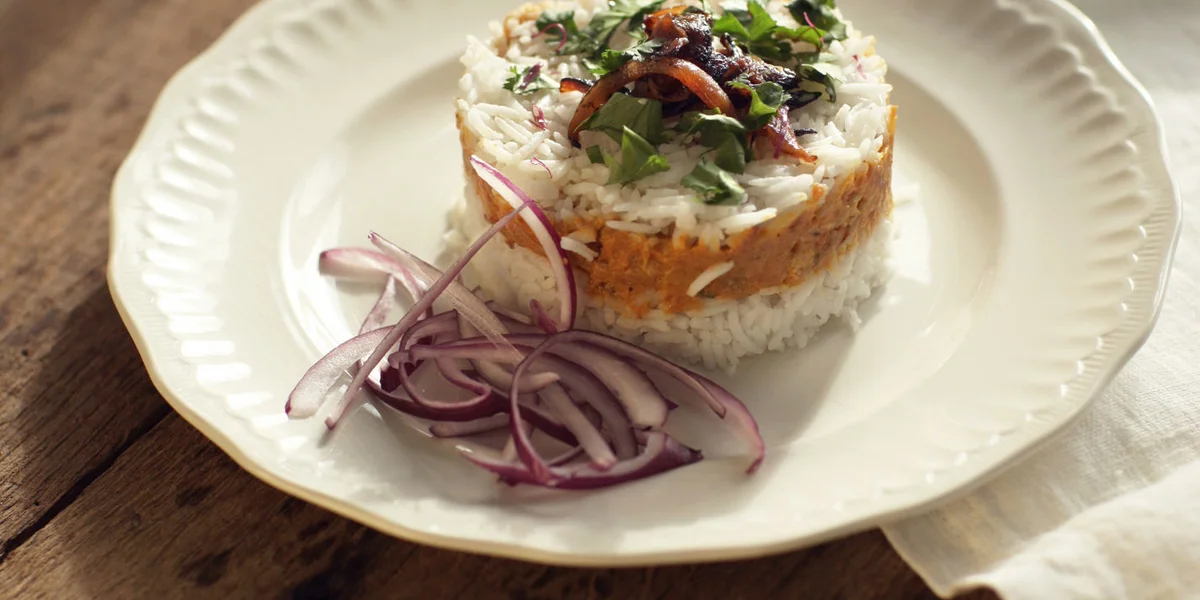
This leftover turkey biryani layers fragrant turkey masala with fluffy basmati rice, saffron milk and caramelised onions. It turns cooked turkey into a warming, celebratory meal with an impressive ring-mould presentation.
Ingredients
- 1 tspsaffron
- 5 tbspmilk
- 400 gbasmati rice
- 500 mlwater
- 400 gleftover turkey meat, chopped into chunks
- 4 tbspghee
- 3 mediumonions, sliced into rings
- 1 tspfresh ginger, grated
- 2garlic cloves, sliced
- 1 tspground turmeric
- 2chillies
- 2bay leaves
- 1 stick, approximately 7 cmcassia
- 1 tspblack peppercorns
- 1 tspcoriander seeds
- 1 tspcumin seeds
- 1/2 tspsalt
- 6cardamom pods
- 5cloves
- 2tomatoes, diced
- 1 bunchfresh coriander, chopped
- 6 tspghee
- 1red onion, sliced
Instructions
- 1
Infuse the saffron
Combine the saffron and milk and leave them to steep and infuse.
- 2
Cook the rice
Rinse the rice under running water until the water runs clear. Put it in a pan with 500 ml cold water, bring to the boil and cook until the water is absorbed; the rice should remain slightly underdone. Take the pan off the heat and let the rice cool slightly.
- 3
Cool the rice
Fluff the rice with a fork, working down to the bottom of the pan, then transfer it to a large bowl to cool completely.
- 4
Caramelise onions
Melt the ghee in a medium saucepan, add the sliced onion rings and cook over a medium heat for about 20 minutes, until caramelised and dark golden brown.
- 5
Cook the spices
Remove half the caramelised onions and set them aside for assembling the biryani. Add the ginger, garlic, bay leaves, chillies, cassia, black peppercorns, coriander seeds, cumin seeds, cardamom, salt and turmeric to the pan. Sauté for a few minutes, until fragrant.
- 6
Make the masala
Add the tomatoes and cook, stirring continuously, until they break down into a thick masala sauce.
- 7
Heat the turkey
Add the cooked turkey and heat it through for 10 minutes. Remove the pan from the heat and set it aside.
- 8
Prepare the oven
Preheat the oven to 180°C (gas mark 4). Line a large baking tray with baking paper.
- 9
Fill the moulds
Lightly grease six ring moulds with a little butter or oil and place them on the lined tray. Add rice to each mould until it is about one-third full.
- 10
Add saffron layers
Divide the saffron milk between the moulds, sprinkling it over the rice. Top each with a teaspoon of ghee, caramelised onions and chopped coriander, reserving the rest of the onions and coriander for garnish.
- 11
Layer and bake
Add a layer of turkey masala to each mould, then finish with a second layer of rice, pressing it into the moulds. Drizzle with ghee and top each with the remaining caramelised onions. Bake for about 10 minutes, until piping hot.
- 12
Garnish and serve
Garnish each ring with the remaining chopped coriander, then carefully slide off the moulds. Serve with the finely sliced red onion on the side.
What is biryani?
Biryani is a South Asian rice dish built around layers of seasoned rice and a richly flavoured filling. This version uses leftover turkey in a tomato and whole-spice masala, with saffron milk and caramelised onions bringing fragrance and colour.
Cooking the components separately before layering helps keep the rice fluffy and lets the turkey masala retain its savoury character. Ring moulds make the layers especially neat to serve.
Nutrition and macros by portion
The nutrition label shows one serving as written: 790 calories, 40g protein, 116g carbs, 22g fat.
| Portion | Adjustment | kcal | Protein | Carbs | Fat |
|---|---|---|---|---|---|
| Lighter | Use less ghee | 553 kcal | 28g | 81g | 15g |
| This serving | As written | 790 kcal | 40g | 116g | 22g |
| Hungry | Serve a larger portion | 1185 kcal | 60g | 174g | 33g |
Most of the carbohydrates come from the basmati rice, while ghee contributes much of the fat and turkey provides most of the protein. Serve a moderate portion with salad or vegetables on the side to add freshness and balance the plate.
Choose the right rice
Basmati rice: rinse it until the water runs clear to remove excess surface starch. This helps the grains stay distinct rather than clumping together.
Slightly underdone: stop cooking as soon as the water is absorbed, while the rice still has a little firmness. It will finish heating in the oven.
Build the masala
Caramelised onions: take the time to cook them for about 20 minutes, until dark golden. Their sweetness gives depth to the spice mixture and provides a layer for the moulds.
Whole spices: sauté them with the ginger, garlic and turmeric for a few minutes, until fragrant. Stir continuously once the tomatoes go in so they break down into a thick sauce without catching.
Layer with care
First layer: add rice to about one-third of each mould, then divide the saffron milk over it. Add the measured toppings before spooning in the turkey masala.
Top layer: cover the masala with rice and press gently so the layers hold their shape. Avoid packing it too firmly, which can make the rice dense.
Check the finish
Masala: the tomatoes should have broken down into a thick sauce before the turkey is added. The turkey only needs heating through in the pan, then it gets a further 10 minutes in the oven.
Biryani: after about 10 minutes in the oven, it should be piping hot. Let the moulds sit steady on the tray as you handle them, then slide them off carefully for serving.
Serve it simply
Red onion: serve the finely sliced onion on the side for a crisp, fresh contrast to the soft rice and rich masala. Add the reserved coriander just before serving for a fresh finish.
A simple salad or cooked vegetables can round out the plate without competing with the spices.
Recipe notes & tips
- Use fully cooked leftover turkey and cut it into chunks of similar size so it heats evenly.
- Rinse the rice thoroughly to help keep the cooked grains separate.
- Keep stirring the tomatoes as they break down to prevent the masala catching on the pan.
- Have the rice, masala and garnishes ready before assembling the moulds.
- Set the ring moulds on the lined tray before filling them to make them easier to move.
- Slide the moulds off carefully after baking to preserve the layered shape.
Variations
- Adjust the heat: use fewer chillies for a milder masala.
- Add vegetables: layer in cooked vegetables alongside the turkey masala.
- Use chicken: substitute cooked leftover chicken for the turkey in the same amount.
- Add nuts: scatter toasted cashews over the finished biryani for crunch.
- Serve with yoghurt: offer plain yoghurt on the side for a cool contrast.
Common mistakes to avoid
- Overcooking the rice: stop when the water is absorbed and the grains are still slightly underdone.
- Pale onions: keep cooking until they are dark golden and caramelised, rather than removing them too early.
- Scorched spices: sauté over medium heat and keep them moving so they become fragrant without burning.
- Watery masala: cook the tomatoes until they break down into a thick sauce before adding the turkey.
- Packing the moulds too tightly: press the rice gently so the layers hold without becoming dense.
- Removing the moulds carelessly: slide them off carefully after baking to avoid disturbing the layers.
How to store
Cool leftovers promptly and refrigerate in an airtight container for up to 2 days. Reheat until piping hot throughout; a microwave or covered oven dish works well, though the layered shape may not hold after storage.
Frequently asked questions
Can I use freshly cooked turkey?
Yes. Cook the turkey fully before adding it to the masala, then follow the recipe's heating and layering steps.
Can I prepare the rice ahead?
Yes. Cook it until slightly underdone, cool it quickly and refrigerate it until you are ready to assemble the biryani.
What can I use instead of ring moulds?
Layer the rice and masala in an ovenproof dish if you do not have six ring moulds. The presentation will be less structured, but the flavours remain the same.
How do I know the biryani is ready?
Bake for about 10 minutes, until piping hot. The rice is partly cooked before assembly, so the oven time is for heating the layers through.
Can I make the masala less hot?
Use fewer chillies to reduce the heat. The ginger, garlic and whole spices will still give the masala plenty of aroma.
Do I need to remove the whole spices before serving?
The recipe leaves the whole spices in the masala. Let diners know they may come across them while eating.
Cook it from the original
This recipe comes from greatbritishchefs.com. Their page has the author’s own photos, notes and tips — the best place to cook it from.
Open the recipe on greatbritishchefs.com