
Coconut Chicken Curry
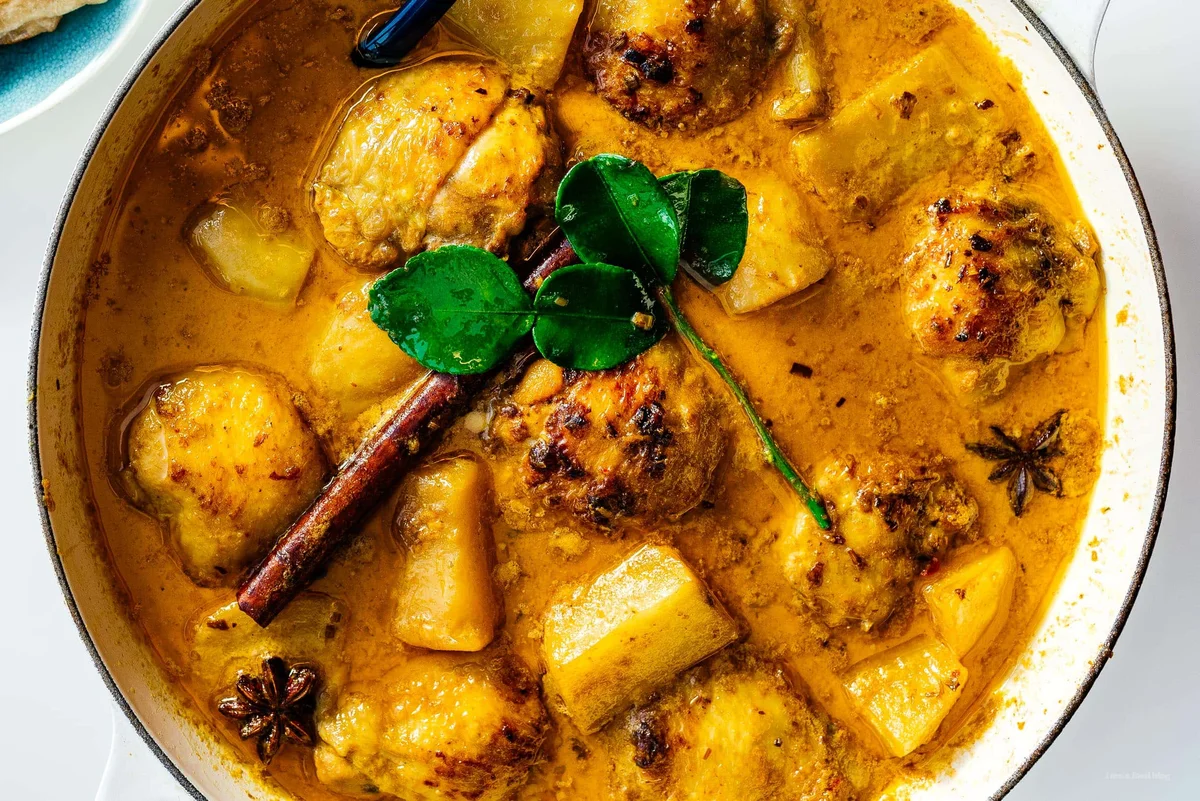
This Malaysian-style coconut chicken curry pairs bone-in chicken thighs and potatoes with a fragrant, gently spicy coconut sauce. It takes time to simmer, but the hands-on preparation is simple and makes a comforting meal to share.
Ingredients
- 2 stalkslemongrass, sliced
- 4 clovesgarlic, minced
- 2shallots, peeled and chopped
- 1 tbspginger, minced
- 2 tbspcurry powder, preferably Malaysian or South-East Asian
- 1/2 tspground turmeric
- 1/2 tspred pepper flakes, preferably Chinese
- 1Thai bird’s eye chilli, sliced (optional)
- 2 tbspoil
- 2 tbspoil
- 8chicken thighs, bone-in and skin-on
- 3–4small potatoes, peeled and quartered
- 1cinnamon stick
- 2star anise pods
- 5lime leaves (optional)
- 360 ml (1.5 cups)coconut milk
- 120 ml (1/2 cup)chicken stock
- 1 tbspfish sauce
- 2 tspbrown sugar
Instructions
- 1
Make the paste
Crush the lemongrass, garlic, shallots, ginger and Thai chilli in a mortar and pestle, or use a food processor, until paste-like. Mix in the curry powder, turmeric, crushed red pepper flakes and 2 tablespoons of oil. Coat the chicken thoroughly with the paste and leave it to marinate for 30 minutes.
- 2
Brown the chicken
Heat another 2 tablespoons of oil in a large Dutch oven. Fry the chicken skin-side down until golden, then turn it skin-side up and add the potatoes. Stir in the coconut milk, chicken stock, cinnamon stick, star anise and lime leaves.
- 3
Simmer until tender
Bring the curry to a gentle simmer and cook for 1 hour, or until the chicken is soft and tender. Season with the fish sauce and brown sugar before serving.
What is Malaysian coconut chicken curry?
Coconut chicken curry is a broad family of dishes found across South and South-East Asia, with regional versions shaped by local spices and ingredients. This version takes Malaysian-inspired flavours and brings them together in a one-pot meal.
The paste gives the chicken a fragrant, spiced coating, while coconut milk rounds out the heat. Potatoes simmer in the same sauce, making the curry substantial enough to serve as a main course.
Nutrition and macros by portion
The nutrition label shows one serving as written: 809 calories, 38g protein, 42g carbs, 56g fat.
| Portion | Adjustment | kcal | Protein | Carbs | Fat |
|---|---|---|---|---|---|
| Lighter | Less coconut milk | 566 kcal | 27g | 29g | 39g |
| This serving | As written | 809 kcal | 38g | 42g | 56g |
| Hungry | Add steamed rice | 1214 kcal | 57g | 63g | 84g |
The potatoes and coconut milk provide much of the carbohydrate, while the chicken thighs contribute protein and the coconut milk and cooking oil account for much of the fat. Serve with a modest portion of rice and add vegetables to balance the plate.
Build the flavour paste
Aromatic base: lemongrass, garlic, shallots and ginger form the foundation of the paste. Crushing them together helps blend their flavours before the chicken is coated.
Spice balance: curry powder and turmeric bring warmth and colour, while red pepper flakes and optional bird’s eye chilli add heat. Use the optional chilli to tailor the finished curry to your taste.
Marinate before cooking
The 30-minute marinating time lets the paste cling to the chicken before it goes into the pot. Coat the thighs thoroughly so the aromatics are spread across the pieces.
Skin first: starting the thighs skin-side down gives the skin time to turn golden before the liquid is added. Then turn them skin-side up for the simmer.
Let the curry simmer gently
Keep the pot at a gentle simmer for the full hour rather than letting it boil vigorously. The recipe’s doneness cue is chicken that is soft and tender.
The potatoes cook in the coconut milk and stock alongside the chicken. A fork should pass into them easily when they are ready.
Use the whole-spice aromatics
Cinnamon and star anise scent the sauce as it cooks, while lime leaves add a citrusy note if you use them. Keep these whole additions in the pot during the simmer and remove them when serving if you prefer not to eat them.
Finish with fish sauce and brown sugar, which add savoury depth and a hint of sweetness. Add both at the end as directed, then taste the sauce.
What to serve with it
Serve the curry with steamed rice to soak up the coconut sauce. The potatoes already make it filling, so rice can be served in a smaller portion if you like.
A crisp, lightly dressed vegetable side can bring freshness alongside the rich sauce. Put the chicken, potatoes and plenty of sauce in each serving.
Recipe notes & tips
- Use a mortar and pestle for the paste, or a food processor if that is more convenient.
- Keep the Thai bird’s eye chilli optional if you prefer a milder curry.
- Give the chicken the full 30 minutes to marinate while you prepare the other ingredients.
- Turn the thighs skin-side up after browning before adding the liquid and whole spices.
- Keep the curry at a gentle simmer during its hour of cooking.
- Add the fish sauce and brown sugar at the end, then taste the sauce before serving.
Variations
- Adjust the heat: Leave out the optional bird’s eye chilli for a gentler curry.
- Use lime leaves: Include the optional leaves for a citrusy aroma in the simmering sauce.
- Change the potatoes: Use the same quantity of another firm potato variety, peeled and quartered.
- Serve with rice: Spoon the curry over steamed rice to catch the coconut sauce.
- Make the paste by machine: Blend the aromatics in a food processor if you do not have a mortar and pestle.
Common mistakes to avoid
- Skipping the marinade: Leave the coated chicken for 30 minutes before cooking.
- Crowding the browning stage: Brown the thighs skin-side down in the large Dutch oven as directed.
- Boiling hard: Bring the curry to a gentle simmer and keep it there.
- Stopping too soon: Cook for 1 hour, or until the chicken is soft and tender.
- Forgetting the finish: Season with both fish sauce and brown sugar before serving.
How to store
Refrigerate leftovers in a covered container and eat within 3 days. Reheat gently in a saucepan until piping hot, adding a splash of water or stock if the sauce has thickened.
Frequently asked questions
How spicy is this coconut chicken curry?
It has heat from the red pepper flakes, with extra spice from the optional Thai bird’s eye chilli. Leave out the fresh chilli for a milder version.
Can I make the curry paste in a food processor?
Yes. The method allows a food processor as an alternative to a mortar and pestle; process the aromatics until they resemble a paste.
Can I use boneless chicken thighs?
The recipe specifies bone-in, skin-on thighs. Boneless thighs may cook faster, so check that they are tender rather than relying on the full simmer time.
How do I know when the chicken is done?
The method’s cue is that the chicken is soft and tender after simmering. The recipe allows about 1 hour.
Do I have to use the lime leaves?
No, they are optional. The curry can be made without them.
What should I serve with the curry?
Steamed rice works well with the coconut sauce. The potatoes in the curry also make it a filling dish on its own.
Cook it from the original
This recipe comes from iamafoodblog.com. Their page has the author’s own photos, notes and tips — the best place to cook it from.
Open the recipe on iamafoodblog.com