
Thai Rice Paper Rolls Recipe (Fresh Spring Rolls)
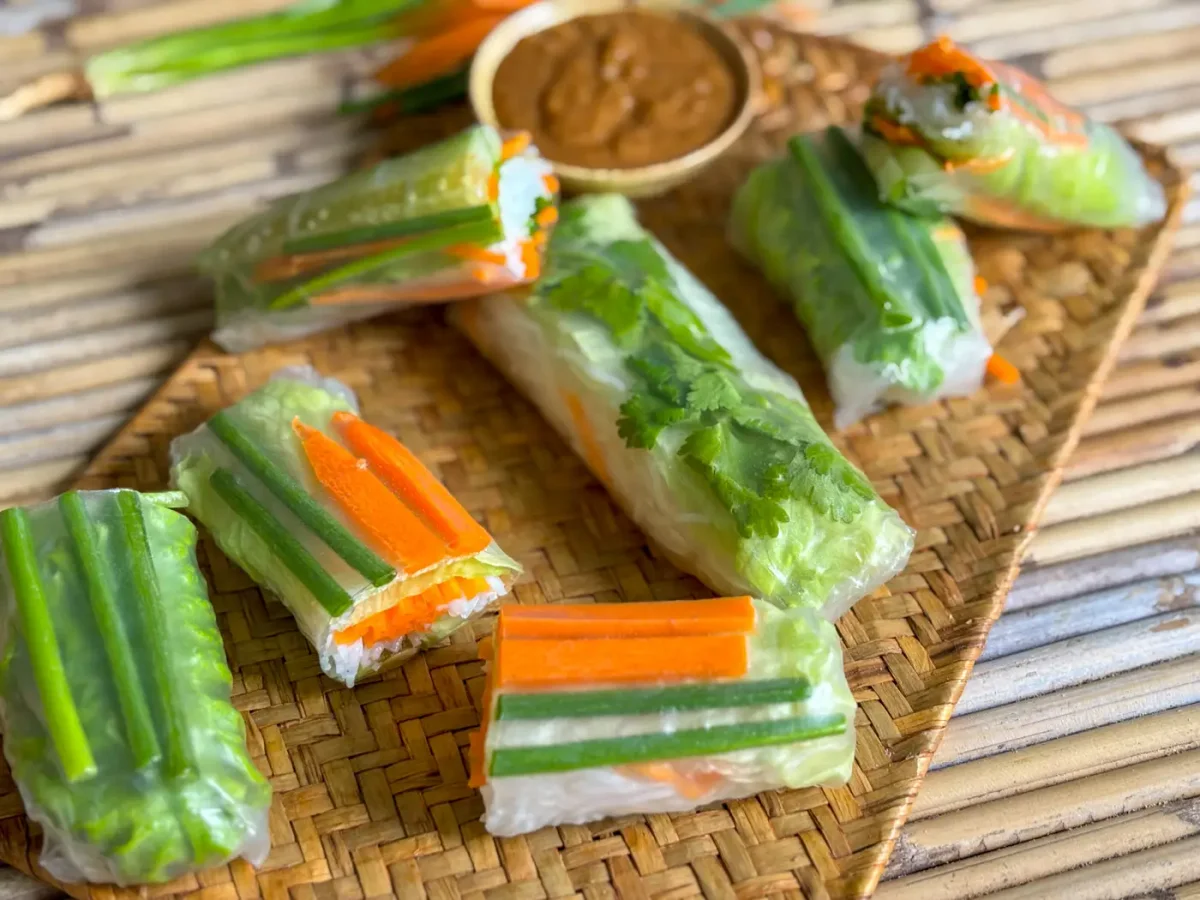
These Thai-style rice paper rolls wrap crisp vegetables and fresh herbs in soft, delicate sheets, with rice vermicelli as an optional filling. They need no cooking unless you choose to add noodles, making them a fresh, flexible meal for warm days.
Ingredients
- 1 packfresh rice paper
- to tasterice vermicelli (optional, cooked according to the packet)
- 1carrot, shredded
- 1lettuce, finely chopped
- 4spring onions, sliced into 2.5 cm pieces
- to tastefresh coriander
- to tastefresh mint
Instructions
- 1
Prepare the fillings
Slice the vegetables thinly and prepare the herbs and any optional protein. Keep everything bite-sized and within easy reach for rolling.
- 2
Cook the noodles
If using rice vermicelli, cook it according to the packet directions. Drain thoroughly and leave it to cool completely. If you like, toss it with a little garlic oil or crispy fried garlic.
- 3
Set up your station
Pour lukewarm water into a shallow dish. Set out a rolling surface, such as a chopping board, and arrange the fillings nearby.
- 4
Soften the rice paper
Dip one rice paper wrapper in the water for a few seconds, just until it softens, then lay it flat on your board.
- 5
Add the fillings
Arrange the fillings in the lower third of the wrapper: start with vegetables, then add noodles and herbs, plus shrimp, tofu or chicken if using.
- 6
Fold and roll
Fold the bottom of the wrapper over the filling, tuck in the sides and roll upwards gently but firmly, like a burrito.
- 7
Repeat the rolling
Make the remaining rolls in the same way. Cover finished rolls with a damp towel as you work.
- 8
Serve the rolls
Serve immediately with your favourite dipping sauce.
What are Thai rice paper rolls?
Rice paper rolls are fresh, uncooked rolls made by wrapping vegetables, herbs and other fillings in softened rice paper. They are associated with the fresh spring-roll traditions of Southeast Asia, and this Thai-style version keeps the filling simple and adaptable.
Crisp vegetables bring freshness, while mint and coriander give the rolls an aromatic lift. Optional vermicelli makes them more substantial without changing the no-cook approach to the fillings.
Nutrition and macros by portion
The nutrition label shows one serving as written: 6 calories, 0g protein, 1g carbs, 0g fat.
| Portion | Adjustment | kcal | Protein | Carbs | Fat |
|---|---|---|---|---|---|
| Lighter | Skip the vermicelli | 4 kcal | 0g | 1g | 0g |
| This serving | As written | 6 kcal | 0g | 1g | 0g |
| Hungry | Add noodles and protein | 9 kcal | 0g | 2g | 0g |
The listed vegetables and herbs contribute most of the carbohydrate, while optional vermicelli adds more; the rice paper also contributes carbohydrate. There is little protein in the listed fillings, so adding tofu, shrimp or chicken can make the rolls more filling, and a side of extra vegetables can balance the plate.
Choose and prepare the fillings
Vegetables: Slice or shred them finely so they fit neatly inside the wrapper and remain easy to bite through. Keep the pieces small and dry rather than adding wet or bulky fillings.
Herbs: Add coriander and mint to taste, distributing them across the rolls for a fresh, fragrant filling.
Noodles: Rice vermicelli is optional. If you use it, drain it well and cool it completely before assembling the rolls.
Soften the rice paper carefully
Water: Lukewarm water softens the wrapper enough to fold. Dip it only for a few seconds; it will continue to soften after you lift it out.
Work surface: Lay each softened sheet flat on a board before filling. A wrapper that is too wet or left soaking can become difficult to handle.
Roll without tearing
Filling position: Keep the ingredients in the lower third of the wrapper and avoid overfilling. A compact line of filling leaves room to fold in the sides.
Rolling: Bring the bottom over the filling, tuck in both sides and roll upwards with gentle, even pressure. Firm handling helps hold the roll together, but pulling too hard can split the rice paper.
Texture and serving
A good roll has a soft, pliable wrapper around crisp vegetables and tender herbs. The filling should stay contained without making the wrapper tight or stretched.
Serve the rolls as soon as they are assembled with a dipping sauce of your choice. If making several at once, keep the finished rolls covered with a damp towel while you work.
Make the work easier
Set out the fillings before wetting the first wrapper, as softened rice paper is easiest to roll while you work promptly. Keep the filling pieces within reach and prepare each wrapper individually.
The listed method takes 30 minutes in total, with no cooking needed unless you choose to add vermicelli. Allow cooked noodles to cool fully before they go into the rolls.
Recipe notes & tips
- Prepare and arrange all the fillings before dipping the first wrapper.
- Cut the vegetables into thin, bite-sized pieces so they are easier to roll.
- Dip each rice paper sheet briefly rather than leaving it in the water.
- Drain and cool the vermicelli completely before adding it to the rolls.
- Keep finished rolls under a damp towel while assembling the rest.
Variations
- Add tofu: Include bite-sized tofu for a plant-based protein filling.
- Use shrimp: Add cooked shrimp alongside the vegetables and herbs.
- Include chicken: Add cooked chicken in small pieces for a more substantial roll.
- Boost the herbs: Use extra mint or coriander for a more aromatic filling.
- Add garlic: Toss cooled vermicelli with a little garlic oil or crispy fried garlic.
Common mistakes to avoid
- Soaking too long: The wrapper can become hard to handle; dip it for only a few seconds.
- Overfilling: Too much filling makes folding difficult; use a compact amount in the lower third.
- Wet noodles: Excess water can make the filling soggy; drain the vermicelli thoroughly.
- Rolling too tightly: Pulling hard can tear the wrapper; use gentle, even pressure.
- Leaving rolls uncovered: They can dry out while you work; cover them with a damp towel.
How to store
These rolls are best served immediately. If needed, keep them covered with a damp towel in an airtight container in the fridge and eat within a day; the wrappers may firm up, so serve them chilled rather than reheating.
Frequently asked questions
Do I have to use rice vermicelli?
No. The noodles are optional, and the rolls can be filled with just the vegetables and herbs.
How long should I dip the rice paper?
Dip it for a few seconds, just until it starts to soften. It will continue softening once it is laid on the board.
Can I prepare the rolls ahead?
They are best made shortly before serving, as the wrappers can dry or become firmer in storage. If you do make them ahead, cover them with a damp towel and refrigerate in an airtight container.
What can I add for more protein?
The method suggests shrimp, tofu or chicken as optional additions. Prepare any protein before assembling the rolls.
Why is my wrapper tearing?
It may have been soaked for too long, overfilled or pulled too firmly while rolling. Dip briefly, keep the filling compact and fold with gentle pressure.
Cook it from the original
This recipe comes from hungryinthailand.com. Their page has the author’s own photos, notes and tips — the best place to cook it from.
Open the recipe on hungryinthailand.com