
30-Minute Creamy Cauliflower and Orange Pasta
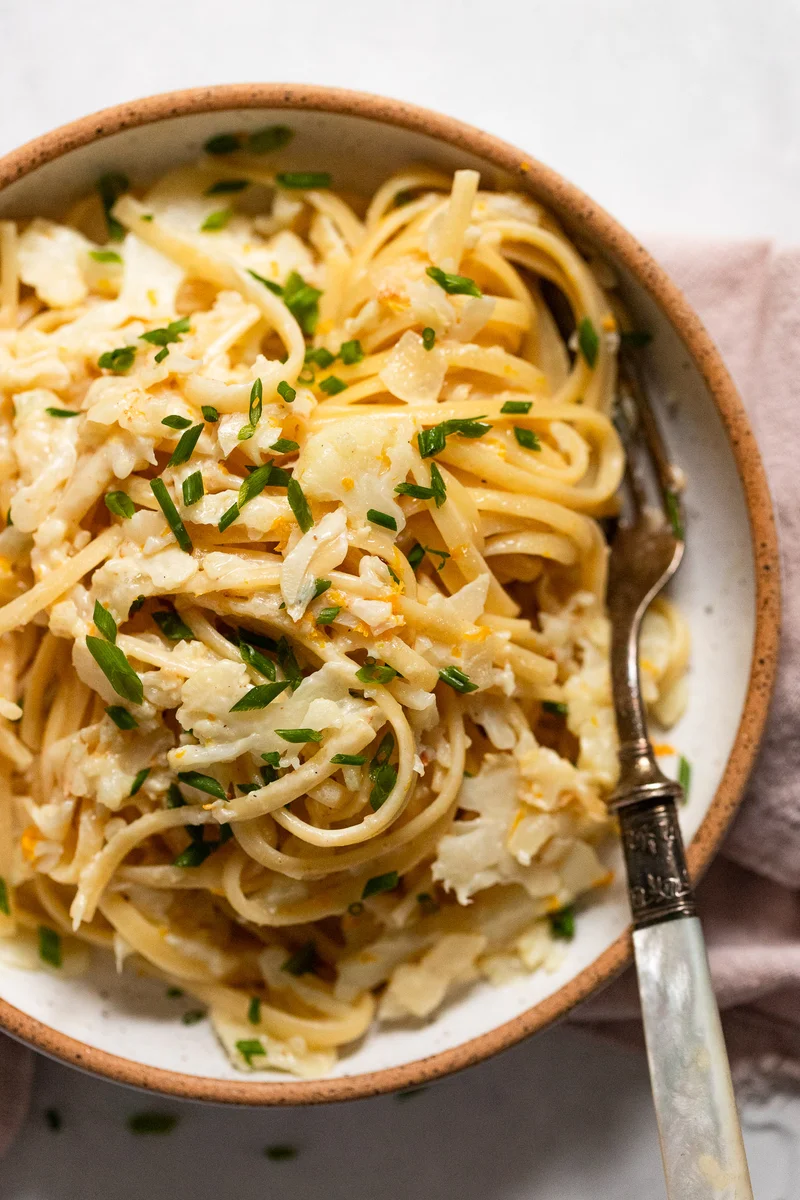
Thinly sliced cauliflower and linguine come together in a silky sauce brightened with orange zest and juice. It makes a quick, satisfying dinner with a balance of sweet citrus, gentle heat and creamy richness.
Ingredients
- 57 g (4 tablespoons)butter
- 150 g (1 cup)yellow onion or shallot, diced
- about 400 g (4 cups)cauliflower, thinly sliced
- 454 g (16 ounces)dried linguine
- 3–4 clovesgarlic, minced
- 1 tablespoonorange zest, from 1 orange
- 1 pinchred pepper flakes
- ¼–½ teaspoonground nutmeg
- 120 ml (½ cup)orange juice, from 1 orange
- 120 ml (½ cup)half-and-half
- 240 ml (1 cup)reserved pasta water
- to tastesalt
- to garnishfresh chives, chopped
Instructions
- 1
Start the sauce
Bring a large pot of salted water to the boil. While it heats, melt the butter in a large frying pan over medium-high heat. Add the diced onion and a pinch of salt; cook for about 2 minutes. Add the cauliflower and stir to coat, then spread it in an even layer to encourage browning.
- 2
Cook the pasta
After the cauliflower has cooked for about 8 minutes, add the linguine to the boiling water. Cook it for 1–2 minutes less than the packet’s al dente timing.
- 3
Season the cauliflower
Cook the cauliflower for 2 more minutes, then add the garlic, orange zest, nutmeg, red pepper flakes and another generous pinch of salt.
- 4
Add the cream
Cook for about 2 minutes, then pour in the orange juice to deglaze the pan. Let it reduce for 1–2 minutes, gradually stir in the half-and-half and lower the heat to low while the pasta finishes cooking.
- 5
Reserve pasta water
Before draining the pasta, reserve 1 cup of its cooking water. Stir about ½ cup into the sauce and raise the heat to medium, bringing it to a gentle simmer.
- 6
Toss and finish
Drain the pasta without rinsing it, or lift it directly into the sauce. Toss to coat, adding up to another ½ cup of pasta water as needed to reach your preferred consistency. Cook for 1–2 minutes, until the pasta is al dente, then taste and adjust the salt.
- 7
Garnish and serve
Scatter over chopped fresh chives and, if desired, some extra orange zest. The recipe also suggests chopped walnuts or toasted breadcrumbs as optional finishing touches.
What is creamy cauliflower and orange pasta?
This is a pasta dish that pairs linguine with thinly sliced cauliflower in a butter-and-cream sauce lifted by orange. Its inspiration is a popular Minneapolis dish, while the flavours draw on familiar Italian combinations of pasta, vegetables and aromatic seasonings.
The thin cauliflower cooks quickly and catches in the strands of pasta. Orange zest and juice bring fragrance and brightness, while reserved pasta water helps the sauce cling.
Nutrition and macros by portion
The nutrition label shows one serving as written: 621 calories, 19g protein, 99g carbs, 17g fat.
| Portion | Adjustment | kcal | Protein | Carbs | Fat |
|---|---|---|---|---|---|
| Lighter | Use less butter | 435 kcal | 13g | 69g | 12g |
| This serving | As written | 621 kcal | 19g | 99g | 17g |
| Hungry | Larger pasta portion | 932 kcal | 29g | 149g | 26g |
The linguine supplies most of the carbohydrates, while butter and half-and-half contribute much of the fat. The pasta and cauliflower provide some protein, with the pasta carrying the larger share. Pair a serving with a green salad or extra vegetables for a more varied plate.
Why slice the cauliflower thinly?
Thin slices cook in the short time available and can brown at the edges while softening in the pan. Try to keep them similar in thickness so they cook at roughly the same pace.
Spread the cauliflower in an even layer rather than piling it up. This gives it better contact with the pan and makes browning more likely.
Build the orange cream sauce
Orange zest brings aromatic citrus oils to the pan, while the juice adds a sharper, more direct citrus flavour. Add both with the garlic and spices after the cauliflower has had time to cook.
Let the juice reduce for 1–2 minutes before stirring in the half-and-half. Keep the heat low once the cream is in, then use pasta water to loosen the sauce as needed.
Time the pasta and cauliflower
Start cooking the linguine after the cauliflower has cooked for about 8 minutes. The recipe calls for taking the pasta out of the water 1–2 minutes before the packet’s al dente timing.
The pasta finishes in the sauce for another 1–2 minutes, so keep it moving and check the texture as it cooks. Reserve the pasta water before draining.
Use pasta water for texture
Begin with about ½ cup of reserved water, added to the sauce at a gentle simmer. Its starch helps the sauce coat the linguine rather than sit separately in the pan.
Add the remaining water gradually, up to ½ cup more, until the sauce looks silky and clings to the pasta. The exact amount depends on how much the sauce has reduced.
Serve it while silky
Finish with chopped chives and, if you like, extra orange zest. Serve promptly so the sauce stays loose and glossy as it coats the pasta.
A crisp green salad or simply cooked green vegetables make an easy accompaniment. For a contrasting finish, the recipe also suggests chopped walnuts or toasted breadcrumbs.
Recipe notes & tips
- Slice the cauliflower thinly so it cooks within the stated time.
- Spread the cauliflower out in the pan to encourage browning.
- Zest the orange before juicing it.
- Reserve the pasta water before draining the linguine.
- Add pasta water in stages so you can control the sauce consistency.
- Taste the sauce before serving and adjust the salt.
Variations
- Use shallot: Swap it for the diced yellow onion as listed.
- Adjust the heat: Use the smaller pinch of red pepper flakes for gentler warmth.
- Change the herb: Use chopped parsley instead of chives, as suggested in the method.
- Add crunch: Finish with chopped walnuts or toasted breadcrumbs, as suggested in the method.
- Boost the citrus: Add extra fresh orange zest at the end, as suggested in the method.
Common mistakes to avoid
- Crowded cauliflower: Spread it in an even layer so it has a chance to brown.
- Overcooked pasta: Start checking it 1–2 minutes before the packet’s al dente timing.
- Forgotten pasta water: Reserve 1 cup before draining the linguine.
- Rinsed pasta: Drain without rinsing so the sauce can coat it.
- Too much pasta water at once: Stir it in gradually and stop when the sauce is silky.
- High heat after adding cream: Lower the heat to low while the pasta finishes.
How to store
Refrigerate leftovers in a covered container and use within 3 days. Reheat gently in a pan, adding a splash of water to loosen the sauce; avoid a hard boil.
Frequently asked questions
Can I use another pasta shape?
Yes. Use a similar amount of dried pasta and cook it according to its packet, stopping 1–2 minutes before al dente so it can finish in the sauce.
Can I prepare the cauliflower ahead?
You can slice it ahead and keep it covered in the refrigerator. Cook it in the pan shortly before serving so it can brown and soften as directed.
How do I keep the sauce from getting too thick?
Add reserved pasta water a little at a time while tossing the pasta. The method allows up to 1 cup in total.
How much nutmeg should I use?
The recipe gives a range of ¼–½ teaspoon. Choose the amount that suits your taste.
Can I leave out the red pepper flakes?
Yes. They add a little heat, so omit them if you prefer a milder sauce.
Cook it from the original
This recipe comes from forkinthekitchen.com. Their page has the author’s own photos, notes and tips — the best place to cook it from.
Open the recipe on forkinthekitchen.com