
Authentic Panang Curry Recipe
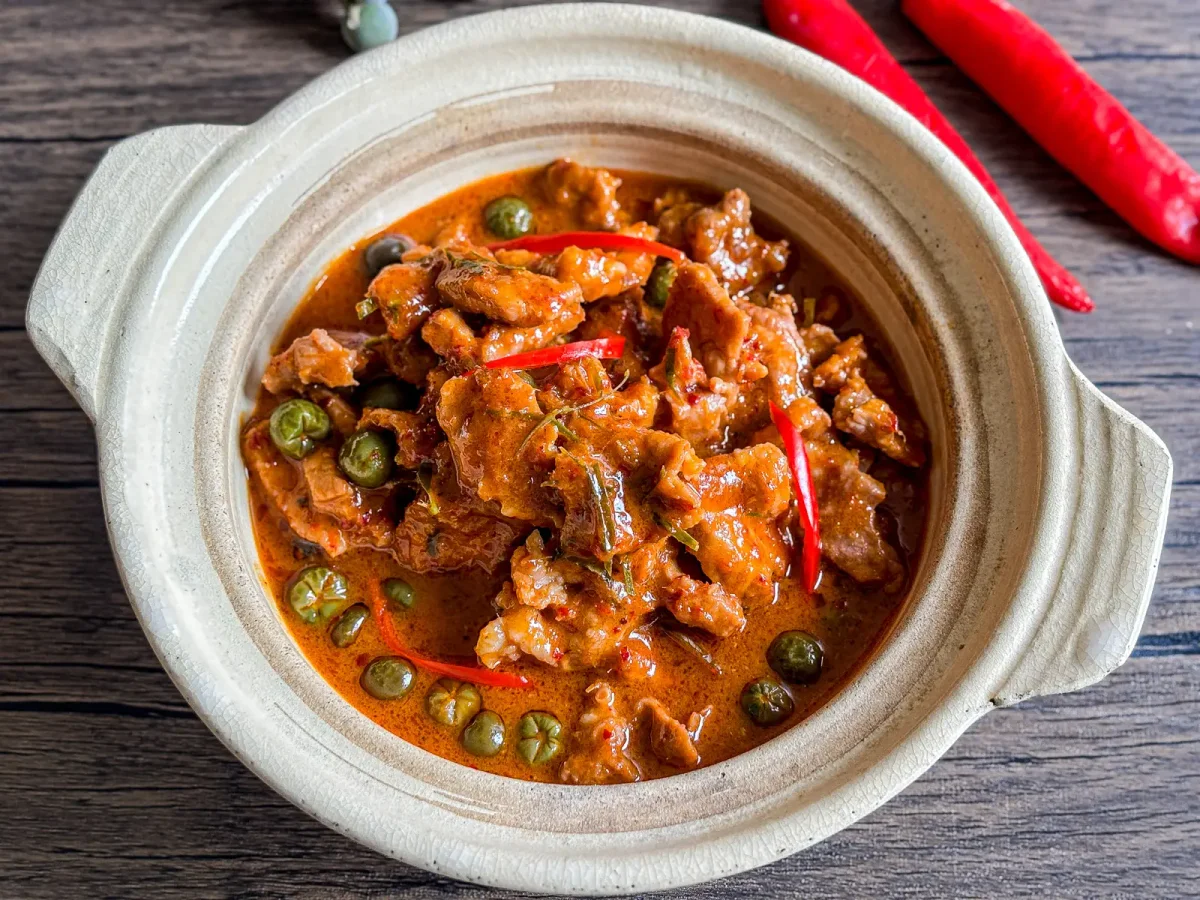
This quick Panang curry pairs pork with a rich coconut sauce flavoured with curry paste, fish sauce, palm sugar and kaffir lime leaves. It is a useful weeknight option when you want a creamy, aromatic curry ready in about 20 minutes.
Ingredients
- 480 ml (2 cups)coconut milk
- 45 ml (3 tbsp)Panang curry paste
- About 315 g (2 1/4 cups)pork, thinly sliced
- About 32 g (2 1/2 tbsp)palm sugar
- 60 ml (4 tbsp)fish sauce
- 1 handfulpea aubergines (optional)
- 4kaffir lime leaves, cut into thin strips
- 3chillies, seeds removed (optional)
Instructions
- 1
Prepare ingredients
Cut the pork into thin, bite-sized pieces. Slice the kaffir lime leaves and red chillies into fine strips.
- 2
Heat coconut milk
Set a pot over medium heat, add one-third of the coconut milk and stir until it thickens and the oil begins to separate.
- 3
Fry the paste
Stir the Panang curry paste into the thickened coconut milk until fragrant and evenly combined.
- 4
Season and simmer
Add the remaining coconut milk, palm sugar, fish sauce and pork.
- 5
Cook the pork
Stir to separate the pieces of meat, then simmer until the pork is just cooked through.
- 6
Add aromatics
Stir in the pea aubergines, if using, along with most of the lime leaf strips and the chillies.
- 7
Finish the curry
Simmer for a further minute, until the sauce is thick and glossy. Serve over jasmine rice and scatter over the remaining lime leaf strips.
What is Panang curry?
Panang curry is a Thai curry known for its thick, coconut-rich sauce and fragrant seasoning. This version combines pork with Panang curry paste, fish sauce, palm sugar and kaffir lime leaves.
The method builds flavour by frying the paste in thickened coconut milk before adding the rest of the liquid and the pork. That gives the sauce a chance to become aromatic and cohesive in a short cooking time.
Nutrition and macros by portion
The nutrition label shows one serving as written: 629 calories, 26g protein, 14g carbs, 54g fat.
| Portion | Adjustment | kcal | Protein | Carbs | Fat |
|---|---|---|---|---|---|
| Lighter | Use less coconut milk | 440 kcal | 18g | 10g | 38g |
| This serving | As written | 629 kcal | 26g | 14g | 54g |
| Hungry | Serve with extra rice | 944 kcal | 39g | 21g | 81g |
The pork provides most of the protein, while the coconut milk contributes much of the fat and energy; the palm sugar and coconut milk also supply some carbohydrates. Serve a moderate amount of jasmine rice with the curry and add vegetables to round out the plate.
The role of each ingredient
Coconut milk: The recipe uses part of it to fry the curry paste, then adds the rest to make the sauce. Stir as it heats so you can see when it thickens and the oil begins to separate.
Panang paste: Frying it briefly in the coconut milk brings out its fragrance before the other ingredients go in.
Palm sugar and fish sauce: These season the sauce with sweetness and savoury depth. Add them as directed, then taste the curry before serving if you want to check the balance.
Getting the pork tender
Cut the pork thinly and into pieces that are similar in size so they cook at much the same pace. Stir as it simmers to separate any pieces that stick together.
Stop cooking once the pork is just cooked through. A further minute of simmering comes after the aromatics are added, so avoid leaving the meat on the heat longer than the method requires.
How the sauce comes together
Coconut milk: Heating one-third first gives the paste a thick base to fry in. Look for thickening and the first signs of oil separating before you add the paste.
Final simmer: Once the pork and seasonings are in, simmer gently and stir. The last minute helps the sauce turn thick and glossy without a long reduction.
Using the lime leaves and chillies
Kaffir lime leaves: Slice them into fine strips so they are easy to distribute through the curry. Reserve some for the final garnish, as the recipe directs.
Chillies: Removing the seeds and using them optionally lets you adjust the heat to suit your preference. Add them with most of the lime leaves near the end.
Serving the curry
Serve the curry over jasmine rice, as suggested in the method, so the rice can take up some of the rich sauce. Finish with the reserved lime leaf strips for a fresh, aromatic accent.
For a more balanced plate, add a simple vegetable side alongside the rice and curry.
Recipe notes & tips
- Slice the pork thinly so it cooks quickly and evenly.
- Keep stirring the first portion of coconut milk as it heats to spot when it thickens and the oil separates.
- Fry the curry paste until fragrant before adding the remaining ingredients.
- Stir during the simmer to keep the pork pieces from clumping together.
- Hold back some lime leaf strips for the final garnish.
- Add the chillies only if you want their heat in the finished curry.
Variations
- Skip the pea aubergines: Leave them out if they are unavailable or not to your taste.
- Adjust the chilli: Omit the chillies for a milder curry or include them for more heat.
- Change the protein: Use thinly sliced chicken in place of pork, checking that it is cooked through.
- Serve with vegetables: Add a simple vegetable side alongside the curry and jasmine rice.
- Garnish generously: Reserve extra lime leaf strips to add a stronger citrus aroma at the table.
Common mistakes to avoid
- Adding all the coconut milk at once: Heat one-third first so the paste can fry in the thickened coconut milk.
- Skipping the paste-frying stage: Stir it into the thick coconut milk until fragrant before adding the rest.
- Leaving the pork in clumps: Stir as it simmers to separate the thin slices.
- Overcooking the pork: Simmer only until just cooked through, then follow the brief final simmer.
- Adding all the lime leaves at the start: Keep some aside to finish the curry as directed.
How to store
Cool leftovers promptly and refrigerate in a covered container for up to 3 days. Reheat gently in a saucepan until piping hot, stirring occasionally; add a small splash of water if the sauce has thickened too much.
Frequently asked questions
Can I make this curry without pea aubergines?
Yes. They are optional in the recipe, so leave them out if you do not have them.
How can I make the curry less hot?
Omit the optional chillies and remove the seeds from any you do use.
How do I know when the pork is done?
Simmer until the thin pork pieces are just cooked through. Stir to separate them and avoid cooking them longer than needed.
Why heat only part of the coconut milk first?
The method thickens one-third of the coconut milk before the paste is added, so the paste can fry in that base. The remaining milk goes in afterwards to form the sauce.
What should I serve with Panang curry?
The method suggests jasmine rice. A simple vegetable side also works well alongside the rich curry.
Can I prepare the ingredients ahead?
You can slice the pork, lime leaves and chillies in advance and keep them covered in the fridge. Cook the curry shortly before serving for the best texture.
Cook it from the original
This recipe comes from hungryinthailand.com. Their page has the author’s own photos, notes and tips — the best place to cook it from.
Open the recipe on hungryinthailand.com