
Beef Tenderloin
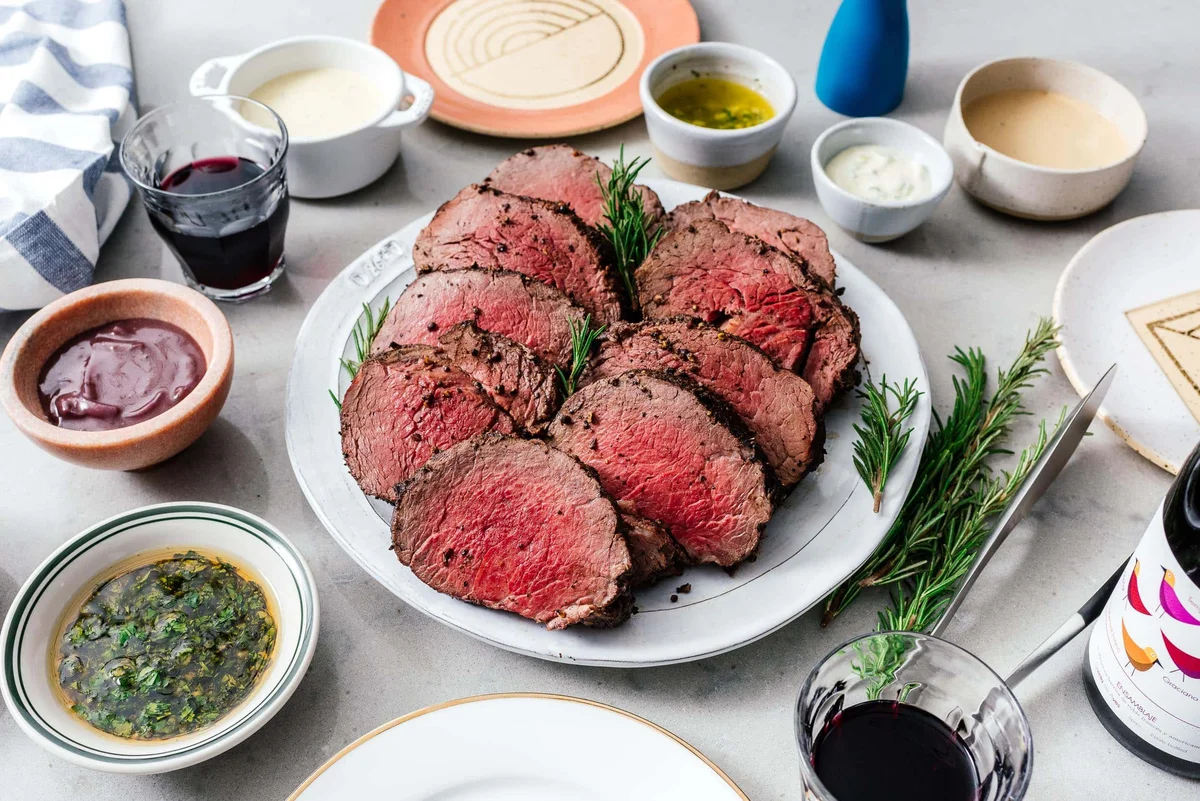
Roast beef tenderloin is an American centrepiece with a peppercorn crust and a tender, rosy middle. Tying the meat to an even thickness helps it cook more consistently, while a low-temperature finish gives you time to reach your preferred doneness.
Ingredients
- 1 tenderloin, trimmed, about 2.3–2.7 kg (5–6 lb)beef tenderloin
- to tasteneutral oil
- to tastesalt
- 120 ml (½ cup)peppercorns, crushed
- as neededbutcher’s string
Instructions
- 1
Tie the tenderloin
Pat the tenderloin dry with paper towels and season it with salt. Soak some butcher’s string in oil, then tie the meat at intervals of about 2.5 cm (1 inch), tucking in the thin ends so the tenderloin is an even thickness.
- 2
Add the pepper
Rub the tenderloin with oil and cover it with the crushed peppercorns. Heat the oven to 245°C (475°F).
- 3
Start the roast
Set the tenderloin on an oiled roasting rack over a rimmed baking sheet and insert a meat probe set to your preferred doneness. Once the oven is hot, roast the meat at 245°C (475°F) for 20 minutes.
- 4
Lower the heat
Reduce the oven temperature to 93°C (200°F) and continue roasting until the centre reaches 49–52°C (120–125°F) for rare to medium-rare, about 2–2½ hours depending on the size.
- 5
Rest and slice
When the meat reaches your preferred temperature, take it out, tent it with foil and rest it for at least 10 minutes. Slice into pieces about 2.5 cm (1 inch) thick, arrange on a platter and serve.
What is beef tenderloin?
Beef tenderloin is a particularly tender cut from the loin, often served as a roast for a celebratory meal in the United States. Its mild flavour suits a simple seasoning and a crisp, peppery coating.
This version starts hot to brown the outside, then cooks at a much lower temperature. Tying the roast into an even shape helps the thinner ends cook more evenly with the centre.
Nutrition and macros by portion
The nutrition label shows one serving as written: 422 calories, 55g protein, 0g carbs, 21g fat.
| Portion | Adjustment | kcal | Protein | Carbs | Fat |
|---|---|---|---|---|---|
| Lighter | Smaller beef slice | 295 kcal | 39g | 0g | 14g |
| This serving | As written | 422 kcal | 55g | 0g | 21g |
| Hungry | Larger beef portion | 633 kcal | 83g | 0g | 31g |
The beef provides most of the protein and fat, while the crushed peppercorns add flavour with very little carbohydrate. For a balanced plate, serve a slice with vegetables and a modest portion of potatoes or another filling side.
Shape the roast evenly
Tie firmly: Loops of butcher’s string about 2.5 cm (1 inch) apart help keep the tenderloin compact. Tuck the narrow ends underneath so they are less exposed to the heat.
Dry the surface: Patting the meat dry before seasoning helps the oil and peppercorns cling and gives the exterior a better chance to brown.
Build the pepper crust
Crush the peppercorns: Aim for a coarse texture rather than powder, so the coating stays distinct and gives each slice a clear peppery bite.
Season simply: Salt brings out the beef’s flavour, while neutral oil helps the peppercorns adhere. Apply the coating over the whole surface, including the ends.
Use temperature as your guide
Probe the centre: Position the meat probe in the thickest part of the tenderloin, avoiding the roasting rack. The recipe’s 49–52°C (120–125°F) target is for rare to medium-rare.
Check the reading: Roasting time varies with the size and shape of the roast, so use the centre temperature rather than the clock alone to judge when it is ready.
Why the oven temperature changes
Hot start: The first 20 minutes at 245°C (475°F) help colour the exterior and set the pepper coating.
Gentle finish: Lowering the oven to 93°C (200°F) lets the centre warm more gradually. Keep the roasting rack over a rimmed baking sheet to catch drips.
Rest before carving
After roasting, tent the tenderloin loosely with foil and leave it to rest for at least 10 minutes. This gives the meat time to settle before slicing.
Cut across the roast into slices about 2.5 cm (1 inch) thick. Arrange them on a platter so the peppered crust is visible and the slices are easy to serve.
What to serve alongside it
Pair the tenderloin with roasted potatoes or another starchy side, plus green vegetables or a crisp salad. These add contrast to the rich beef and pepper crust.
A sharp mustard or horseradish sauce can complement the mild meat; serve it alongside so everyone can choose how much to add.
Recipe notes & tips
- Let the meat probe guide doneness rather than relying only on the estimated roasting time.
- Use coarse crushed peppercorns for a more noticeable crust.
- Tuck the narrow ends underneath before tying to help the roast keep an even shape.
- Oil the roasting rack so the meat is less likely to stick.
- Rest the roast for at least 10 minutes before slicing.
- Slice across the tenderloin for neat, easy-to-serve portions.
Variations
- Coarser pepper: Leave some peppercorns in larger pieces for a more pronounced crunch.
- Herb crust: Mix finely chopped rosemary into the crushed peppercorns before coating the beef.
- Garlic note: Rub a little minced garlic over the oiled tenderloin before adding the pepper.
- Sauce on the side: Serve with mustard or horseradish for a sharper contrast.
- Different doneness: Set the meat probe to your preferred doneness and use the reading to decide when to remove the roast.
Common mistakes to avoid
- Skipping the tying: An uneven roast cooks less consistently; tuck in the thin ends and tie the meat at regular intervals.
- Using a time alone: Roast size affects cooking time; check the centre with a meat probe.
- Placing the probe poorly: Insert it into the thickest part of the meat, not against the rack.
- Crushing the pepper too finely: Powder can make a dense coating; keep the peppercorns coarse.
- Cutting immediately: The juices can run out more readily; rest the roast for at least 10 minutes first.
How to store
Refrigerate leftover beef in a covered container within 2 hours and use within 3–4 days. Reheat gently until hot, or serve chilled in thin slices.
Frequently asked questions
Can I make this without a meat probe?
A probe is the most reliable way to track the centre temperature for this roast. Without one, check the thickest part with an instant-read thermometer and expect the timing to vary.
How long should I roast the tenderloin?
After the initial 20 minutes at 245°C (475°F), the recipe estimates about 2–2½ hours at 93°C (200°F). The roast’s size affects the timing, so use its centre temperature as the guide.
What doneness does 49–52°C (120–125°F) indicate?
The recipe gives this as the target for rare to medium-rare. Choose the reading that suits your preferred doneness.
Why tie the tenderloin?
Tying helps the roast hold an even thickness, especially when the ends are tapered. That encourages more consistent cooking from end to end.
Can I prepare the roast ahead?
You can tie and season it ahead, then keep it covered in the refrigerator until you are ready to roast. Allow extra time if the meat is still very cold when it goes into the oven.
What should I serve with beef tenderloin?
Roasted potatoes and green vegetables make a straightforward meal. A crisp salad or a sharp sauce also works well alongside the rich beef.
Cook it from the original
This recipe comes from iamafoodblog.com. Their page has the author’s own photos, notes and tips — the best place to cook it from.
Open the recipe on iamafoodblog.com