
Crunchy Peanut Butter Cookies
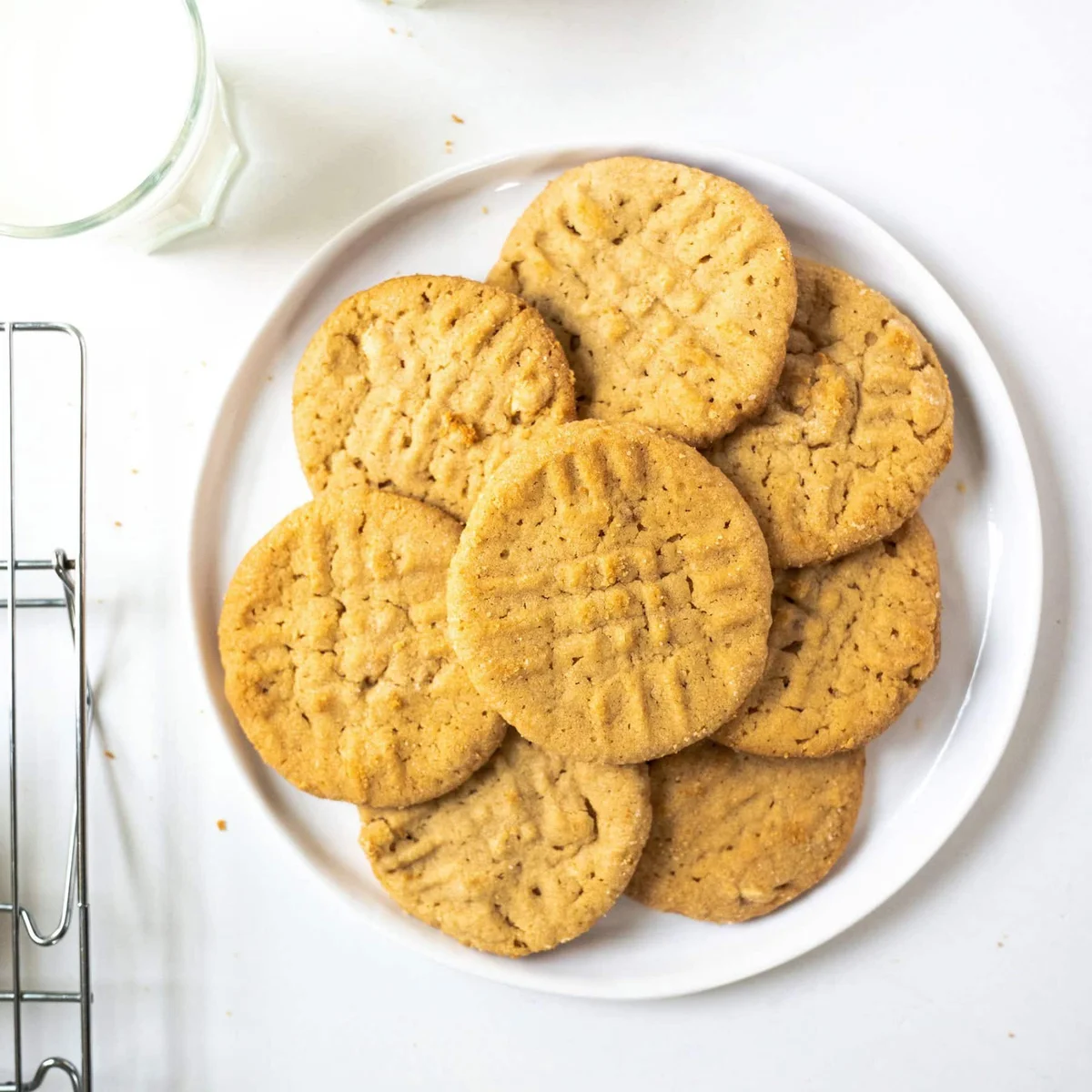
These American peanut butter cookies bake up crisp around the edges, with a slightly soft middle and crunchy pieces of roasted peanut throughout. They’re straightforward to make, easy to carry and well suited to sharing.
Ingredients
- 207 g (1½ cups plus 2 tablespoons)plain flour
- 1 teaspoonbicarbonate of soda
- ¼ teaspoonbaking powder
- ¼ teaspoonsalt
- 170 g (1½ sticks), cool room temperatureunsalted butter
- 100 g (½ cup)granulated sugar
- 100 g (½ cup)light brown sugar
- 201 g (¾ cup)creamy peanut butter
- 1 largeegg
- ½ teaspoonvanilla extract
- 70 g (½ cup), roughly choppeddry-roasted peanuts
- 67 g (⅓ cup)granulated sugar, for rolling
Instructions
- 1
Prepare the oven
Heat the oven to 190°C (375°F). Line large baking trays with baking parchment.
- 2
Mix dry ingredients
In a medium bowl, stir together the flour, bicarbonate of soda, baking powder and salt.
- 3
Make the dough
Using an electric mixer on medium-high, beat the butter with both sugars until smooth and combined, for 1 to 2 minutes. Mix in the peanut butter, then the egg and vanilla. Turn the mixer to low and gradually beat in the flour mixture until combined. Fold in the peanuts.
- 4
Shape the cookies
Use a medium spring-loaded scoop to portion the dough into 1½-tablespoon rounds. Roll each in the granulated sugar, then arrange on the prepared trays about 5 cm (2 inches) apart. Press each round twice with the back of a fork to flatten it slightly and make a criss-cross pattern.
- 5
Bake and cool
Bake for 10 to 12 minutes, until the edges are lightly browned. Leave the cookies on the trays for 10 minutes, then transfer them to wire racks to cool completely.
What are peanut butter cookies?
Peanut butter cookies are a familiar American bake, often shaped with a fork pressed across the top. This version pairs a soft-centred, crisp-edged cookie with chopped dry-roasted peanuts for extra crunch.
Creamy peanut butter gives the dough its rich, nutty base, while a coating of sugar adds a lightly crisp outside. The fork marks also flatten the rounds so they bake evenly.
Nutrition and macros by portion
The nutrition label shows one serving as written: 156 calories, 4g protein, 17g carbs, 9g fat.
| Portion | Adjustment | kcal | Protein | Carbs | Fat |
|---|---|---|---|---|---|
| Lighter | Smaller cookie portions | 109 kcal | 2g | 12g | 6g |
| This serving | As written | 156 kcal | 4g | 17g | 9g |
| Hungry | Larger cookie portion | 234 kcal | 5g | 26g | 14g |
The flour and sugars provide most of the carbohydrates, while butter and peanut butter contribute much of the fat; peanut butter, peanuts and egg also supply protein. Pair a cookie or two with fruit and milk or yoghurt for a more rounded snack.
The ingredients that matter
Peanut butter: Use creamy peanut butter for a smooth, cohesive dough, and keep the chopped roasted peanuts for distinct crunchy pieces.
Butter and sugars: Cool room-temperature butter is soft enough to beat with the sugars but should not be melted. The two sugars help build flavour and a tender centre.
Flour and raising agents: Measure the flour carefully and mix it with the bicarbonate of soda, baking powder and salt before adding it to the wet ingredients.
Getting the dough right
Creaming: Beat the butter and sugars for the stated 1 to 2 minutes, stopping once the mixture looks smooth and well combined. Add the peanut butter, egg and vanilla in turn.
Mixing: Add the flour mixture on low speed and stop as soon as it is incorporated. Stir in the peanuts at the end so they stay distributed through the dough.
Shaping and fork marks
Portions: A medium spring-loaded scoop makes rounds of about 1½ tablespoons, helping the cookies bake at a similar rate. Roll each portion in the reserved sugar before setting it on the tray.
Pattern: Press the back of a fork into each ball twice, crossing the marks and flattening the dough slightly. Leave about 5 cm between rounds so the cookies have room to spread.
When the cookies are done
Edges: Take the trays out when the edges are slightly browned, after 10 to 12 minutes. The centres may still look soft; they firm as the cookies cool.
Cooling: Leave the cookies on the baking trays for 10 minutes before moving them. This gives them time to set without losing their tender middle.
Serving and carrying
These cookies are easy to pack once fully cooled, making them handy for a picnic, gathering or lunchbox. Let them cool completely before stacking so the sugar coating and forked tops stay neat.
For a simple dessert plate, serve them with fresh fruit or alongside tea, coffee or a glass of milk.
Recipe notes & tips
- Use butter that is cool and pliable rather than melted or greasy.
- Scrape down the mixer bowl if the butter and sugars are not combining evenly.
- Keep the mixer on low when adding the flour to avoid overworking the dough.
- Use the same scoop for each portion to help the cookies bake evenly.
- Bake one tray at a time if your oven browns unevenly.
- Let the cookies cool on the tray for the full 10 minutes before moving them.
Variations
- Extra peanuts: Replace some of the chopped peanuts with an equal amount of chopped roasted peanuts for more crunch.
- Chocolate chips: Fold chocolate chips into the dough along with the peanuts.
- Salted finish: Add a small pinch of flaky salt to each dough round before baking.
- Chunky peanut butter: Use crunchy peanut butter in place of creamy for a more textured dough.
- Smaller cookies: Scoop smaller rounds and begin checking them earlier, as they will bake more quickly.
Common mistakes to avoid
- Warm butter: It can make the dough overly soft; use butter that is cool but soft enough to beat.
- Overmixing the flour: This can make the cookies firm; stop mixing once the flour is incorporated.
- Crowded trays: The rounds may spread into one another; keep them about 5 cm apart.
- Skipping the fork press: The thicker rounds may bake less evenly; flatten each one slightly with two fork presses.
- Overbaking: The centres can lose their softness; remove the cookies when the edges are just lightly browned.
- Moving them too soon: Warm cookies are fragile; leave them on the tray for 10 minutes before transferring.
How to store
Once completely cool, keep the cookies in an airtight container at room temperature for up to 5 days. To refresh one, warm it briefly in a low oven, then let it cool slightly before eating.
Frequently asked questions
Why are the centres still soft when the cookies come out?
They continue to set as they cool on the tray. Take them out when the edges are lightly browned, within the 10 to 12-minute baking time.
Can I make the dough ahead?
Yes. Cover and refrigerate the dough, then allow it to soften enough to scoop and roll. The recipe’s stated bake time is for the shaped dough when ready to bake.
Can I use crunchy peanut butter?
Yes, though the cookies will have a more textured dough. The recipe also includes chopped roasted peanuts, so the finished cookies will be especially crunchy.
Do I need to press the dough with a fork?
The fork marks are traditional and flatten the rounds slightly, helping them bake evenly. Press each ball twice to make the criss-cross pattern.
How do I know when to take them out?
Look for slightly browned edges after 10 to 12 minutes. The centres can still appear soft at that point.
Can I freeze the baked cookies?
Yes. Freeze them once completely cool in a sealed container, separating layers with baking parchment. Thaw at room temperature before serving.
Cook it from the original
This recipe comes from handletheheat.com. Their page has the author’s own photos, notes and tips — the best place to cook it from.
Open the recipe on handletheheat.com