
Homemade Cheese Ravioli with Ricotta
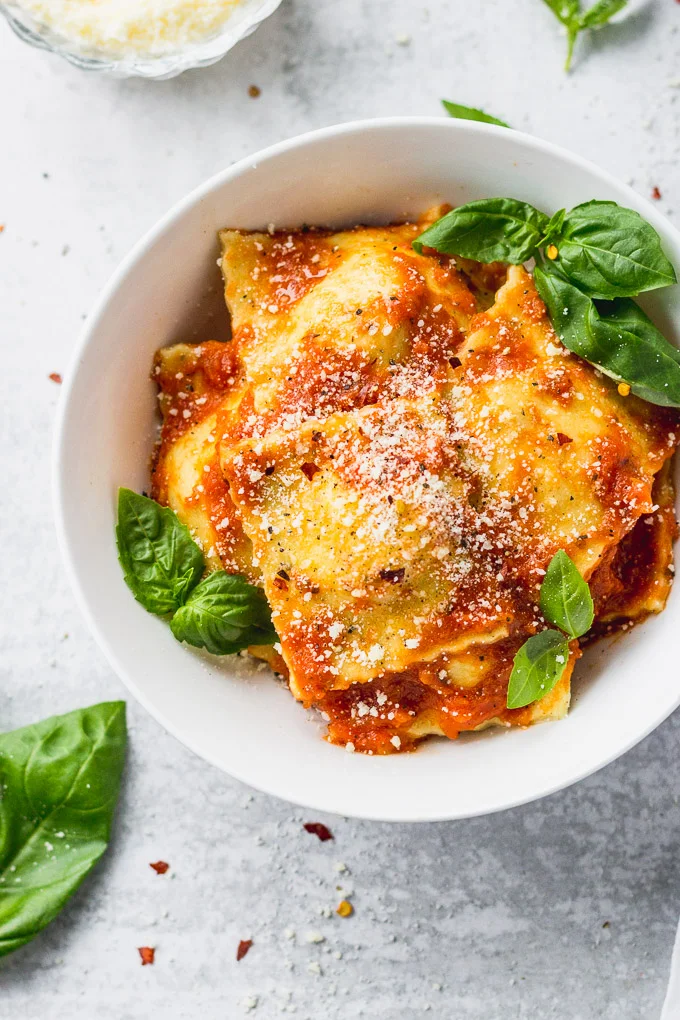
These homemade ravioli pair fresh pasta with a creamy ricotta and Parmesan filling, flavoured with basil, lemon zest and nutmeg. Make them for a hands-on Italian-style meal, then serve with tomato sauce or a simple butter sauce.
Ingredients
- 454 g (1 pound)fresh pasta dough* or fresh pasta sheets
- 250 g (1 cup)whole-milk ricotta
- 33 g (⅓ cup)freshly shredded Parmesan cheese*
- ⅛–¼ teaspoonlemon zest
- 2 teaspoons fresh or 1 teaspoon driedbasil, finely chopped if fresh
- 1 pinchground nutmeg
- to tastesalt and pepper
- as neededsemolina, for dusting
- as neededwater and salt, for the pasta pot
- as desiredhomemade tomato sauce or another sauce, for serving
- as desiredParmesan and/or basil, for garnish
Instructions
- 1
Rest the dough
Make the fresh pasta dough and leave it to rest as directed. Dust a baking sheet with semolina and set it aside for the shaped ravioli.
- 2
Mix the filling
Stir together the ricotta, Parmesan, lemon zest, basil, nutmeg, salt and pepper in a bowl. Taste and adjust the seasoning to your liking, then set aside; refrigerate it if you are not using it straight away.
- 3
Heat the water
Bring a large pot of salted water to the boil. Start this before or while shaping the pasta so it is ready when the ravioli are formed.
- 4
Roll the dough
Take about one-quarter of the dough ball, cutting or tearing it off. Shape it into a rectangle that fits the widest setting of your pasta machine. Roll it through that setting, folding and reshaping it into a rectangle as needed; a rolling pin can be used instead, though a pasta machine is preferred.
- 5
Thin the sheets
After the dough has passed through the widest setting and holds a fairly even rectangular shape, feed it through each narrower setting in turn. Stop at your preferred thickness; the second-thinnest setting is suggested, or roll it thinner if you prefer. Lay the sheet on a semolina-dusted work surface to prevent sticking.
- 6
Add the filling
Arrange about 1½ teaspoons of filling along one half of the pasta sheet, spacing the portions roughly 1½ inches apart. Keep the other half clear so it can fold over the filling; a small cookie scoop can help portion it evenly.
- 7
Fold the pasta
Fold the empty half of the sheet over the filling. If the dough seems dry, run a water-dipped finger along its edges first to help them stick.
- 8
Seal each pocket
Press gently around each portion of filling to begin forming the pockets. Cut between them with a pizza cutter or pasta wheel, then press the edges closed as needed, using a fork if helpful. Place the ravioli on the prepared baking sheet and repeat with the remaining sheets.
- 9
Cook the ravioli
When the water is at a rolling boil, cook the ravioli in batches without overcrowding the pot. They take about 2–4 minutes to reach al dente, depending on their size; they are ready when they float. Lift them from the water and transfer them directly into the sauce, repeating with the remaining ravioli.
- 10
Serve straight away
Serve immediately, with extra Parmesan and basil as desired.
What are ricotta ravioli?
Ravioli are filled pasta pockets associated with Italian cooking, made by enclosing a filling between pasta layers and sealing the edges. This version uses ricotta and Parmesan for a soft, savoury centre, with basil, lemon zest and nutmeg for a little aromatic lift.
Fresh pasta keeps the wrappers tender, while the filling stays simple enough to pair with either a bold tomato sauce or a lighter butter sauce.
Nutrition and macros by portion
The nutrition label shows one serving as written: 659 calories, 17g protein, 57g carbs, 40g fat.
| Portion | Adjustment | kcal | Protein | Carbs | Fat |
|---|---|---|---|---|---|
| Lighter | Use less butter sauce | 461 kcal | 12g | 40g | 28g |
| This serving | As written | 659 kcal | 17g | 57g | 40g |
| Hungry | Serve a larger portion | 989 kcal | 26g | 86g | 60g |
The pasta dough supplies most of the carbohydrates, while ricotta and Parmesan contribute protein and fat. For a balanced plate, serve a moderate portion with vegetables or salad and choose the amount of sauce to suit your meal.
Choosing the filling ingredients
Ricotta: Whole-milk ricotta gives the filling its creamy texture. If it seems especially wet, drain it before mixing so it is less likely to escape from the pasta.
Parmesan and lemon: Freshly shredded Parmesan brings savoury depth, while a small amount of zest adds a fresh note. Start at the lower end of the zest range if you want the cheese to remain the main flavour.
Basil and nutmeg: Fresh basil gives a fragrant, herbal flavour; dried basil is an alternative. The pinch of nutmeg is subtle, so keep it restrained.
Rolling an even pasta sheet
Work with about one-quarter of the dough at a time, keeping the rest covered as directed by your dough recipe. Starting at the widest machine setting and reducing it gradually helps the dough become thin without tearing.
A roughly rectangular sheet is useful here because the filling goes along one half and the other half folds over it. Dust the work surface lightly with semolina to keep the pasta from sticking.
Filling and sealing the pockets
Portions: Space about 1½ teaspoons of filling roughly 1½ inches apart along one side of the sheet. Leave enough room around each mound to press the pasta layers together.
Seals: Fold the clear half over the filling and press around each mound to push out air and close the layers. If the edges feel dry, a little water can help them adhere; finish by pressing with your fingers or a fork.
Knowing when they are cooked
Cook the ravioli in batches in salted water at a rolling boil, giving each pocket room to move. The stated cooking time is about 2–4 minutes, with the exact time depending on the size of the ravioli.
Floating is the recipe’s doneness cue, and the pasta should be al dente. Lift each batch directly into the sauce rather than leaving it to sit in the cooking water.
Choosing a sauce and sides
Tomato sauce gives the cheese filling a bold, tangy contrast, while a light butter sauce keeps the focus on the pasta and herbs. Finish with Parmesan, basil, or both, as desired.
For a more rounded plate, serve alongside a green salad or simply cooked vegetables. Keep accompaniments straightforward so the fresh pasta remains the centrepiece.
Recipe notes & tips
- Keep the unused dough covered while rolling each section so it does not dry out.
- Dust the pasta sheet and baking tray with semolina to reduce sticking.
- Taste the filling before shaping the ravioli and adjust its seasoning then.
- Use a small scoop to make the filling portions more consistent.
- Cook the ravioli in batches rather than crowding the pot.
- Have the sauce ready so cooked ravioli can go straight into it.
Variations
- Tomato sauce: Serve the ravioli with a bold tomato sauce for a bright contrast to the creamy filling.
- Butter sauce: Use a light butter sauce when you want the pasta and cheese to take centre stage.
- Dried basil: Replace the fresh basil with 1 teaspoon dried basil as indicated in the recipe.
- More lemon: Use up to ¼ teaspoon zest for a more noticeable citrus note.
- Extra garnish: Finish with Parmesan, basil, or both to taste.
Common mistakes to avoid
- Overfilling the pasta: Use about 1½ teaspoons per pocket so the edges can close properly.
- Dry edges: Run a water-dipped finger along the pasta before folding if it does not seem tacky enough to seal.
- Trapped air: Press around each mound before cutting to help close the pockets neatly.
- Sticky sheets: Dust the work surface and baking sheet with semolina.
- Crowded pot: Cook in batches so the ravioli have space in the boiling water.
- Overcooking: Start checking at 2 minutes and use floating and an al dente texture as cues.
How to store
Keep uncooked ravioli on the semolina-dusted baking sheet until cooking, taking care not to let them stick together. Cooked ravioli are best served immediately; refrigerate leftovers promptly in a covered container and reheat gently in sauce.
Frequently asked questions
Can I use fresh pasta sheets instead of homemade dough?
Yes. The ingredient list allows store-bought fresh pasta sheets, which you can fill, fold and seal in the same way.
Can I make the filling ahead?
Yes. Mix it in advance and keep it in the fridge until you are ready to shape the ravioli.
How thin should I roll the pasta?
The recipe suggests stopping at the second-thinnest setting on a pasta machine. Roll it thinner if you prefer, while handling the sheet carefully.
How do I know when the ravioli are cooked?
They usually take about 2–4 minutes, depending on size, and are ready when they float and are al dente.
Can I use dried basil?
Yes. Use 1 teaspoon of dried basil in place of the 2 teaspoons of fresh basil.
What sauce goes well with these ravioli?
The recipe suggests homemade tomato sauce or another sauce of your choice. A bold tomato sauce or a light butter sauce both suit the cheese filling.
Cook it from the original
This recipe comes from forkinthekitchen.com. Their page has the author’s own photos, notes and tips — the best place to cook it from.
Open the recipe on forkinthekitchen.com