
Vegetarian Jollof Rice
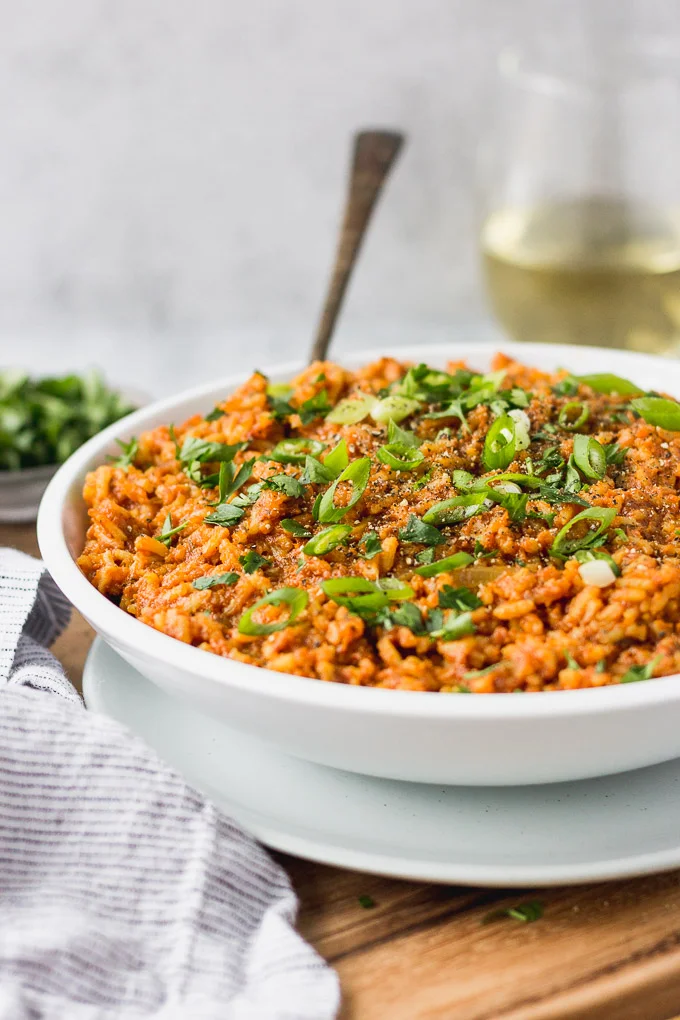
Ghanaian-inspired vegetarian jollof rice is cooked in a deeply flavoured tomato, onion and spice sauce until the grains are tender and richly coloured. It makes a hearty vegan main or a satisfying side, with most of the hands-on work going into building the sauce.
Ingredients
- 30 ml (2 tablespoons)vegetable oil, or another oil of your choice
- 1 mediumyellow onion, roughly chopped
- 3–4garlic cloves
- 1–2, optionalThai chillies or habanero pepper, seeds removed
- 3.8 cm (1½ inches)fresh ginger, peeled
- 400 g (1 can, 14 oz)diced tomatoes
- 45 ml (3 tablespoons)tomato paste
- 2 tsp, or to tastekosher salt
- 1 tspdried thyme
- 1 tspcurry powder
- ½ tspfreshly ground black pepper
- 235 g (1¼ cups)basmati rice
- 600 ml (2½ cups)water or vegetable stock
Instructions
- 1
Cook the onion
Heat the oil in a large Dutch oven or stockpot over medium heat. Purée the onion in a blender until smooth, then add it to the hot oil. Simmer for 8–10 minutes, stirring occasionally, until the moisture has cooked off and the onion is paste-like; some browning is fine. Add a pinch of the salt if you like.
- 2
Reduce the sauce
Meanwhile, blend the garlic, chillies, ginger, diced tomatoes and tomato paste until smooth. Add this mixture to the cooked onion along with the remaining salt, thyme, curry powder and black pepper. Stir, then cook over medium-low heat for 25–30 minutes, stirring occasionally, until thick and deep red.
- 3
Rinse the rice
While the sauce reduces, rinse the rice well until the water runs clear. When the sauce is ready, add the rice and stir to coat the grains in the tomato mixture.
- 4
Simmer the rice
Pour in the water or stock and stir to combine. Cover and simmer gently for 30–40 minutes, until the rice is cooked through. Stir once or twice during cooking, but avoid frequent stirring so the rice can steam.
- 5
Check the texture
If most of the liquid has absorbed but the rice is still firm, add a further 60–120 ml (¼–½ cup) liquid. If the rice is too wet, cook it uncovered for 5 minutes at a time, checking for doneness after each interval.
- 6
Serve and store
Once the rice is cooked through, serve it with vegetables or a protein of your choice. Keep leftovers in an airtight container in the fridge.
What is jollof rice?
Jollof is a West African one-pot rice dish made by cooking rice in a seasoned tomato-based sauce. It has regional styles, including Ghanaian versions, and is often served as a centrepiece or alongside other dishes.
This version takes inspiration from travel in West Africa and keeps the dish vegetarian and vegan. Blending the aromatics and reducing the sauce gives the rice a cohesive, savoury base.
Nutrition and macros by portion
The nutrition label shows one serving as written: 322 calories, 6g protein, 58g carbs, 8g fat.
| Portion | Adjustment | kcal | Protein | Carbs | Fat |
|---|---|---|---|---|---|
| Lighter | Use less oil | 225 kcal | 4g | 41g | 6g |
| This serving | As written | 322 kcal | 6g | 58g | 8g |
| Hungry | Serve a larger portion | 483 kcal | 9g | 87g | 12g |
The rice supplies most of the carbohydrates, while the vegetable oil contributes most of the fat. There is no substantial protein ingredient in the pot, so serve it with a protein of your choice and vegetables to round out the meal.
Build the flavour in stages
Onion base: cook the puréed onion until most of its liquid has evaporated and it looks thick and paste-like. This gives the sauce a concentrated starting point.
Tomato mixture: blend the garlic, ginger, chillies, tomatoes and tomato paste until smooth. Cooking this mixture down with the spices deepens its colour and flavour before the rice goes in.
Choose your heat
Chilli: Thai chillies or habanero bring plenty of heat, and removing the seeds can make them milder. Leave them out for a gentler dish, or use one rather than two to keep some warmth.
Seasoning: kosher salt is listed as a starting amount, so taste the sauce as it reduces and adjust to your preference. If using stock instead of water, bear in mind that it may already be salted.
Let the sauce reduce
The long reduction is central to this method: the sauce should become thick and deep red before you add the rice. Stir from time to time so it cooks evenly and does not catch on the bottom.
A wide, heavy pot helps the sauce reduce steadily. If it starts sticking or browning too quickly, lower the heat and stir more often.
Steam the rice gently
Rinsing: wash the basmati until the water runs clear, then drain it well. This removes loose surface starch and helps keep the cooked grains from becoming overly sticky.
Doneness: keep the pot covered and simmer gently, stirring only once or twice. If the grains remain firm after the liquid has mostly absorbed, add a little extra liquid; if the rice is wet, finish it uncovered in short intervals.
How to serve it
Vegetables: serve the rice with cooked or roasted vegetables for a more complete plate. A crisp salad can also offer a fresh contrast to the rich tomato sauce.
Protein: it works alongside a protein of your choice, or as a filling vegan main on its own. Serve it hot, straight from the pot.
Recipe notes & tips
- Use a blender to make the onion and tomato mixtures smooth and easy to incorporate.
- Let the onion purée reduce until it is thick before adding the tomato mixture.
- Rinse the rice until the water runs clear, then drain it well.
- Keep the heat gentle once the pot is covered so the rice can steam without catching.
- Use water for a simpler flavour, or vegetable stock for a more savoury base.
- Add extra liquid gradually if the grains are still firm after most of the original liquid has absorbed.
Variations
- Milder chilli: Leave out the pepper for a gentler tomato flavour.
- Extra heat: Keep some chilli seeds in the purée for a hotter pot.
- Stock base: Use vegetable stock instead of water for added savouriness.
- Vegetable side: Serve with roasted or steamed vegetables for a more substantial plate.
- Protein pairing: Add a protein of your choice at the table to make it a fuller meal.
Common mistakes to avoid
- Adding rice too early: Reduce the sauce until thick and deep red before stirring in the grains.
- Skipping the rinse: Wash the rice until the water runs clear to remove loose surface starch.
- Stirring too often: Limit stirring to once or twice during the covered simmer so the rice can steam.
- Cooking at a fierce simmer: Keep the heat low enough for gentle cooking and reduce it if the pot starts catching.
- Ignoring firm grains: Add 60–120 ml (¼–½ cup) more liquid if most has absorbed but the rice is not tender.
- Leaving wet rice covered: Cook it uncovered in 5-minute intervals, checking each time, if it needs to dry out.
How to store
Transfer leftover rice to an airtight container and refrigerate it. Reheat until steaming hot, adding a small splash of water if needed to loosen the grains.
Frequently asked questions
Can I make this jollof rice without chilli?
Yes. The chillies are optional, so leave them out for a milder result. You can also use just one pepper for less heat.
Can I use vegetable stock instead of water?
Yes, the recipe allows either. If your stock is salted, taste the sauce before adding all the salt.
Why does the onion need to cook before the tomatoes go in?
The onion purée needs time to lose its liquid and become paste-like. That creates a concentrated base for the tomato sauce.
How do I know when the rice is cooked?
Check that the grains are tender all the way through. If they are still firm after most of the liquid has absorbed, add a little more liquid and continue cooking.
What should I serve with vegetarian jollof rice?
Serve it with vegetables or a protein of your choice. It can also be served as a side dish.
Can I make the rice less wet if it is already cooked?
If the grains are cooked but the pot is too wet, continue cooking uncovered in 5-minute intervals and check the texture each time.
Cook it from the original
This recipe comes from forkinthekitchen.com. Their page has the author’s own photos, notes and tips — the best place to cook it from.
Open the recipe on forkinthekitchen.com