
Easy Oven Baked Pork Tonkatsu
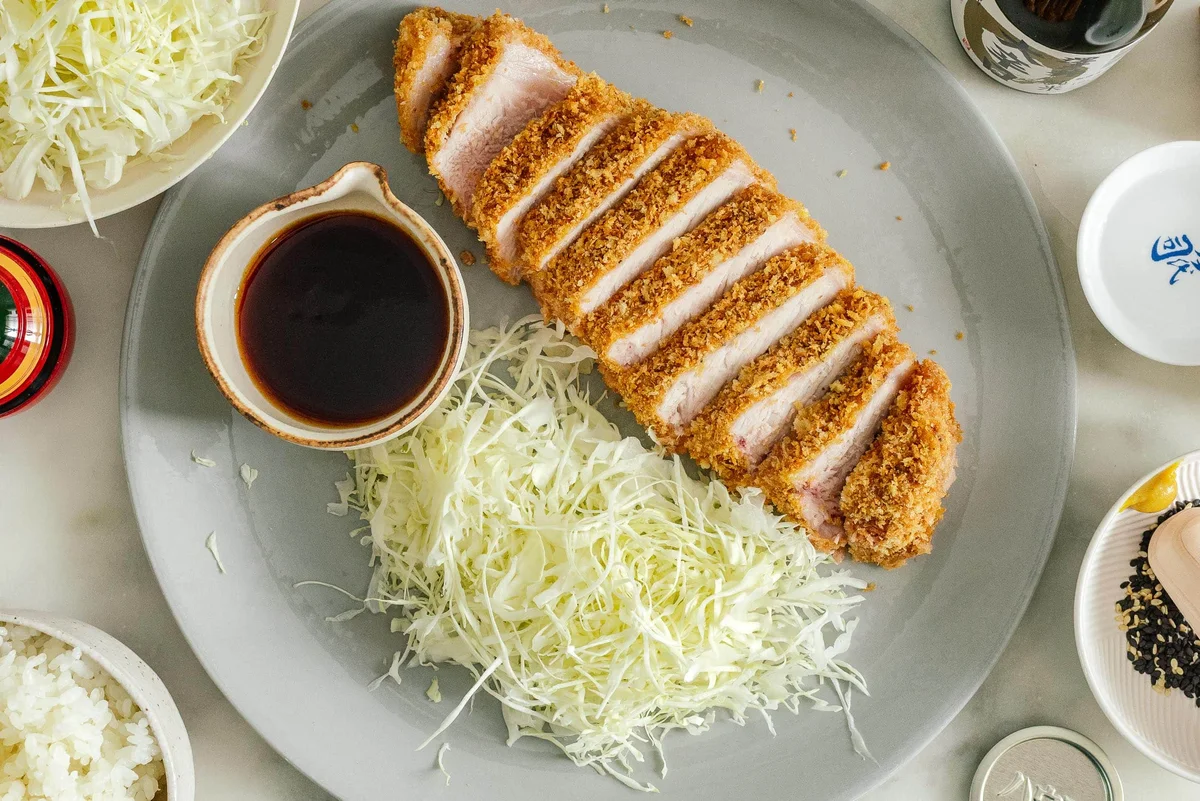
This oven-baked take on Japanese tonkatsu pairs juicy pork with a crisp panko coating, without deep-frying. Serve it with rice, shredded cabbage and tonkatsu sauce for a satisfying meal.
Ingredients
- 60 g (1 cup)panko
- 15 ml (1 tbsp)neutral oil
- 1thick-cut pork loin chop
- 16 g (2 tbsp)flour
- 1, lightly beatenegg
- to tasterice, shredded cabbage and tonkatsu sauce
- to tasteJapanese mustard
Instructions
- 1
Heat the oven
Heat the oven to 135°C (275°F). While it warms, put the panko in a dry pan over medium heat and stir as it toasts. Drizzle in the oil and keep stirring until the crumbs are golden and fragrant. Take the pan off the heat, transfer the panko to a shallow bowl and leave it to cool.
- 2
Coat the pork
Season both sides of the chop. Dust it with flour, then shake off any excess.
- 3
Add egg and panko
Dip the floured chop into the lightly beaten egg, then press it into the panko until fully coated. Set it on a lightly oiled wire rack over a foil-lined baking sheet.
- 4
Bake until cooked
Bake until the pork reaches an internal temperature of 49°C (120°F), about 30–45 minutes depending on its thickness. A 3.8 cm (1.5-inch) chop took 40 minutes in the recipe. Raise the oven to 230°C (450°F) and cook for about 5 minutes more, until the internal temperature reaches 57°C (135°F).
- 5
Slice and serve
Slice the pork and serve with fluffy white rice, shredded cabbage, tonkatsu sauce and Japanese mustard.
What is tonkatsu?
Tonkatsu is a Japanese dish of breaded pork, commonly served with shredded cabbage and a savoury-sweet sauce. This version keeps those familiar flavours but bakes the chop rather than deep-frying it.
The method uses a thick chop and toasted panko for a juicy centre and a crisp, golden crumb. Rice and cabbage complete the plate with simple, contrasting textures.
Nutrition and macros by portion
The nutrition label shows one serving as written: 520 calories, 31g protein, 60g carbs, 16g fat.
| Portion | Adjustment | kcal | Protein | Carbs | Fat |
|---|---|---|---|---|---|
| Lighter | More cabbage, less rice | 364 kcal | 22g | 42g | 11g |
| This serving | As written | 520 kcal | 31g | 60g | 16g |
| Hungry | Add extra rice | 780 kcal | 47g | 90g | 24g |
The pork and egg provide most of the protein, while the panko, flour and rice contribute carbohydrates. Oil, egg yolk and the pork contribute fat; tonkatsu sauce can add further carbohydrates and sodium. The recipe does not specify quantities for the accompaniments or the chop, so the per-serving nutrition is only a rough estimate; balance the plate with a generous serving of cabbage.
Why toast the panko first?
Golden crumbs: Toasting the panko in a pan with a little oil gives it colour before it goes into the oven. Stir frequently so the crumbs brown evenly rather than catching on the pan.
Cool coating: Let the toasted crumbs cool in a shallow bowl before breading the pork. This makes them easier to handle and helps keep the coating distinct.
Coating the chop
Flour first: A light dusting gives the egg a surface to cling to. Shake off excess flour so it does not form a thick, dry layer beneath the crumb.
Press firmly: After dipping in egg, press the pork into the panko on every side. Check the edges too, where bare patches can be easy to miss.
Using a two-stage bake
Gentle heat: The initial bake at 135°C (275°F) cooks the thick chop gradually. The stated 30–45 minutes is a guide; thickness affects the timing.
Hot finish: Raising the oven to 230°C (450°F) for the final few minutes adds colour to the crumb. Use an instant-read thermometer to check the centre rather than relying on time alone.
Checking the texture
Even coating: The panko should look golden and cover the pork without large gaps. A wire rack lets hot air circulate around the chop while it bakes.
Doneness: Check the temperature in the thickest part of the meat, without touching bone if there is one. The method gives 49°C (120°F) before the hotter finish and 57°C (135°F) at the end; follow local food-safety guidance for pork and allow for any temperature rise during resting.
Serving the tonkatsu
Rice: Fluffy white rice makes a mild base for the crunchy pork and savoury sauce. Serve it alongside or underneath the sliced chop.
Cabbage and sauce: Shredded cabbage brings a cool, crisp contrast, while tonkatsu sauce adds sweet-savoury flavour. Japanese mustard is an optional sharp accompaniment mentioned in the method.
Recipe notes & tips
- Toast the panko over medium heat and stir often for even colour.
- Let the crumbs cool before coating the pork so they are easier to press on.
- Use a wire rack over the baking sheet to keep the underside of the coating from sitting in moisture.
- Measure the chop at its thickest point when estimating its baking time.
- Check the internal temperature with a thermometer rather than cutting into the pork to judge doneness.
- Slice the chop just before serving to keep the crumb crisp.
Variations
- Add garlic: Mix a little garlic powder into the flour for a savoury note.
- Use chicken: Swap in a thick chicken breast and check its centre temperature as it cooks.
- Change the sauce: Serve with a different Japanese-style dipping sauce if tonkatsu sauce is unavailable.
- Add sesame: Sprinkle toasted sesame seeds over the cabbage or rice just before serving.
- Make it spicy: Serve with a little chilli sauce alongside the tonkatsu sauce.
Common mistakes to avoid
- Skipping the panko toast: Untoasted crumbs may stay pale; toast them in the pan until golden before coating.
- Leaving excess flour: A heavy flour layer can make the coating uneven; shake off the surplus before dipping in egg.
- Loose crumbs: Panko can fall away during baking; press it firmly onto the egg-coated chop.
- Guessing by time: Thick chops vary; check the internal temperature at the centre.
- Overbaking during the finish: The hot oven works quickly; check the temperature after about 5 minutes.
How to store
Refrigerate leftover pork in an airtight container for up to 3 days. Reheat in an oven or air fryer until hot to help the coating crisp again; the crumb may soften in a microwave. Store rice and cabbage separately where possible.
Frequently asked questions
Can I use a thinner pork chop?
Yes, but it will cook faster than the thick chop described here. Start checking its internal temperature earlier and adjust the timing accordingly.
Do I need to turn the chop during baking?
The method does not call for turning it. Baking on a wire rack allows air to circulate around the coating.
How do I know when the pork is done?
Check the thickest part with an instant-read thermometer. The recipe gives a final target of 57°C (135°F); follow local food-safety guidance for pork.
Can I prepare the panko ahead?
You can toast it in advance and let it cool before storing it in an airtight container. Coat the pork shortly before baking for the best crumb texture.
What can I serve with baked tonkatsu?
The suggested sides are fluffy white rice, shredded cabbage, tonkatsu sauce and Japanese mustard. Add more cabbage or rice to suit the meal.
Cook it from the original
This recipe comes from iamafoodblog.com. Their page has the author’s own photos, notes and tips — the best place to cook it from.
Open the recipe on iamafoodblog.com