
Almond and vanilla custard tarts
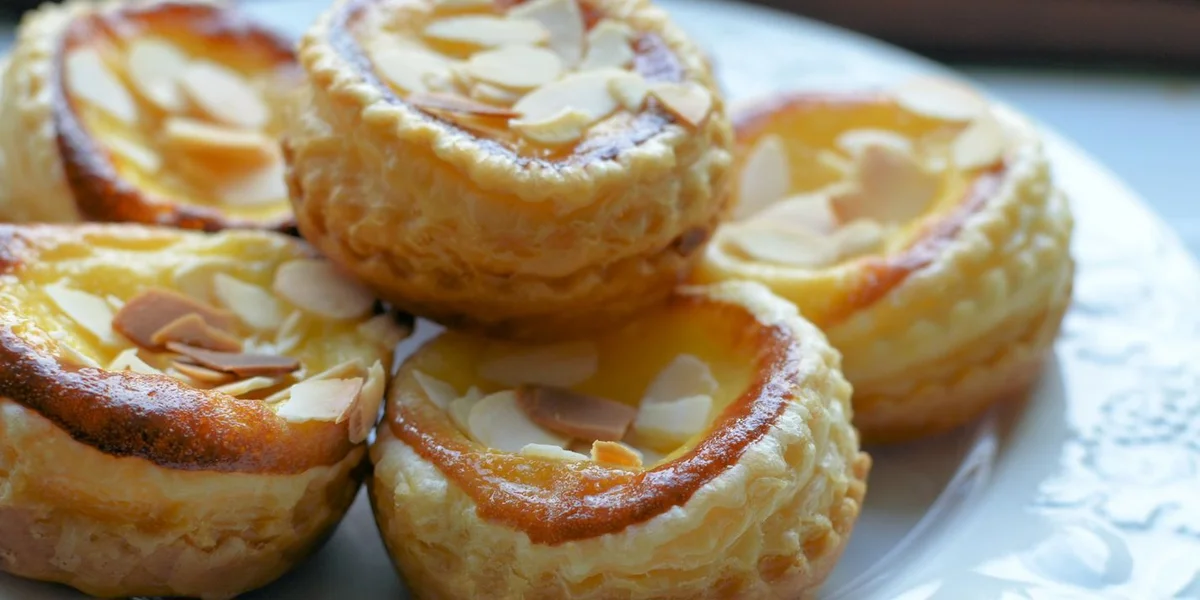
These almond and vanilla custard tarts pair crisp, golden puff pastry with a softly set, creamy filling. They make a straightforward British-style bake for sharing, served cold or at room temperature.
Ingredients
- as neededsoftened butter, for greasing
- 1 packet (275 g)ready-rolled puff pastry
- 100 mlsingle cream
- 100 mlwhole milk
- 1 tspvanilla extract
- 2 largeeggs, beaten
- 50 gcaster sugar
- 25 gflaked almonds
Instructions
- 1
Prepare the oven
Heat the oven to 200°C (gas mark 6). Grease a muffin tray or pie dish with softened butter, or use foil tart cases.
- 2
Cut the pastry
Cut the pastry into shapes to fit your muffin tray, pie dish or foil cases, leaving a little pastry overhanging the edges.
- 3
Line the cases
Set the pastry shapes into the greased tray or cases and press them down gently.
- 4
Mix the custard
Whisk the eggs with the cream, milk, vanilla extract and caster sugar. Pour the mixture through a strainer into the pastry cases; skip straining if a perfectly smooth filling is not important to you.
- 5
Add the almonds
Scatter the flaked almonds over the tops of the tarts.
- 6
Bake until set
Bake for 25 to 30 minutes, until the pastry has puffed and turned golden, the almonds are golden and the filling has just set with a slight wobble.
- 7
Cool the tarts
Leave the tarts out of the oven for a minute. Remove individual tarts from the tray and cool them on a wire rack. Leave a larger pie in its dish to serve, or remove it once it has cooled slightly.
- 8
Serve at room temperature
Serve the tarts cold or at room temperature.
What are custard tarts?
Custard tarts are a familiar British bake: a pastry case holds a sweet, egg-set filling, often flavoured with vanilla. This version adds flaked almonds for a lightly toasted topping and uses puff pastry for a crisp, layered shell.
Individual tarts are easy to portion, while the same filling can be baked in a larger pie dish. The recipe description connects this family-style twist with the long-standing popularity of British custard tarts.
Nutrition and macros by portion
The nutrition label shows one serving as written: 607 calories, 12g protein, 56g carbs, 39g fat.
| Portion | Adjustment | kcal | Protein | Carbs | Fat |
|---|---|---|---|---|---|
| Lighter | Smaller tart portion | 425 kcal | 8g | 39g | 27g |
| This serving | As written | 607 kcal | 12g | 56g | 39g |
| Hungry | Larger tart portion | 911 kcal | 18g | 84g | 59g |
The puff pastry supplies much of the carbohydrate and fat, while the cream adds fat and the eggs, milk and almonds contribute protein. Serve a tart with fresh fruit to add freshness and round out the plate.
Choosing the pastry
Ready-rolled pastry: the 275 g sheet makes preparation quick and gives you enough to cut shapes for muffin wells, foil cases or a pie dish. Leave a little overhang when cutting so the pastry does not sit too low in its case.
Greasing: a thin coating of softened butter helps prevent sticking, particularly in a muffin tray. Foil tart cases are another option.
Getting a smooth filling
Whisking: combine the beaten eggs, cream, milk, vanilla and sugar until evenly mixed, without whipping in more air than necessary. Pouring the mixture through a strainer removes small lumps for a smoother custard.
Filling: pour carefully into the pastry-lined cases so the mixture stays inside the pastry. If you do not mind a less-smooth finish, the recipe allows you to skip straining.
Look for a slight wobble
Custard: the centre should have just set but still move slightly when the tray is nudged. It will continue to settle as the tarts cool, so avoid waiting for the filling to become completely firm in the oven.
Pastry and nuts: check that the pastry has puffed and turned golden and that the almonds are golden too. Begin checking at 25 minutes, as the recipe gives a 25-to-30-minute baking window.
Choose a tin that suits
Individual tarts: press the pastry into muffin wells or foil cases, then lift the baked tarts out after a minute of cooling. A wire rack lets them cool without staying in the hot tray.
Larger pie: bake the pastry and filling in a pie dish, then leave it in the dish to serve. You can take it out once it has cooled slightly if you prefer.
Serving and timing
The stated total time is 60 minutes, including the 25 to 30 minutes in the oven. Allow extra time if you want the tarts fully cool before serving.
Serve them cold or at room temperature. Their creamy filling and crisp pastry also work well alongside fresh berries or sliced fruit.
Recipe notes & tips
- Cut the pastry with enough overhang to cover the sides of your chosen tin or cases.
- Press the pastry into the cases gently so it keeps its shape.
- Strain the custard mixture if you want a smoother filling.
- Pour the custard slowly to avoid spilling it over the pastry edges.
- Start checking for doneness at 25 minutes, as ovens and tin sizes can affect baking time.
- Give individual tarts a minute to cool before lifting them from the tray.
Variations
- Citrus note: add a little finely grated lemon or orange zest to the custard mixture.
- Spiced custard: add a pinch of ground nutmeg before whisking.
- Fruit on the side: serve with fresh berries or sliced pear.
- Larger tart: use a pie dish instead of individual cases and leave the pie in its dish to serve.
- Extra crunch: scatter a few more flaked almonds over the top, keeping an eye on their colour as the tarts bake.
Common mistakes to avoid
- Skipping the overhang: pastry can sit too low in the cases; leave a little extra around the edges when cutting.
- Filling too quickly: custard may spill over the pastry; pour it carefully into each case.
- Expecting a firm centre in the oven: the filling can overbake; take it out when it has just set and still has a slight wobble.
- Leaving the tarts in the hot tray: they may be harder to remove; wait a minute, then transfer individual tarts to a wire rack.
- Using ungreased metal: pastry may stick; grease the muffin tray or use foil cases.
How to store
Once completely cool, store the tarts covered in the fridge and eat within 2 days. Serve chilled or bring them to room temperature before eating; the pastry is best on the day it is baked.
Frequently asked questions
Can I make one large tart instead of individual ones?
Yes. The recipe allows for a pie dish as well as muffin trays or foil cases. Leave the larger pie in its dish to serve, or remove it once it has cooled slightly.
Do I have to strain the custard?
No. Straining is optional and is suggested for a smoother filling. You can pour the whisked mixture straight into the pastry cases if you prefer.
How can I tell when the custard is done?
The filling should be just set, with a slight wobble, while the pastry and almonds are golden. It will continue to settle as it cools.
Can I serve the tarts warm?
The recipe recommends serving them cold or at room temperature. Let them cool before serving for the filling to settle.
Can I use foil tart cases?
Yes. The recipe lists foil cases as an option alongside a muffin tray or pie dish. Cut the pastry to fit and leave a little overhang.
Cook it from the original
This recipe comes from greatbritishchefs.com. Their page has the author’s own photos, notes and tips — the best place to cook it from.
Open the recipe on greatbritishchefs.com