
Beef Rouladen
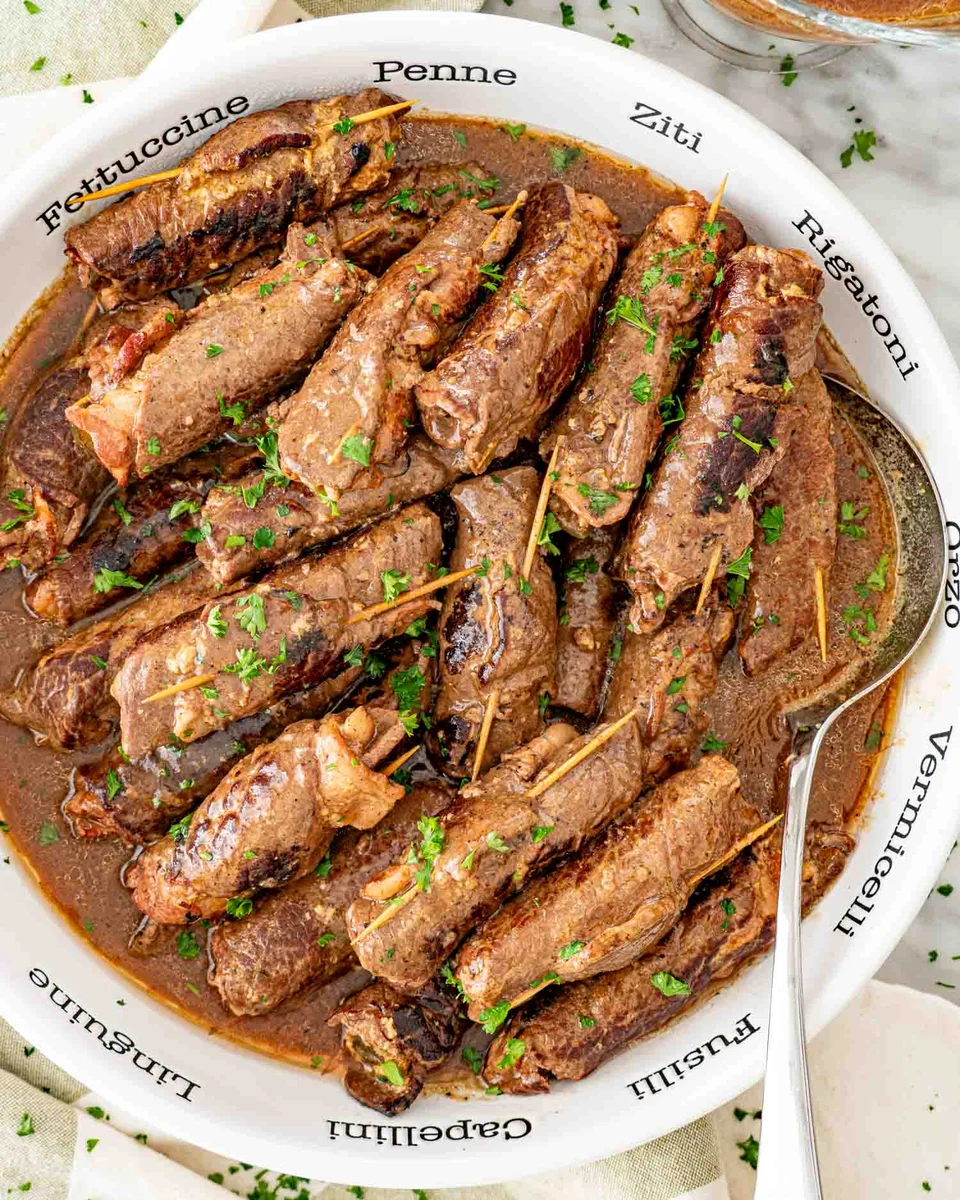
Beef rouladen are thin slices of beef rolled around mustard, bacon, onion, pickles and carrot, then slowly cooked in a savoury gravy. This German comfort-food favourite suits a Sunday dinner or a special occasion, especially with potatoes or spaetzle.
Ingredients
- 1.36 kgbeef rouladen
- 85 gKeens hot mustard
- 2 mediumonions, shredded or finely chopped
- 3 mediumcarrots, peeled and cut into 6 mm sticks
- 6pickles, cut into 6 mm sticks
- 907 gthin-cut bacon, slices halved
- 5 mlsalt, or to taste
- 5 mlpepper, or to taste
- 45 mlvegetable oil
- 950 ml, or more as neededwater
- 180 mlred wine, such as Cabernet Sauvignon or Malbec
- 125 gplain flour
Instructions
- 1
Prepare the beef
If the beef pieces are long, cut them in half into roughly 10 cm square pieces.
- 2
Fill and roll
Lay as many beef pieces as will fit on a chopping board. Spread about 5 ml mustard over each, then add about 5 ml onion, a piece of bacon, and a little salt and pepper. Add a piece of carrot and pickle, or two of each if they are small. Roll up each piece and secure it with a toothpick. Repeat with the remaining ingredients.
- 3
Sear the rolls
Heat some of the vegetable oil in a frying pan or skillet. Sear the rouladen in batches of about six, depending on the pan size, without crowding them, turning to brown all sides. Transfer them to a large oven-safe Dutch oven with a lid.
- 4
Make the gravy
In a bowl, whisk the flour with about 710–950 ml water. Pour about 240 ml of this mixture into the skillet with the drippings and whisk until it thickens and the flour cooks slightly. Add about 60 ml red wine and cook for a couple more minutes, whisking. Pour the gravy over the rouladen. Clean the skillet and repeat with the remaining ingredients in three or four batches as needed; there should be enough gravy to cover the rouladen.
- 5
Preheat the oven
Heat the oven to 180°C and position a rack in the middle.
- 6
Bake until tender
Cover the Dutch oven with its lid and place it in the preheated oven. Bake for about 2½–3 hours.
- 7
Rest and serve
Let the rouladen cool for a few minutes before serving with spaetzle, German red cabbage or mashed potatoes.
What is beef rouladen?
Rouladen is a German dish of thin beef slices rolled around a savoury filling and cooked slowly in gravy. The filling commonly combines mustard, bacon, onion and pickle, with variations from one kitchen to another.
Here, carrot joins the classic-style filling, adding a little sweetness and texture. Browning the rolls before the long oven braise builds flavour for the gravy and helps the beef become tender.
Nutrition and macros by portion
The nutrition label shows one serving as written: 747 calories, 40g protein, 16g carbs, 56g fat.
| Portion | Adjustment | kcal | Protein | Carbs | Fat |
|---|---|---|---|---|---|
| Lighter | Trim some bacon | 523 kcal | 28g | 11g | 39g |
| This serving | As written | 747 kcal | 40g | 16g | 56g |
| Hungry | Add extra spaetzle | 1121 kcal | 60g | 24g | 84g |
Beef and bacon contribute most of the protein and fat, while the flour in the gravy provides much of the carbohydrate. Serve a roulade with a generous portion of vegetables alongside a smaller helping of spaetzle or potatoes to balance the plate.
Choosing the filling
Mustard: Spread a thin layer across each piece of beef so it seasons the filling without making the rolls difficult to close.
Bacon and vegetables: Use slim pieces of bacon, carrot and pickle so they fit inside the beef and the rolls can be secured neatly.
Rolling and securing
Even filling: Keep the onion and other fillings in a narrow line rather than piling them in the centre. That makes the beef easier to roll and helps prevent the filling pushing out.
Toothpicks: Secure each roll firmly enough to hold its shape, but avoid piercing it repeatedly. Remember to remove the toothpicks before serving.
Why sear the rouladen?
Small batches: Leave space around the rolls in the pan so their surfaces brown rather than steam. Turn them to colour all sides, then transfer them to the Dutch oven.
Pan drippings: The browned bits left in the skillet flavour the gravy. Whisk the flour mixture in gradually and keep stirring as it thickens.
Getting the gravy right
Flour mixture: Whisk the flour and water together until smooth before adding it to the skillet, which helps avoid lumps. Add the red wine as directed and continue whisking while the gravy cooks.
Coverage: The recipe calls for enough gravy to cover the rouladen in the Dutch oven. If the rolls are not covered after the batches are combined, the method allows for additional water as needed.
Slow cooking and doneness
Covered braise: Keep the Dutch oven covered while it bakes at 180°C for about 2½–3 hours. The long, gentle cooking time is what softens the beef and lets the flavours mingle.
Tenderness: Check a roll near the end of the cooking time; it should be easy to cut and tender to eat. Let the dish cool for a few minutes before serving.
What to serve with rouladen
Traditional sides: Spaetzle, German red cabbage and mashed potatoes are all suggested accompaniments. Their mild or slightly sweet flavours work well with the savoury gravy.
To serve: Spoon gravy over the rouladen and the chosen side. A simple green vegetable can add freshness to the plate.
Recipe notes & tips
- Arrange the beef pieces in an assembly line to make filling and rolling quicker.
- Cut the carrot and pickle into slim sticks so they fit inside the rolls.
- Sear the rouladen in batches, leaving room between each one.
- Whisk the flour and water thoroughly before adding the mixture to the pan.
- Keep the Dutch oven covered throughout the oven cooking time.
- Remove all toothpicks before serving.
Variations
- Add celery: Replace some of the carrot with slim celery sticks for a different crunch.
- Use a milder mustard: Choose a less fiery mustard if you prefer a gentler filling.
- Change the wine: Use another dry red wine in place of Cabernet Sauvignon or Malbec.
- Serve with potatoes: Choose mashed potatoes instead of spaetzle to catch the gravy.
- Add red cabbage: Pair the rouladen with German red cabbage for a classic-style plate.
Common mistakes to avoid
- Overfilling the beef: Use a modest amount of each filling so the rolls close securely.
- Crowding the skillet: Sear in batches so the rouladen brown rather than steam.
- Lumpy gravy: Whisk the flour and water until smooth before pouring any into the pan.
- Skipping the pan drippings: Use the same skillet for the gravy to incorporate the browned flavour.
- Baking uncovered: Keep the Dutch oven lid on so the rouladen cook in the gravy.
- Serving immediately: Let the beef cool for a few minutes and remove the toothpicks first.
How to store
Cool leftovers promptly and store them covered in the fridge for up to 3 days. Reheat gently in a covered pan with the gravy, or in the microwave, until hot throughout.
Frequently asked questions
Can I make beef rouladen ahead of time?
Yes. You can prepare and roll them ahead, then keep them covered in the fridge until you are ready to sear and bake.
How do I know when the rouladen are tender?
After about 2½–3 hours in the oven, check that a roll cuts easily and feels tender. If needed, continue cooking until it reaches that texture.
Can I use a different red wine?
Yes. The recipe suggests Cabernet Sauvignon or Malbec, but another red wine can be used in the same amount.
What can I serve with beef rouladen?
The recipe suggests spaetzle, German red cabbage or mashed potatoes. All are good with the gravy.
Can I make the gravy without lumps?
Whisk the flour and water together until smooth before adding the mixture to the skillet. Keep whisking as it thickens.
Should I remove the toothpicks before serving?
Yes. Take them out carefully after cooking so nobody bites into one.
Cook it from the original
This recipe comes from jocooks.com. Their page has the author’s own photos, notes and tips — the best place to cook it from.
Open the recipe on jocooks.com