
Popcorn Shrimp
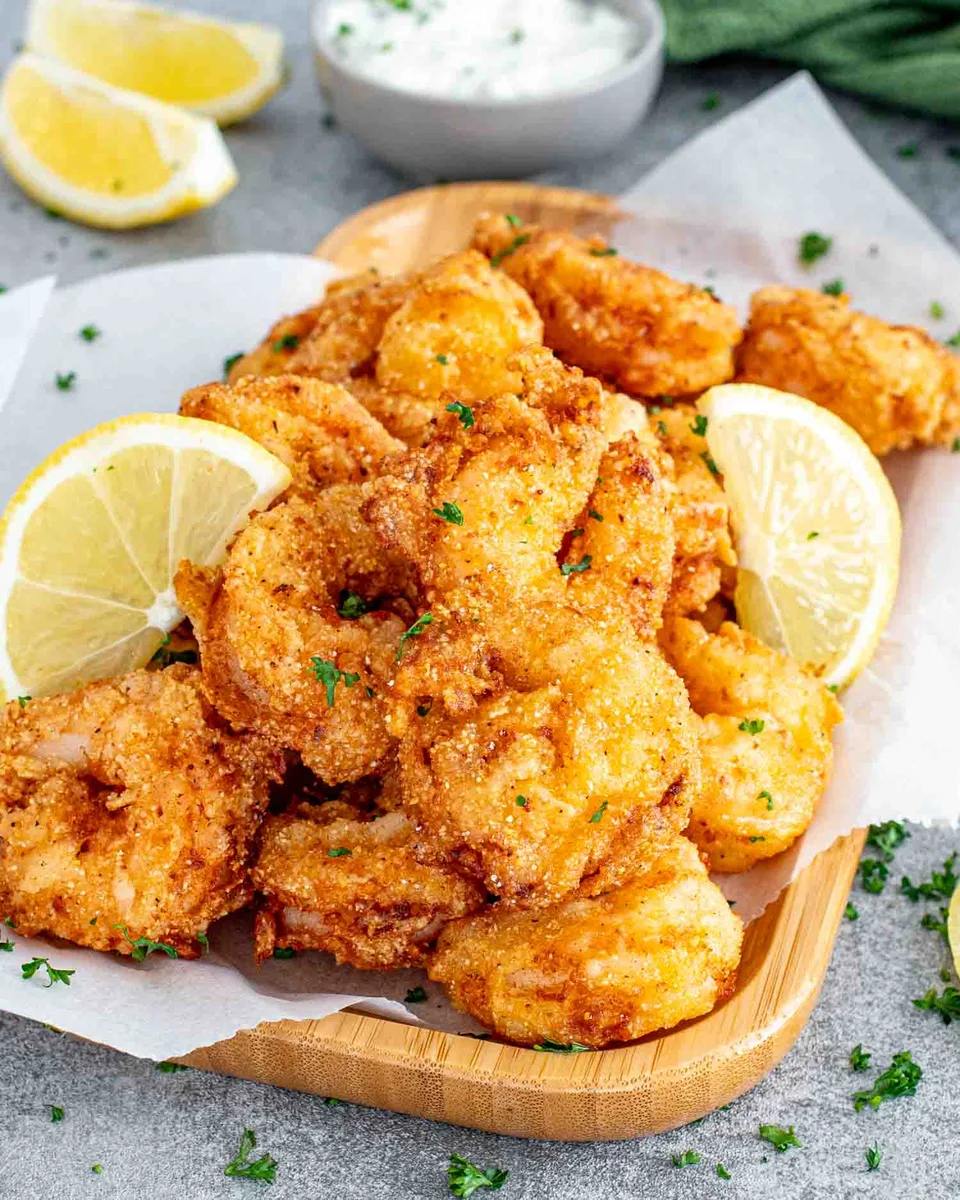
Popcorn shrimp are small, crisp bites coated in a seasoned flour and cornmeal mixture, served with lemon and tartar sauce. The brief buttermilk marinade helps the coating cling, while quick frying makes them handy for sharing or serving as a main.
Ingredients
- 454 g (1 pound)medium shrimp, peeled and deveined
- 240 ml (1 cup)buttermilk
- 125 g (1 cup)plain flour
- 80 g (1/2 cup)cornmeal
- 1 teaspoonpaprika
- 1/2 teaspoongarlic powder
- 1/2 teaspoononion powder
- 1/4 teaspooncayenne pepper
- to tastesalt and pepper
- for fryingvegetable oil
- to servelemon wedges
- to servetartare sauce
Instructions
- 1
Prepare the shrimp
If needed, peel and devein the shrimp. Pat them dry with paper towels.
- 2
Marinate briefly
Put the shrimp in a bowl, cover with the buttermilk and leave to marinate for about 10 minutes.
- 3
Heat the oil
Pour about 5 cm (2 inches) of vegetable oil into a deep frying pan or pot. Heat it to 190°C (375°F).
- 4
Mix the coating
In a separate bowl, combine the flour, cornmeal, paprika, garlic powder, onion powder, cayenne, salt and pepper.
- 5
Coat the shrimp
Lift a few shrimp at a time from the buttermilk and let the excess drip off. Toss them in the flour mixture until coated all over.
- 6
Fry in batches
Carefully add the coated shrimp to the hot oil, taking care not to overcrowd the pan. Fry in batches if needed for 2–3 minutes, until golden brown and crisp.
- 7
Drain the shrimp
Use a slotted spoon to transfer the shrimp to a plate lined with paper towels so excess oil can drain.
- 8
Serve hot
Serve the popcorn shrimp hot with lemon wedges and tartare sauce for dipping.
What is popcorn shrimp?
Popcorn shrimp is an American-style dish of small battered or breaded shrimp, fried and served in bite-sized portions. Its name refers to the small pieces, which are easy to pick up and share.
This version uses a short buttermilk marinade and a flour-and-cornmeal coating seasoned with paprika, garlic, onion and cayenne. The result is a crisp exterior with a little spice and lemon to brighten each bite.
Nutrition and macros by portion
The nutrition label shows one serving as written: 231 calories, 7g protein, 42g carbs, 4g fat.
| Portion | Adjustment | kcal | Protein | Carbs | Fat |
|---|---|---|---|---|---|
| Lighter | Serve with less tartare sauce | 162 kcal | 5g | 29g | 3g |
| This serving | As written | 231 kcal | 7g | 42g | 4g |
| Hungry | Add a larger shrimp portion | 347 kcal | 11g | 63g | 6g |
The flour and cornmeal provide most of the carbohydrate, while shrimp contributes protein; the frying oil is the main source of fat. Serve with a generous portion of vegetables or salad alongside, and keep the tartare sauce to the amount you prefer.
Why use buttermilk?
The buttermilk gives the shrimp a moist surface for the dry coating to adhere to. A 10-minute soak is enough for this quick recipe; drain off the excess before dredging so the coating does not become pasty.
Drying the shrimp first also helps limit excess water in the marinade and promotes an even coating.
Building a crisp coating
Cornmeal: it adds a coarser texture alongside the flour, giving the crust a distinct crunch.
Seasoning: paprika, garlic powder, onion powder and cayenne distribute flavour through the dry mixture. Mix them thoroughly with the flour and cornmeal so the seasoning is not concentrated in a few bites.
Frying in batches
Oil temperature: bring the oil to 190°C before frying so the coating starts crisping promptly. Use a thermometer if available, and take care when working with hot oil.
Batch size: leave space around the shrimp rather than filling the pan. Crowding cools the oil and can leave the coating less crisp.
How to tell they are done
Fry each batch for 2–3 minutes, watching for an evenly golden, crisp coating. The shrimp inside should be opaque and firm rather than translucent.
Shrimp are small and cook quickly, so keep an eye on them instead of relying on colour alone. Lift them out as soon as they are cooked through.
Serving ideas
Serve the shrimp straight after draining, while the coating is at its crispest. Lemon wedges and tartare sauce are the suggested accompaniments.
For a more substantial plate, add a green salad or steamed vegetables. Keep any sauce on the side so the crust stays crisp until serving.
Recipe notes & tips
- Pat the shrimp thoroughly dry before adding them to the buttermilk.
- Let excess buttermilk drip away before dredging to help keep the coating distinct.
- Mix the spices evenly through the flour and cornmeal before coating the shrimp.
- Use a slotted spoon to lower shrimp gently into the hot oil.
- Fry in small batches so the oil temperature does not drop sharply.
- Serve soon after draining for the best crunch.
Variations
- More heat: increase the cayenne slightly for a spicier coating.
- Milder spice: omit the cayenne for a gentler flavour.
- Extra lemon: add finely grated lemon zest to the dry coating.
- Herby finish: scatter chopped parsley over the shrimp just before serving.
- Different dip: serve with a favourite dipping sauce in place of tartare sauce.
Common mistakes to avoid
- Wet shrimp: pat them dry before marinating so excess water does not dilute the coating.
- Excess buttermilk: let it drip off before dredging to avoid a heavy, clumped crust.
- Uneven coating: toss the shrimp through the dry mixture until every side is covered.
- Crowded pan: fry in batches so the shrimp have room and the oil stays hot.
- Overcooking: check after 2 minutes and remove the shrimp once cooked through and golden.
- Serving late: offer them soon after draining, before steam softens the crust.
How to store
Refrigerate leftover shrimp in an airtight container for up to 2 days. Reheat in an oven or air fryer until hot to help restore some crispness; the coating may soften during storage.
Frequently asked questions
Can I use frozen shrimp?
Yes. Thaw them completely and pat them dry before marinating, then continue with the recipe.
Do I have to marinate the shrimp for 10 minutes?
The short buttermilk marinade helps the coating stick. If you are short on time, make sure the shrimp are still well coated before dredging.
How can I tell when the oil is hot enough?
A cooking thermometer gives the clearest check: the recipe calls for 190°C. Take care not to let the oil smoke.
Can I make these without a deep fryer?
Yes. Use a deep frying pan or pot as directed, with about 5 cm of oil, and fry in batches.
Can I prepare the shrimp ahead?
You can peel and devein the shrimp ahead and keep them refrigerated. For the crispest coating, dredge and fry shortly before serving.
Cook it from the original
This recipe comes from jocooks.com. Their page has the author’s own photos, notes and tips — the best place to cook it from.
Open the recipe on jocooks.com