
Turkey Thigh Slow Cooked in the Oven
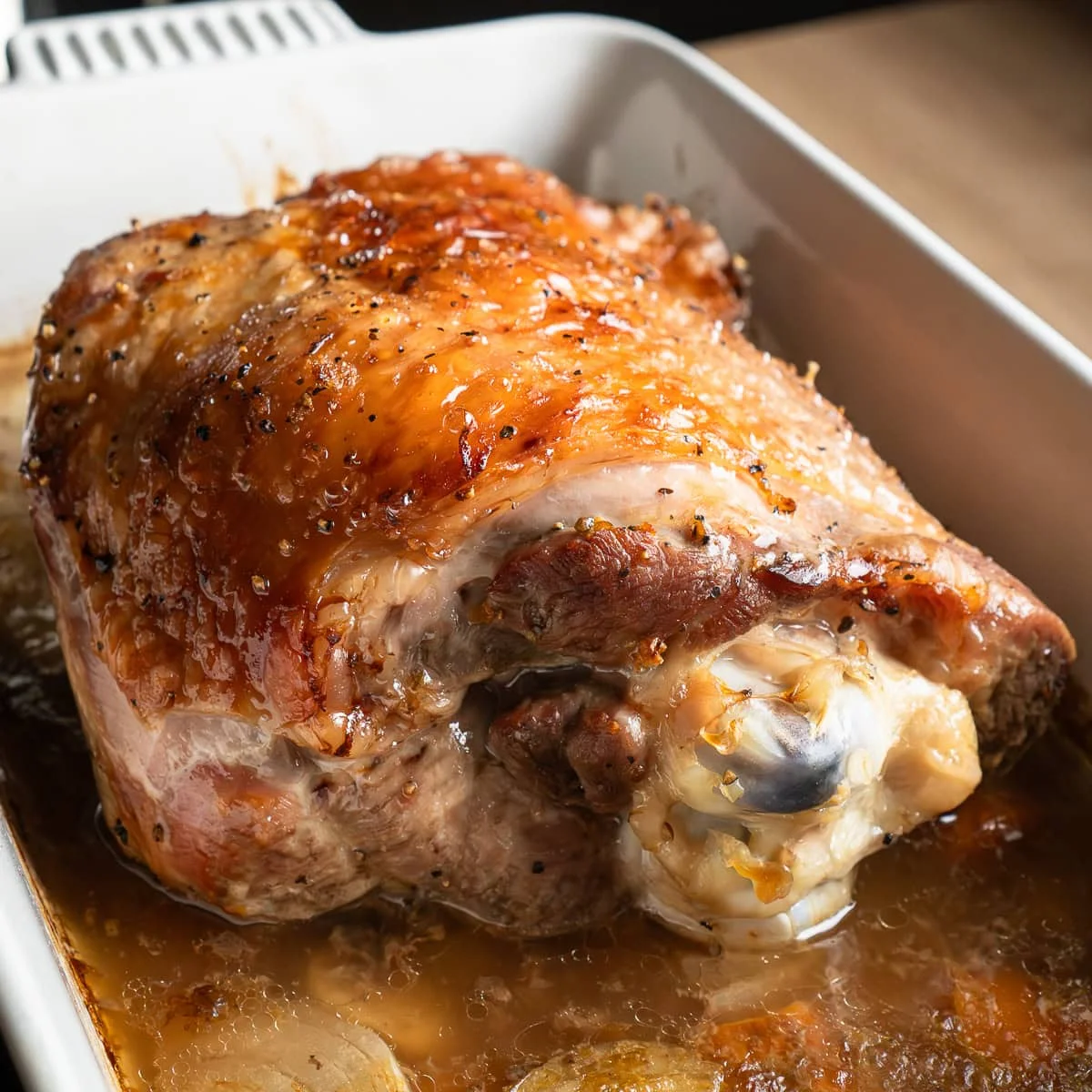
This oven-slow-cooked turkey thigh is roasted gently over carrots and onion, then finished at a higher temperature for crisp skin. It makes a satisfying Sunday roast with homemade gravy, without the scale of cooking a whole turkey.
Ingredients
- 1.25 kgturkey thigh joint
- 1 tbspolive oil
- plentysalt and black pepper
- 2carrots, roughly chopped
- 1 largeonion, roughly chopped
- 250 mlchicken stock, made from a stock pot
- 2 tbspcornflour
- 2 tbspcold water
Instructions
- 1
Season the turkey
Heat the oven to 150°C fan. Pat the 1.25 kg turkey thigh joint dry, then rub the skin and underside with 1 tbsp olive oil, plenty of salt and black pepper, seasoning it all over.
- 2
Prepare vegetables
Roughly chop 2 carrots and 1 large onion and arrange them in a deep ovenproof dish.
- 3
Set on vegetables
Place the turkey thigh joint directly on top of the vegetables.
- 4
Add the stock
Pour 250 ml chicken stock into the dish, enough to cover the vegetables without covering the turkey.
- 5
Cover the dish
Seal the dish tightly with foil so steam cannot escape.
- 6
Cook slowly
Cook at 150°C fan for 3 hours, basting the turkey halfway through.
- 7
Raise the heat
Remove the foil and increase the oven temperature to 180°C fan.
- 8
Crisp the skin
Return the turkey to the oven for a further 20 minutes, or until the skin is golden and crisp.
- 9
Rest the turkey
Transfer the turkey to a chopping board, cover it loosely with foil and leave it to rest for at least 30 minutes.
- 10
Mash vegetables
While the turkey rests, press the vegetables into the cooking juices with a masher.
- 11
Strain the juices
Sieve the liquid to remove the vegetable pieces, then pour the gravy base into a saucepan.
- 12
Thicken the gravy
Stir 2 tbsp cornflour together with 2 tbsp cold water to make a slurry. Whisk it into the gravy as you bring it to the boil, stirring until thickened.
- 13
Slice the turkey
Cut the turkey thigh into slices of your preferred thickness.
- 14
Serve with gravy
Serve the sliced turkey with the gravy and your favourite roast dinner side dishes.
What is slow-cooked turkey thigh?
Turkey thigh is a dark-meat cut that makes a smaller roast than a whole bird. This American-style oven roast cooks gently under foil over vegetables, then gets a short, hotter finish to crisp the skin.
The method makes use of the cooking juices as well as the meat: the softened vegetables are pressed into the juices before straining, giving the gravy a savoury base.
Nutrition and macros by portion
The nutrition label shows one serving as written: 407 calories, 40g protein, 11g carbs, 21g fat.
| Portion | Adjustment | kcal | Protein | Carbs | Fat |
|---|---|---|---|---|---|
| Lighter | More greens, less skin | 285 kcal | 28g | 8g | 15g |
| This serving | As written | 407 kcal | 40g | 11g | 21g |
| Hungry | Larger turkey portion | 611 kcal | 60g | 17g | 32g |
Turkey supplies most of the protein, while the carrots and onion contribute some of the carbohydrates. Olive oil and the turkey skin provide much of the fat. Pair a serving with plenty of green vegetables to round out the plate.
Why cook it over vegetables?
Carrots and onion: they form a bed for the joint and soften in the stock and turkey juices. Rough chopping is enough because the vegetables will be mashed and strained later.
Chicken stock: add it around the vegetables rather than over the turkey. The joint should sit above the liquid so the skin can roast rather than become submerged.
Keeping the meat tender
Dry skin: pat the joint dry before adding oil and seasoning. This helps the skin brown during the uncovered finish.
Tight foil: seal the dish well for the long, low-temperature stage. Basting halfway through adds a chance to coat the turkey with the cooking juices without leaving it uncovered for the whole cook.
Getting crisp skin and juicy slices
Hot finish: after 3 hours at 150°C fan, remove the foil and raise the oven to 180°C fan. Give the skin a further 20 minutes, checking for a golden, crisp finish.
Resting: leave the joint loosely covered for at least 30 minutes before slicing. This also gives you time to finish the gravy.
Making the gravy
Strain first: mash the cooked vegetables into the juices, then sieve the liquid into a saucepan for a smooth gravy base.
Cornflour slurry: mix the cornflour with cold water before whisking it into the gravy. Bring the gravy to the boil while stirring, and stop once it has thickened to your liking.
What to serve alongside
Serve the turkey and gravy with roast potatoes and a green vegetable for a classic dinner. The rich juices also go well with plain mash or other roast vegetables.
If the meal needs a lighter balance, add a generous serving of greens or steamed vegetables alongside the roast.
Recipe notes & tips
- Pat the turkey skin dry before rubbing it with oil and seasoning.
- Use a dish deep enough to hold the stock and cooking juices without letting the liquid cover the turkey.
- Keep the foil tightly sealed during the slow-cooking stage.
- Baste the turkey once, halfway through the 3-hour covered cook.
- Let the joint rest for at least 30 minutes before slicing.
- Whisk the cornflour slurry into the gravy gradually while stirring.
Variations
- Add herbs: tuck a few sprigs of thyme or rosemary among the vegetables for an aromatic gravy.
- Use turkey stock: replace the chicken stock with turkey stock if you have it available.
- Add garlic: place a few crushed garlic cloves with the carrots and onion for a deeper savoury flavour.
- Make it peppery: add extra black pepper to the seasoning and finish the gravy with another pinch.
- Serve with mash: spoon the gravy over mashed potatoes for a comforting plate.
Common mistakes to avoid
- Wet skin: pat the turkey dry before adding the oil so the skin has a better chance to crisp.
- Loose foil: seal the dish tightly during the slow cook to retain steam.
- Too much stock: pour it around the vegetables and keep it below the turkey rather than covering the joint.
- Skipping the rest: leave the turkey loosely covered for at least 30 minutes before carving.
- Lumpy gravy: strain the cooking liquid before thickening it, and mix the cornflour with cold water first.
How to store
Cool leftover turkey and gravy promptly, then store them in separate airtight containers in the fridge for up to 3 days. Reheat until steaming hot throughout; warm the gravy in a saucepan, adding a little water if needed.
Frequently asked questions
Can I prepare the turkey thigh ahead?
You can chop the carrots and onion ahead and keep them covered in the fridge. For the best skin, pat and season the turkey shortly before it goes into the oven.
How do I know when the turkey is cooked?
The recipe gives a slow cook of 3 hours at 150°C fan, followed by 20 minutes at 180°C fan. For a clear doneness check, use a food thermometer and follow its guidance for turkey.
Can I use a different stock?
Yes, turkey stock can be used in place of the chicken stock. Keep the quantity at 250 ml so the vegetables are covered without submerging the joint.
Why does the turkey need to rest?
Resting for at least 30 minutes gives you time to make the gravy and helps the joint settle before slicing. Keep it loosely covered with foil while it rests.
Can I make the gravy without a sieve?
The sieve removes the vegetable pieces for a smooth gravy. If you prefer a more rustic texture, you can leave some of the mashed vegetables in the sauce.
What can I serve with this roast?
Try roast potatoes and a green vegetable, or serve it with mashed potatoes and other roast vegetables. Spoon the gravy over the turkey and sides.
Cook it from the original
This recipe comes from flawlessfood.co.uk. Their page has the author’s own photos, notes and tips — the best place to cook it from.
Open the recipe on flawlessfood.co.uk