
4-Ingredient Strawberry Brigadeiros (Moranguinho)
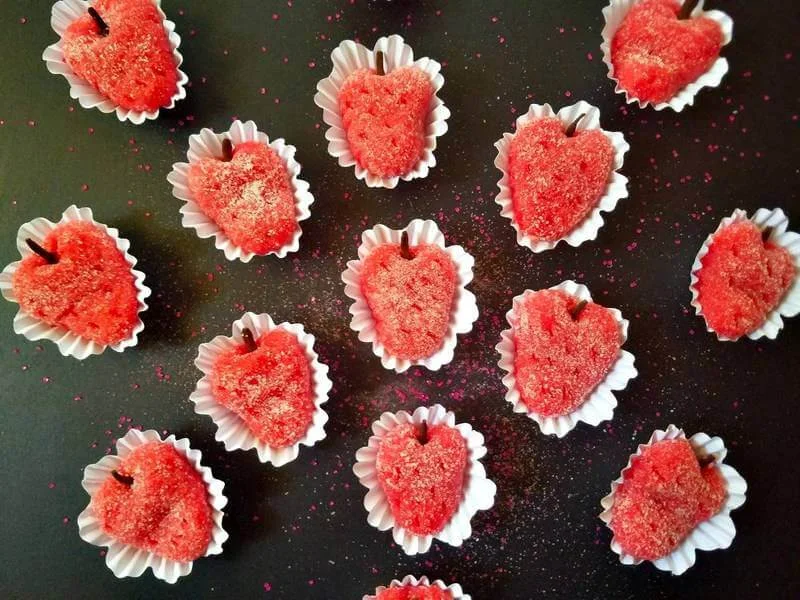
These Brazilian strawberry brigadeiros are soft, fudgy sweets made with condensed milk and strawberry gelatin, then rolled in sugar and finished with a clove. They’re a colourful, bite-sized treat for parties and celebrations.
Ingredients
- 1 can (397 g)sweetened condensed milk
- ½ packet (42.5 g)strawberry gelatin powder
- 1 tablespoon (14 g)unsalted butter
- To sprinklegranulated sugar
- To garnishcloves
Instructions
- 1
Mix the ingredients
Whisk the condensed milk and strawberry gelatin powder until smooth and free of lumps. Stir in the butter.
- 2
Cook until thick
Cook in a medium non-stick saucepan or frying pan over medium-low to medium heat, using a large burner and stirring constantly. After about 5–8 minutes, the mixture should thicken and begin to pull away from the pan. When you scrape the bottom with a wooden spoon, it should stay visible for a couple of seconds before the mixture flows back over it.
- 3
Cool the mixture
Take the pan off the heat and spread the strawberry mixture on a plate greased with butter.
- 4
Shape and decorate
Leave the mixture to cool to room temperature. Grease your hands, measure out portions with a 1 teaspoon measuring spoon and roll them into balls; shape each one like a strawberry. Gently coat with sugar, place in paper bonbon cases and add a clove to each as a stem.
What are strawberry brigadeiros?
Brigadeiros are Brazilian sweets traditionally made by cooking condensed milk with other ingredients until thick enough to roll. This strawberry version, also known as moranguinho, swaps in strawberry gelatin for a fruity flavour and pink colour.
Condensed milk gives the sweets their fudgy base, while the gelatin brings both flavour and colour. A coating of sugar and a clove stem make them look like tiny strawberries.
Nutrition and macros by portion
The nutrition label shows one serving as written: 62 calories, 1g protein, 10g carbs, 2g fat.
| Portion | Adjustment | kcal | Protein | Carbs | Fat |
|---|---|---|---|---|---|
| Lighter | Use diet strawberry gelatin | 43 kcal | 1g | 7g | 1g |
| This serving | As written | 62 kcal | 1g | 10g | 2g |
| Hungry | Serve a larger portion | 93 kcal | 2g | 15g | 3g |
The condensed milk and sugar coating provide most of the carbohydrates, while the butter and condensed milk contribute fat. There is a small amount of protein from the condensed milk; serve a couple of sweets alongside fresh fruit or another less-sweet option to balance a party plate.
Why these ingredients work
Condensed milk: its concentrated sweetness and thick texture form the base of the mixture.
Strawberry gelatin: whisking it in before cooking helps it disperse evenly and avoids lumps.
Butter: stirred into the mixture, it contributes richness; greasing the plate and hands also helps with handling.
Sugar and cloves: the sugar gives the outside a crisp, sparkling coat, while each clove provides the strawberry’s decorative stem.
Getting the cooking stage right
Steady stirring: keep the mixture moving across the bottom and sides of the pan so it heats evenly and does not catch.
Pan test: scrape a wooden spoon across the bottom. The mixture is ready when the cleared strip remains visible for a couple of seconds before filling in again.
Heat control: use medium-low to medium heat and watch the mixture closely; the stated 5–8 minutes is a guide, while the texture is the more useful cue.
Cooling and shaping
Cool completely: spread the cooked mixture on a butter-greased plate and wait until it reaches room temperature before rolling.
Portion evenly: use a 1 teaspoon measuring spoon for each piece, then roll with greased hands and shape the balls into strawberry forms.
Coat gently: roll or sprinkle each sweet with sugar until covered, then press a clove into the top as a stem.
Serving these party sweets
Paper bonbon cases keep the sugar coating tidy and make the sweets easy to arrange on a serving plate. Their small size suits a party spread alongside fruit, biscuits or other bite-sized treats.
Place the cloves securely for the strawberry look, and remind guests that they are a garnish rather than part of the sweet.
Timing and yield
The cooking stage takes about 5–8 minutes, but the mixture also needs time to cool to room temperature before it can be shaped. Allow for that cooling time when planning, even though the stated total time is 15 minutes.
The recipe makes 22 sweets when portioned with a 1 teaspoon measure. Keeping the portions consistent helps them cook and present evenly.
Recipe notes & tips
- Whisk the gelatin into the condensed milk before adding the butter to help prevent lumps.
- Use a wooden spoon to scrape the pan so you can judge how quickly the mixture flows back.
- Keep stirring throughout cooking, especially where the mixture meets the base of the pan.
- Let the mixture cool fully before shaping so it is easier to handle.
- Grease your hands before rolling each portion to reduce sticking.
- Add the cloves after coating the sweets so their stems remain visible.
Variations
- Diet gelatin: use diet strawberry gelatin if you wish, as the recipe allows.
- Different flavour: swap in another gelatin flavour for a different-coloured sweet.
- Sugar finish: sprinkle sugar over the sweets instead of rolling them in it.
- Round shape: keep the portions as balls rather than shaping them like strawberries.
- No clove garnish: leave out the cloves for a simpler finish.
Common mistakes to avoid
- Lumpy mixture: whisk the gelatin thoroughly into the condensed milk before adding the butter.
- Scorched base: stir constantly and keep the spoon moving across the bottom of the pan.
- Undercooked mixture: wait until the pan bottom stays visible for a couple of seconds after scraping.
- Sticky hands: grease your hands before rolling the cooled mixture.
- Misshapen sweets: cool the mixture to room temperature before portioning and shaping.
- Loose sugar coating: coat the sweets gently but make sure sugar reaches all sides.
How to store
Store the sweets in an airtight container in a cool place and eat within a few days. They are best served at room temperature; reheating is not needed.
Frequently asked questions
Can I use diet strawberry gelatin?
Yes. The recipe says diet gelatin can be used; the amount remains half of a 3 oz (85 g) packet.
How do I know when the mixture is ready?
Scrape the bottom of the pan with a wooden spoon. The mixture should pull away and leave the bottom visible for a couple of seconds before flowing back.
Why is the mixture difficult to roll?
It may still be warm or your hands may need greasing. Cool it to room temperature and grease your hands before shaping.
Do I have to shape them like strawberries?
No. You can leave them round, though the strawberry shape and clove stem give them their characteristic look.
Can I make the mixture ahead?
You can cook it ahead and let it cool before shaping. Store the finished sweets in an airtight container in a cool place.
Are the cloves meant to be eaten?
They are used as decorative stems. Remove them before eating if you prefer.
Cook it from the original
This recipe comes from easyanddelish.com. Their page has the author’s own photos, notes and tips — the best place to cook it from.
Open the recipe on easyanddelish.com