
Kung Pao Chicken Recipe
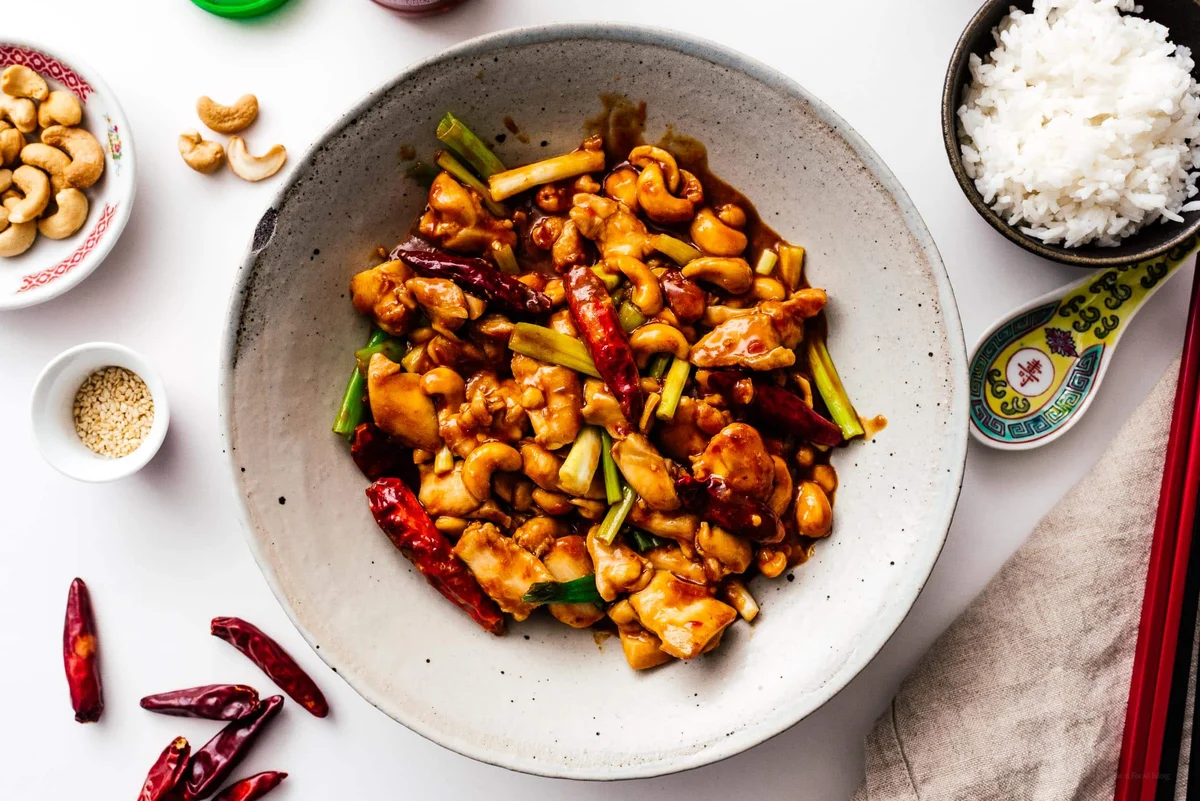
This quick, American-style Kung Pao chicken pairs tender chicken with a glossy, spicy-sweet sauce, dried chiles and crunchy nuts. It is a handy choice for a flavour-packed weeknight dinner that comes together in about 20 minutes.
Ingredients
- 454 g (1 lb)chicken thighs, cut into bite-sized pieces
- 15 ml (1 tbsp)soy sauce
- 15 ml (1 tbsp)Shaoxing wine
- 5 ml (1 tsp)cornflour
- 10 ml (2 tsp)cornflour
- 60 ml (1/4 cup)water
- 30 ml (2 tbsp)hoisin sauce
- 30 ml (2 tbsp)sambal oelek
- 15 ml (1 tbsp)rice vinegar
- 15 ml (1 tbsp)sugar
- 2 clovesgarlic, crushed
- 10 ml (2 tsp)ginger, grated
- 15 ml (1 tbsp)oil
- 8–10dried red chillies, if desired
- 60 ml (1/4 cup)roasted cashews or peanuts
- 2–3spring onions, cut into 5 cm (2 in) lengths
Instructions
- 1
Marinate the chicken
Mix the chicken thighs with the soy sauce, Shaoxing wine and 5 ml (1 tsp) of cornflour. Set aside while you prepare the sauce.
- 2
Mix the sauce
In a small bowl or measuring jug, whisk together the remaining 10 ml (2 tsp) of cornflour and 60 ml (1/4 cup) water with the hoisin, sambal oelek, rice vinegar, sugar, garlic and ginger.
- 3
Cook the chicken
Heat the oil in a large non-stick frying pan or sauté pan over a medium-high heat. Add the chicken and cook, stirring occasionally, until golden and cooked through.
- 4
Add chillies and sauce
Reduce the heat to medium, then add the dried red chillies, if using, and the sauce. Stir to coat the chicken and cook until the sauce thickens and looks glossy.
- 5
Finish with toppings
Stir in the spring onions and cashews or peanuts.
- 6
Serve while hot
Enjoy the chicken hot.
What is Kung Pao chicken?
Kung Pao chicken is associated with Sichuan cooking in China, where chicken, chillies and peanuts are commonly brought together in a savoury, spicy stir-fry. This version leans on familiar American-style pantry sauces, including hoisin and sambal oelek.
The quick marinade seasons the chicken, while the cornflour-thickened sauce clings to each piece. Cashews or peanuts add a crisp finish.
Nutrition and macros by portion
The nutrition label shows one serving as written: 350 calories, 35g protein, 14g carbs, 16g fat.
| Portion | Adjustment | kcal | Protein | Carbs | Fat |
|---|---|---|---|---|---|
| Lighter | More vegetables, fewer nuts | 245 kcal | 25g | 10g | 11g |
| This serving | As written | 350 kcal | 35g | 14g | 16g |
| Hungry | Larger chicken portion | 525 kcal | 53g | 20g | 24g |
The chicken supplies most of the protein, while sugar and the sauce ingredients contribute carbohydrates. Oil, chicken thighs and the cashews or peanuts provide much of the fat; serve with plenty of vegetables and a measured portion of rice to balance the plate.
Why these ingredients work
Chicken thighs: their richer texture suits the high-heat cooking and stays tender as the sauce reduces. Cutting them into bite-sized pieces helps them cook quickly and evenly.
Sauce balance: hoisin brings sweetness and depth, sambal oelek brings chilli heat, and rice vinegar adds a sharp counterpoint. Garlic and ginger give the mixture a fragrant base.
Get the pan ready
Prep first: mix the sauce before heating the pan, and have the chillies, nuts and spring onions ready to add. The chicken cooks quickly, so there is little time to measure ingredients once it is in the pan.
Room to brown: use a large pan and avoid packing the chicken tightly into it. If the pieces are crowded, they are more likely to steam than turn golden.
How to get a glossy sauce
Cornflour slurry: whisk the remaining cornflour into the water and sauce ingredients until smooth. This helps prevent lumps when the mixture meets the hot pan.
Watch the finish: stir as the sauce heats and stop when it thickens and coats the chicken with a glossy layer. Keep the heat at medium for this stage so the sauce does not catch.
Choose your chilli heat
Dried chillies: use the suggested 8–10 if you want extra chilli character, or leave them out for a milder dish. Sambal oelek still gives the sauce some heat.
Taste carefully: sambal brands can vary in strength, so the final heat depends partly on the one you use. Serve with a mild side if you would like a gentler overall meal.
Timing and doneness
The chicken is done when the pieces are cooked through and golden on the outside. Cut into a larger piece to check that the centre is no longer pink.
Add the spring onions and nuts at the end, as directed, so they retain more of their fresh bite and crunch. Serve as soon as the sauce has thickened.
What to serve alongside
Plain rice is a simple partner for the savoury, spicy sauce and helps make the meal more substantial. Steamed greens or stir-fried vegetables add freshness and colour.
For a lighter plate, serve a smaller amount of rice with extra vegetables. Keep the chicken hot and bring it to the table soon after cooking.
Recipe notes & tips
- Cut the chicken into evenly sized pieces so they cook at a similar rate.
- Whisk the cornflour thoroughly into the cold water before adding the other sauce ingredients.
- Use a large pan to give the chicken room to brown.
- Prepare the garnishes before you start cooking, as the chicken and sauce come together quickly.
- Add the dried chillies only if you want their extra heat.
Variations
- Use peanuts: swap the cashews for roasted peanuts for a more traditional-style crunchy finish.
- Make it milder: leave out the dried chillies and use sambal oelek sparingly.
- Add vegetables: stir-fry sliced peppers or broccoli before adding the sauce.
- Use chicken breast: cut it into bite-sized pieces and take care not to overcook it.
- Serve with rice: spoon the chicken and sauce over freshly cooked rice for a fuller meal.
Common mistakes to avoid
- Crowding the pan: the chicken may steam instead of browning; use a large pan and leave space between pieces.
- Skipping the marinade: the chicken misses the first layer of seasoning; coat it with the soy, wine and cornflour before preparing the sauce.
- Lumpy sauce: undissolved cornflour can clump; whisk it into the water until smooth before cooking.
- Cooking the sauce too hard: it can catch or reduce too far; keep the heat at medium and stir until glossy.
- Overcooking the chicken: small pieces cook quickly; check them as soon as they are golden.
How to store
Refrigerate leftovers in a sealed container for up to 3 days. Reheat in a pan over a medium heat until piping hot, adding a small splash of water if the sauce has thickened too much.
Frequently asked questions
Can I make Kung Pao chicken less spicy?
Yes. Omit the dried chillies and reduce the sambal oelek to taste. The sauce will still have flavour from the hoisin, garlic, ginger and vinegar.
Can I use chicken breast instead of thighs?
Yes. Cut the breast into bite-sized pieces and cook just until cooked through, as it can dry out more quickly than thigh meat.
Do I have to use Shaoxing wine?
It is part of the listed marinade, but you can omit it if needed. The flavour will be a little different.
How do I know when the sauce is ready?
It should thicken and look glossy, coating the chicken rather than pooling as a thin liquid in the pan.
Can I prepare the sauce ahead?
Yes. Mix it shortly before cooking and whisk it again before adding it to the pan, as the cornflour may settle.
Cook it from the original
This recipe comes from iamafoodblog.com. Their page has the author’s own photos, notes and tips — the best place to cook it from.
Open the recipe on iamafoodblog.com