
Pork Loin Roast
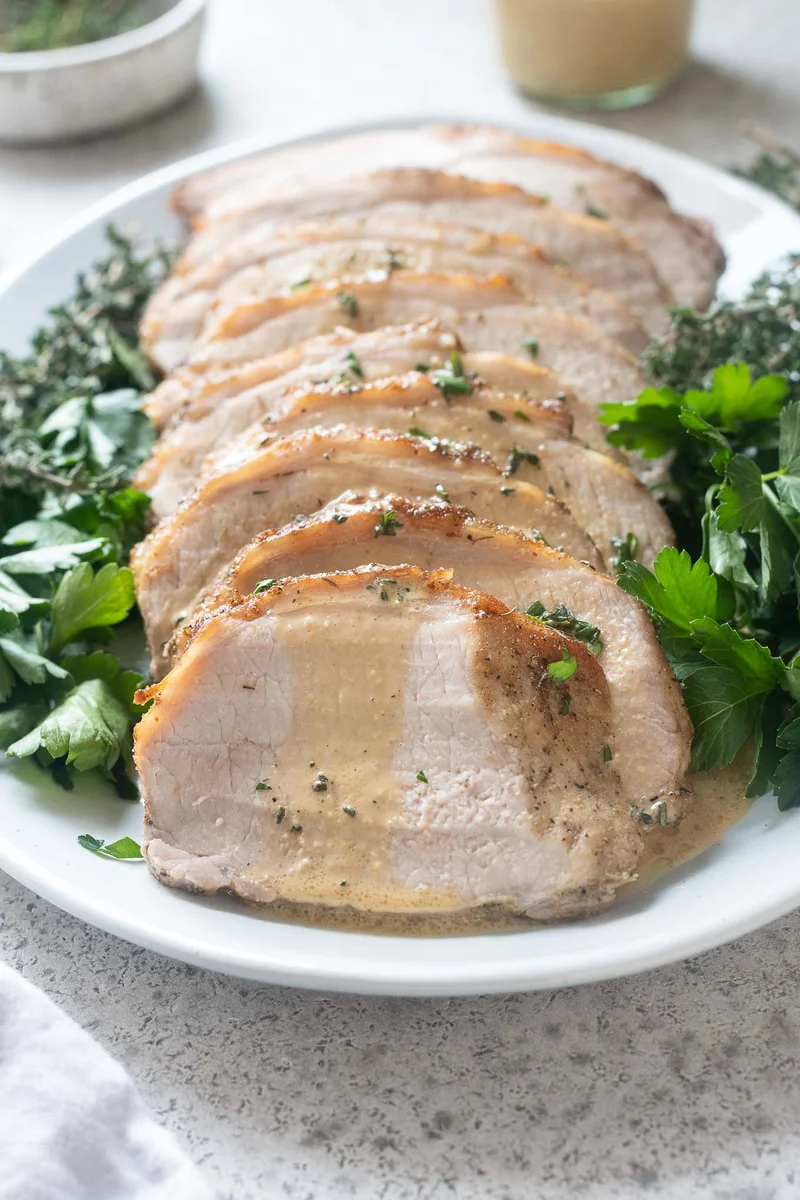
This American-style pork loin roast is rubbed with herbs and spices, roasted until juicy, then served with an optional Dijon cream sauce. It makes a straightforward centrepiece for a special dinner, with most of the preparation involving seasoning the meat and letting the oven do the work.
Ingredients
- 1.36 kg (3 lb)pork loin roast
- 1 teaspoonsalt
- 1 teaspoonblack pepper
- 1½ tablespoonsolive oil
- 1½ teaspoonsground cumin
- 1 teaspoonground coriander
- 1 teaspoongarlic powder
- 1 teaspoondried thyme
- 120 ml (½ cup)vermouth (or your preferred alcohol or chicken stock)
- 180 ml (¾ cup)chicken stock
- 120 ml (½ cup)double cream (or additional chicken stock for a dairy-free sauce)
- 1 tablespoonDijon mustard
- 2 teaspoonschopped fresh thyme (or fresh parsley)
- ½ teaspoon, or to tastesalt
- ½ teaspoon, or to tasteblack pepper
Instructions
- 1
Season the pork
Season the pork loin all over with 1 teaspoon of salt and 1 teaspoon of black pepper. Leave it at room temperature for about 1 hour.
- 2
Rub with spices
Heat the oven to 200°C (400°F). Mix the olive oil, cumin, coriander, garlic powder and dried thyme in a small bowl. Rub the mixture over every side of the pork and place it on a rimmed baking tray.
- 3
Roast the pork
Roast for 30 minutes, or until browned, then lower the oven to 175°C (350°F) and roast for about another 30 minutes, until a thermometer in the centre reads 63°C (145°F). Start checking after 45 minutes to avoid overcooking. If it browns too quickly, cover it loosely with foil; if the pan juices start to burn, add 120 ml (½ cup) of water.
- 4
Rest and slice
Take the pork out of the oven, cover it with foil and leave it to rest for at least 10 minutes. Slice to serve.
- 5
Save the juices
For the optional sauce, transfer the roast to a chopping board and pour the pan juices into a bowl or measuring jug.
- 6
Make the sauce
Set the roasting tray over a medium heat on the hob and pour in the vermouth. Scrape up the browned bits and simmer until the liquid has reduced by half. Add the chicken stock, cream if using, and reserved pan juices. Cook for about 3–5 minutes, whisking often, until the sauce is thick enough to coat the back of a wooden spoon.
- 7
Season and serve
Take the tray off the heat and whisk in the Dijon mustard, fresh thyme and the remaining salt and pepper to taste. Spoon the sauce over the sliced pork.
What is pork loin roast?
Pork loin roast is a large, relatively lean cut from the back of the pig, cooked whole and sliced to serve. This American-style version pairs it with a cumin, coriander and thyme rub, then offers a pan sauce made from the roasting juices.
The spice coating gives the surface a savoury, aromatic flavour, while a brief rest helps the slices stay juicy. The sauce is optional, so the roast can suit a simpler dinner as well as a more dressed-up meal.
Nutrition and macros by portion
The nutrition label shows one serving as written: 319 calories, 39g protein, 2g carbs, 15g fat.
| Portion | Adjustment | kcal | Protein | Carbs | Fat |
|---|---|---|---|---|---|
| Lighter | Skip the cream sauce | 223 kcal | 27g | 1g | 11g |
| This serving | As written | 319 kcal | 39g | 2g | 15g |
| Hungry | Larger pork portion | 479 kcal | 59g | 3g | 23g |
The pork supplies most of the protein, while the olive oil and optional cream contribute fat; the small amount of carbohydrate comes mainly from the seasoning and sauce ingredients. Serve with vegetables and a suitable starchy side to round out the plate.
Choosing the pork
Cut: Use a pork loin roast, not a tenderloin; they are different cuts and have different cooking times. Keep the roast whole so it cooks evenly and can be carved into slices.
Seasoning: Salt and pepper go directly on the meat, while the olive oil helps the dried spices form a coating. The vermouth is for the optional sauce and can be replaced with chicken stock.
Build the spice rub
Mixing: Stir the oil, cumin, coriander, garlic powder and dried thyme together before rubbing them over the roast. Cover the ends and sides as well as the top for an even layer of flavour.
Surface: A rimmed baking tray catches the juices and makes it easier to prepare the sauce afterward. If the drippings look as though they are burning, add the specified water to the tray.
Check for doneness
Thermometer: Begin checking after 45 minutes, inserting the thermometer into the centre of the roast. The method calls for a reading of 63°C (145°F); oven times can vary, so use the temperature cue rather than relying only on the clock.
Colour: If the exterior browns too quickly while the centre is still cooking, tent the roast loosely with foil. Avoid cutting into it to check, as that lets juices escape.
Rest before carving
Resting: After roasting, leave the meat covered with foil for at least 10 minutes before slicing. This pause also gives you time to make the optional sauce.
Carving: Slice the rested roast across the grain where it is visible, using a sharp knife. Cut slices to your preferred thickness and serve while warm.
Finish the optional sauce
Deglazing: Pour vermouth into the roasting tray over medium heat and scrape up the browned bits. Reducing the liquid by half concentrates its flavour before the stock and cream go in.
Texture: Whisk regularly as the sauce cooks for 3–5 minutes, and stop when it coats the back of a wooden spoon. Add the Dijon mustard and fresh thyme off the heat, then adjust the salt and pepper to taste.
What to serve alongside
Sides: Serve the slices with roast potatoes, mash or another filling side, plus a green vegetable such as green beans or broccoli. These additions make a balanced dinner and work well with the pan sauce.
Sauce: Pass the sauce at the table or spoon it over the pork just before serving. For a dairy-free version, use additional chicken stock instead of cream.
Recipe notes & tips
- Letting the seasoned roast stand for about 1 hour brings it to room temperature as directed in the method.
- Use a rimmed tray to keep the roasting juices contained for the optional sauce.
- Start checking the centre temperature after 45 minutes, as ovens and roasts can vary.
- Tent the roast loosely if the outside is browning faster than you want.
- Keep a little water nearby to add to the tray if the drippings begin to burn.
- Whisk the sauce often as it thickens to help it cook evenly.
Variations
- Dairy-free sauce: Replace the cream with additional chicken stock as indicated.
- Herb swap: Use chopped fresh parsley instead of fresh thyme in the sauce.
- Stock in place of vermouth: Use chicken stock instead of vermouth when deglazing.
- Different alcohol: Replace the vermouth with your preferred alcohol for the sauce.
- Sauce-free roast: Serve the rested pork without making the optional pan sauce.
Common mistakes to avoid
- Using tenderloin: Choose pork loin roast, since tenderloin is a different cut and will not follow the same timing.
- Skipping temperature checks: Begin checking after 45 minutes and use the centre reading to judge doneness.
- Over-browning: Cover the roast loosely with foil if its surface darkens too quickly.
- Burning pan juices: Add 120 ml (½ cup) water to the tray if the juices start to burn.
- Slicing too soon: Rest the roast under foil for at least 10 minutes before carving.
- Rushing the sauce: Reduce the vermouth by half before adding the stock and cream.
How to store
Refrigerate leftover pork and sauce in separate airtight containers and use within 3 days. Reheat gently until hot, adding a splash of stock to the sauce if it has thickened; avoid prolonged heating, which can dry out the pork.
Frequently asked questions
Can I make this without the Dijon cream sauce?
Yes. The sauce is optional, so you can slice and serve the rested roast on its own.
What can I use instead of vermouth?
The recipe suggests your preferred alcohol or chicken stock. Stock gives you a non-alcoholic option.
How do I make the sauce dairy-free?
Use additional chicken stock instead of the cream. Cook it with the reserved pan juices until it reaches the desired thickness.
When should I start checking the roast?
Start checking after 45 minutes, and use a thermometer in the centre. The method gives 63°C (145°F) as the target reading.
How long should the pork rest?
Rest it under foil for at least 10 minutes before slicing. This gives you time to prepare the optional sauce as well.
Can I use parsley instead of fresh thyme?
Yes. The recipe lists chopped fresh parsley as a substitute for the fresh thyme in the sauce.
Cook it from the original
This recipe comes from flavorthemoments.com. Their page has the author’s own photos, notes and tips — the best place to cook it from.
Open the recipe on flavorthemoments.com