
Salmon Fillet with Sake Sauce and Wild Rice
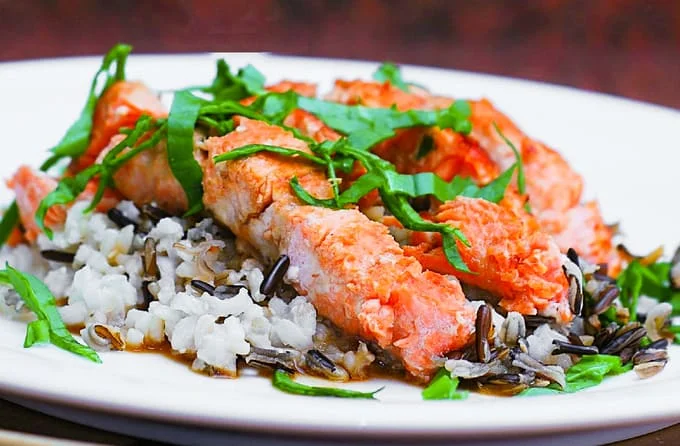
Salmon fillets are seared, brushed with a honey-sesame glaze and finished under the grill, then served with wild rice and a savoury sake sauce. It makes a flavourful, Asian-inspired dinner without requiring complicated techniques.
Ingredients
- 185 g (1 cup)wild rice
- 946 ml (4 cups)water
- to tastesalt
- 80 ml (⅓ cup)sake
- 1 tablespoonsoy sauce
- ½ teaspoonwhite wine vinegar
- 1 teaspoonEnglish mustard powder, or wasabi paste
- 2 tablespoonssoy sauce
- 1 tablespoonsesame oil
- 2 tablespoonshoney
- 1 tablespoonsesame oil
- 2 filletssalmon, skin on
- 15 g (¼ cup)spinach, chopped, for garnish
Instructions
- 1
Cook the rice
Simmer the wild rice in 946 ml water for 30 minutes, using the stated 1:4 rice-to-water ratio, until soft but not mushy. Basmati can be used instead and usually takes 15–20 minutes. Drain if needed, then season the rice with salt.
- 2
Make the sauce
Bring the sake to the boil in a small uncovered pan and simmer for about 3 minutes. Take it off the heat and stir in the other sauce ingredients.
- 3
Prepare the glaze
Preheat the grill. Mix the glaze ingredients in a small bowl, then microwave the mixture for about 20 seconds, or longer if needed to soften the honey. Brush it over the skinless side of the salmon.
- 4
Sear and grill
Heat a stainless-steel frying pan until hot and add the remaining 1 tablespoon sesame oil. Cook the salmon for 3 minutes on its skinless side over high heat, then 2 minutes on the skin side. Brush more glaze over the top, skinless side and grill for about 4 minutes.
- 5
Serve the salmon
Slice the salmon thinly. Mix the wild rice with white rice, then arrange the salmon on top. Pour the sauce over the salmon and some of the rice, and finish with chopped spinach.
What is salmon with sake sauce?
This is a salmon-and-rice dish with flavours often associated with East Asian cooking: sake, soy, sesame and a touch of sweetness. Sake is a Japanese rice wine, while the recipe’s combination of seared fish and rice makes a straightforward, filling meal.
Here, a quick sake-based sauce accompanies salmon brushed with a honey-soy glaze. The rice provides a mild base for the savoury sauce and richly flavoured fish.
Nutrition and macros by portion
The nutrition label shows one serving as written: 392 calories, 24g protein, 40g carbs, 12g fat.
| Portion | Adjustment | kcal | Protein | Carbs | Fat |
|---|---|---|---|---|---|
| Lighter | Less rice, extra greens | 274 kcal | 17g | 28g | 8g |
| This serving | As written | 392 kcal | 24g | 40g | 12g |
| Hungry | Larger rice portion | 588 kcal | 36g | 60g | 18g |
The rice supplies most of the carbohydrates, while the salmon contributes protein and some of the fat. Sesame oil and honey add further fat and carbohydrates, and the sauce brings in soy sauce. Balance the plate with extra greens or another non-starchy vegetable.
The two flavourings
Sake sauce: Boiling the sake briefly before stirring in the other sauce ingredients gives it a short head start on the hob. Keep the pan uncovered as directed.
Honey glaze: Warming the glaze briefly helps soften the honey so it mixes and brushes more easily. The mustard or wasabi gives the sweet soy mixture a sharper edge.
Cook the rice gently
Wild rice: Use the recipe’s 1:4 ratio of rice to water and allow about 30 minutes of cooking. Check near the end; the grains should be tender but not mushy.
Basmati: The method suggests it as an alternative, with a shorter cooking time of about 15–20 minutes. Follow the texture rather than relying on the wild-rice timing.
Searing and grilling
Hot pan: Heat the stainless-steel pan before adding the oil, then sear for 3 minutes on the skinless side and 2 minutes on the skin side. Avoid moving the fillets around as they cook.
Grill finish: Brush on more glaze before placing the fish under the preheated grill for about 4 minutes. Watch closely, since the honey in the glaze can darken quickly.
Check the fish
The recipe’s timings are a guide, as fillet thickness and grill strength can vary. Check the thickest part of the salmon for your preferred doneness; the flesh should turn opaque and separate into flakes when gently pressed.
If the fillets are particularly thick, they may need more time; thinner pieces can finish sooner. Keep the final grill stage under observation.
Rice and serving
The method says to mix the cooked wild rice with white rice, although no quantity of white rice is listed in the ingredients. Add it only if you have some prepared, or serve the wild rice on its own.
Arrange the sliced salmon over the rice and spoon sauce across both, as desired. Chopped spinach adds a fresh garnish; steamed greens or a crisp salad also make suitable accompaniments.
Recipe notes & tips
- Measure the rice and water to keep the stated 1:4 proportion.
- Taste the sauce before serving and spoon it on gradually.
- Brush the glaze onto the skinless side before searing, as directed.
- Keep a close eye on the fish during the final grill stage.
- Slice the salmon just before serving to help it stay moist.
Variations
- Use wasabi: Choose wasabi paste instead of English mustard for a different sharp note.
- Try basmati: Cook basmati for about 15–20 minutes instead of using wild rice.
- Add greens: Serve with steamed greens alongside the rice and salmon.
- Adjust the glaze: Use a little less honey for a less sweet finish.
- Serve rice separately: Keep the wild rice on its own if you do not have white rice prepared.
Common mistakes to avoid
- Mushy wild rice: Check the grains as they approach 30 minutes and stop cooking when tender.
- Cold frying pan: Heat the pan before adding sesame oil so the salmon can sear.
- Overcooked salmon: Watch the grill closely and check the thickest part before extending the cooking time.
- Glaze that will not brush: Microwave the mixture for about 20 seconds, then warm it longer if the honey is still firm.
- Too much sauce at once: Spoon it over the fish and rice gradually so you can control how much is used.
How to store
Refrigerate leftover salmon and rice in a covered container for up to 2 days. Reheat gently until hot throughout, taking care not to overcook the salmon; store any remaining sauce separately if possible.
Frequently asked questions
Can I use basmati rice instead of wild rice?
Yes. The method suggests basmati as an alternative and gives a cooking time of about 15–20 minutes. Use the package directions to check the water amount and doneness.
Can I use wasabi instead of English mustard?
Yes. The ingredient list gives wasabi paste as an alternative to dry English mustard.
Can I cook the salmon without the skin?
The method calls for skin-on fillets and sears both sides, but says the skin can be removed easily after cooking. If using skinless fillets, watch the timing closely as they may cook differently.
Why does the recipe mention white rice?
The serving method says to mix wild and white rice, but the ingredient list does not give a quantity for white rice. You can serve the wild rice on its own or add white rice that you have cooked separately.
How can I tell when the salmon is done?
Check the thickest part: the flesh should be opaque and flake when gently pressed. The suggested grilling time is about 4 minutes, but fillet thickness and grill strength affect how long it takes.
Cook it from the original
This recipe comes from juliasalbum.com. Their page has the author’s own photos, notes and tips — the best place to cook it from.
Open the recipe on juliasalbum.com