
Tuna Melt Sandwich Recipe
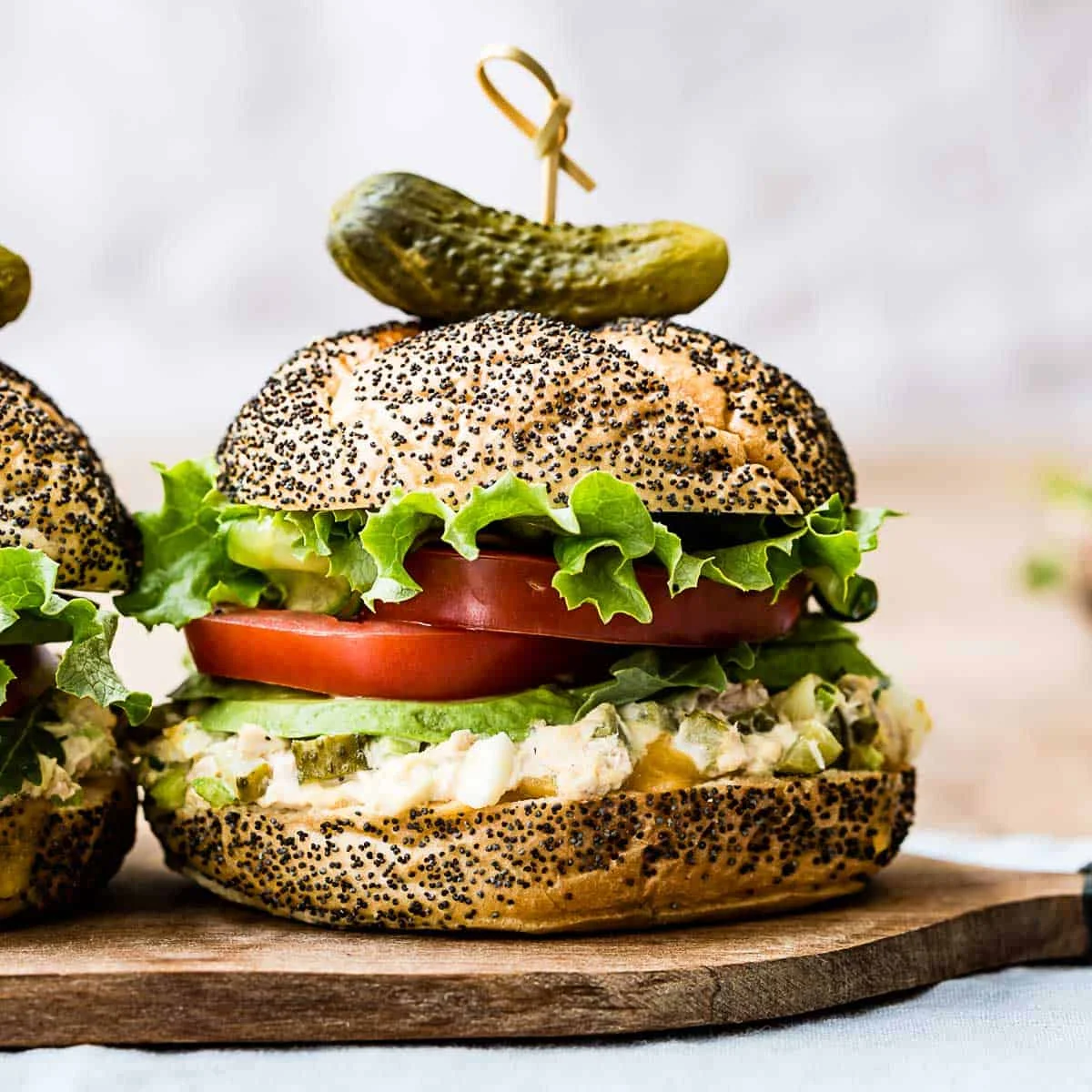
This American-style tuna melt combines a creamy, crunchy tuna salad with cheddar on a toasted bun, then gets finished with fresh cucumber, avocado, tomato and greens. It makes a satisfying meal and comes together in about 30 minutes.
Ingredients
- 2 cans (142 g each; 5 oz each)tuna, drained
- 4 stalkscelery, chopped
- 2–3 smallpickles, chopped
- 1hard-boiled egg, peeled and chopped
- 2 tablespoonsfresh parsley, chopped
- 120 ml (½ cup)mayonnaise
- 1 tablespoonlemon juice
- ½ teaspoonkosher salt
- ¼ teaspoonblack pepper
- 4hamburger buns, halved, or your favourite toast
- 8 slicescheddar cheese, or provolone, mozzarella or Havarti
- 1cucumber, thinly sliced
- 1ripe avocado, sliced
- 1 largetomato, sliced
- 120 ml (½ cup)salad greens or rocket
- 4 (optional)cornichons, to garnish
Instructions
- 1
Mix the tuna
Combine the drained tuna, celery, pickles, egg, parsley, mayonnaise, lemon juice, salt and pepper in a bowl. Taste and adjust the seasoning if needed.
- 2
Heat the oven
Preheat the oven to 180°C (350°F).
- 3
Build the sandwiches
Put 1 slice of cheese on each bottom bun and add ½ cup of tuna mixture. Place another slice of cheese on each top bun. Arrange both bun halves face up on a baking tray and repeat with the remaining buns.
- 4
Bake the cheese
Bake for 8–10 minutes, until the cheese has melted. Remove from the oven and leave to cool for 1 minute.
- 5
Add fresh toppings
Top each bottom bun, which holds the tuna mixture, with cucumber, avocado, tomato and a salad leaf. Place the top bun over it.
- 6
Garnish and serve
Add a cornichon to each sandwich if you like, then serve.
What is a tuna melt?
A tuna melt is an American sandwich of tuna salad and melted cheese, usually served on bread or a bun. This version bakes the open sandwich halves so the cheese softens before the fresh toppings go on.
The combination works because creamy tuna salad and savoury cheddar meet crisp vegetables and soft avocado. Pickles, lemon and parsley give the filling a bright, tangy edge.
Nutrition and macros by portion
The nutrition label shows one serving as written: 447 calories, 33g protein, 30g carbs, 23g fat.
| Portion | Adjustment | kcal | Protein | Carbs | Fat |
|---|---|---|---|---|---|
| Lighter | Use less mayonnaise | 313 kcal | 23g | 21g | 16g |
| This serving | As written | 447 kcal | 33g | 30g | 23g |
| Hungry | Add another sandwich | 671 kcal | 50g | 45g | 35g |
The tuna, egg and cheese provide most of the protein, while the buns supply much of the carbohydrate. Mayonnaise, cheese and avocado contribute much of the fat. For a balanced plate, serve the sandwich with extra salad greens or other vegetables.
Making the tuna salad
Drain the tuna well before mixing so the mayonnaise dressing stays creamy rather than watery. Flake it gently, then fold in the chopped celery, pickles, egg and parsley.
Balancing the dressing
Mayonnaise binds the filling, while lemon juice and pickles add acidity. Taste the mixture before assembling and adjust the salt and pepper to suit the tuna and pickles.
Melting the cheese
Place the buns cut-side up so the cheese melts evenly and the bread gets lightly toasted. Keep an eye on the tray towards the end of the 8–10-minute bake; the cheese should be melted, not browned heavily.
Adding the fresh layers
Cucumber, avocado, tomato and salad greens go on after baking, so they keep their cool, fresh texture. Layer them over the tuna side and put the cheese-topped bun half on last.
Choosing bread and cheese
Hamburger buns make substantial sandwiches, while toast offers a thinner, crisp base. Cheddar gives a pronounced savoury flavour; provolone, mozzarella or Havarti can be used as alternatives.
Serving the sandwiches
Serve the melts soon after assembly, while the cheese is soft and the salad toppings are fresh. A simple green salad or a bowl of soup makes an easy accompaniment.
Recipe notes & tips
- Drain the tuna thoroughly to keep the filling from becoming loose.
- Chop the celery and pickles finely so they mix evenly through the tuna.
- Taste the tuna salad before adding it to the buns, as pickles vary in saltiness.
- Use a baking tray large enough to keep the bun halves in a single layer.
- Slice the avocado and tomato just before assembling to keep them fresh.
- Let the baked halves rest for 1 minute before adding the cold toppings.
Variations
- Try another cheese: Use provolone, mozzarella or Havarti in place of cheddar.
- Use toast: Swap the hamburger buns for your favourite sliced bread.
- Add rocket: Replace the salad greens with rocket for a peppery note.
- Adjust the pickle: Use more or fewer chopped pickles to change the tang.
- Skip the garnish: Leave off the cornichons if you prefer a simpler finish.
Common mistakes to avoid
- Wet tuna: Drain it well before mixing so the salad does not turn watery.
- Overmixing: Fold the ingredients together gently to keep some texture in the tuna.
- Crowded tray: Arrange the bun halves in one layer so they heat evenly.
- Overbaking: Check at 8 minutes and remove the tray once the cheese has melted.
- Warm salad toppings: Add cucumber, avocado, tomato and greens after baking.
- Unseasoned filling: Taste the tuna mixture before assembling and adjust the seasoning.
How to store
Store leftover tuna mixture in a covered container in the fridge and use within 2 days. Keep the assembled fresh toppings separate where possible; reheat the tuna-and-cheese bun halves in the oven until warmed through, then add the vegetables.
Frequently asked questions
Can I make the tuna salad ahead?
Yes. Mix it ahead and keep it covered in the fridge, then assemble and bake the sandwiches when you are ready to eat.
Can I use tuna packed in oil?
Yes, drain it well before mixing. The flavour and richness may differ from tuna packed in water.
How can I tell when the melts are ready?
The recipe gives a baking time of 8–10 minutes. Take them out when the cheese has melted.
Can I make these without hamburger buns?
Yes. Use your favourite toast instead, as suggested in the ingredients.
Do the vegetables go in the oven?
No. Add the cucumber, avocado, tomato and salad greens after baking so they stay fresh.
Cook it from the original
This recipe comes from foolproofliving.com. Their page has the author’s own photos, notes and tips — the best place to cook it from.
Open the recipe on foolproofliving.com