
Better Than Takeout Sesame Noodles
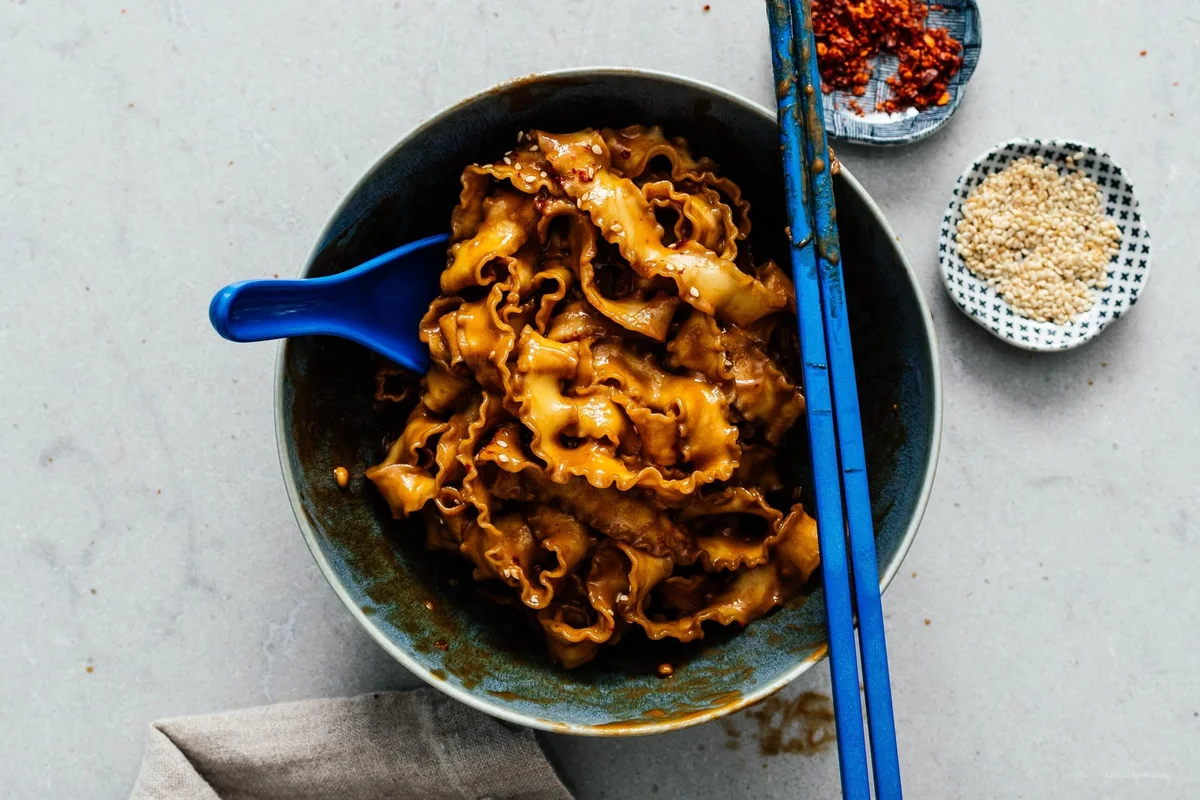
These quick sesame noodles coat dried noodles in a creamy, savoury sauce with a little sweetness and tang. They make a speedy one-person meal using pantry staples, with chilli flakes for optional heat.
Ingredients
- 30 ml (2 tbsp)Chinese sesame paste
- 15 ml (1 tbsp)soy sauce
- 15 ml (1 tbsp)rice vinegar
- 15 ml (1 tbsp)toasted sesame oil
- 8 g (2 tsp)sugar
- 1 clovegarlic, minced
- 113 g (4 oz)dried noodles of choice
- to tastetoasted sesame seeds, to finish
- to tastechilli flakes, to finish
Instructions
- 1
Mix the sauce
In a large bowl, stir together the sesame paste, soy sauce, rice vinegar, sesame oil, sugar and minced garlic.
- 2
Cook the noodles
Cook the noodles following the packet instructions. Reserve 60 ml (1/4 cup) of the cooking water, then drain the noodles well.
- 3
Toss with sauce
Add the noodles to the sauce and toss to coat. Stir in a little hot noodle water if the sauce is too thick.
- 4
Add toppings
Finish with toasted sesame seeds and chilli flakes, if desired, and serve.
What are sesame noodles?
Sesame noodles are a Chinese-inspired dish built around noodles coated in a sesame-based sauce. This fast version brings together sesame paste, soy sauce, vinegar and garlic for a creamy, savoury dressing with a sharp edge.
The recipe is designed for one and takes about eight minutes, making it a practical option when you want a filling meal without a long cooking process.
Nutrition and macros by portion
The nutrition label shows one serving as written: 746 calories, 20g protein, 92g carbs, 33g fat.
| Portion | Adjustment | kcal | Protein | Carbs | Fat |
|---|---|---|---|---|---|
| Lighter | Use less sesame oil | 522 kcal | 14g | 64g | 23g |
| This serving | As written | 746 kcal | 20g | 92g | 33g |
| Hungry | Add more noodles | 1119 kcal | 30g | 138g | 50g |
The noodles provide most of the carbohydrates, while sesame paste and sesame oil contribute much of the fat; the sesame paste and noodles also provide some protein. Serve with a generous portion of vegetables on the side for a more balanced plate.
Choosing the sesame paste
Sesame paste: Chinese sesame paste gives the sauce its rich, nutty base. Stir it well before measuring if the oil has separated in the jar.
Sesame oil: toasted sesame oil adds a concentrated roasted aroma, so keep it distinct from the sesame paste rather than treating it as a substitute.
Getting a smooth sauce
Mixing: stir the sauce ingredients together in a large bowl before adding the noodles. If the paste looks thick at first, keep stirring until the ingredients are evenly combined.
Noodle water: the reserved cooking water helps loosen the sauce and cling it to the noodles. Add it a little at a time; you may not need the full 60 ml.
Cooking the noodles
Timing: use the packet directions, as cooking times vary by noodle type and thickness. Start checking near the suggested time so the noodles do not become too soft.
Doneness: drain when the noodles are cooked to your liking, then toss them with the sauce while they are still hot.
Finishing and serving
Toppings: toasted sesame seeds add a little crunch, while chilli flakes bring optional heat. Add them just before serving so the seeds keep their texture.
On the side: pair the noodles with a simple vegetable side, such as quickly cooked greens or sliced cucumber, if you want a more rounded plate.
Balancing the flavours
Savoury: soy sauce seasons the sauce and contributes its salty depth. Taste the finished noodles before adding any extra salt.
Tangy and sweet: rice vinegar brightens the sesame, while sugar rounds out its savoury flavour. Keep the amounts as listed for the intended balance, or adjust slightly to suit your taste.
Recipe notes & tips
- Measure the noodle water before draining so it is ready when you need to thin the sauce.
- Add the reserved water gradually to avoid making the sauce runny.
- Use a large bowl so you can toss the noodles thoroughly without spilling.
- Taste before serving, since soy sauces can vary in saltiness.
- Toast sesame seeds briefly in a dry pan if they are not already toasted.
Variations
- Add greens: toss in cooked leafy greens for a vegetable addition.
- More heat: increase the chilli flakes to suit your preference.
- Extra tang: add a small splash of rice vinegar if you like a sharper sauce.
- Fresh herbs: scatter over sliced spring onion for a fresh finishing note.
- Change the noodles: use another dried noodle variety and follow its packet cooking time.
Common mistakes to avoid
- Skipping the noodle water: reserve it before draining so you can loosen the sauce as needed.
- Adding all the water: pour it in gradually, because too much can make the sauce thin.
- Overcooking the noodles: check them around the packet's suggested time and drain when tender.
- Uneven sauce: mix the sauce ingredients thoroughly before tossing in the noodles.
- Overdoing the toppings: add chilli flakes a little at a time, especially if you prefer mild food.
How to store
For the best texture, eat the noodles freshly made. If needed, refrigerate leftovers in an airtight container for up to 2 days; reheat gently with a splash of water, stirring to loosen the sauce.
Frequently asked questions
Can I make the sauce ahead?
Yes. Mix the sauce and refrigerate it in a covered container for up to 2 days. Stir it before tossing with freshly cooked noodles.
What if I cannot find Chinese sesame paste?
The recipe specifies Chinese sesame paste, which gives the sauce its characteristic flavour. Tahini can be used as a substitute, though the result will taste different.
Can I use fresh noodles?
Yes, but follow their packet directions because fresh noodles may cook faster than dried ones. Reserve some cooking water before draining.
How do I stop the sauce being too thick?
Toss in a little hot noodle water at a time until the sauce coats the noodles easily. You may not need the full reserved amount.
Are the chilli flakes essential?
No. They are an optional topping, so leave them off for a milder bowl or add them to taste.
Cook it from the original
This recipe comes from iamafoodblog.com. Their page has the author’s own photos, notes and tips — the best place to cook it from.
Open the recipe on iamafoodblog.com