
Bourbon Glazed Baked Ham
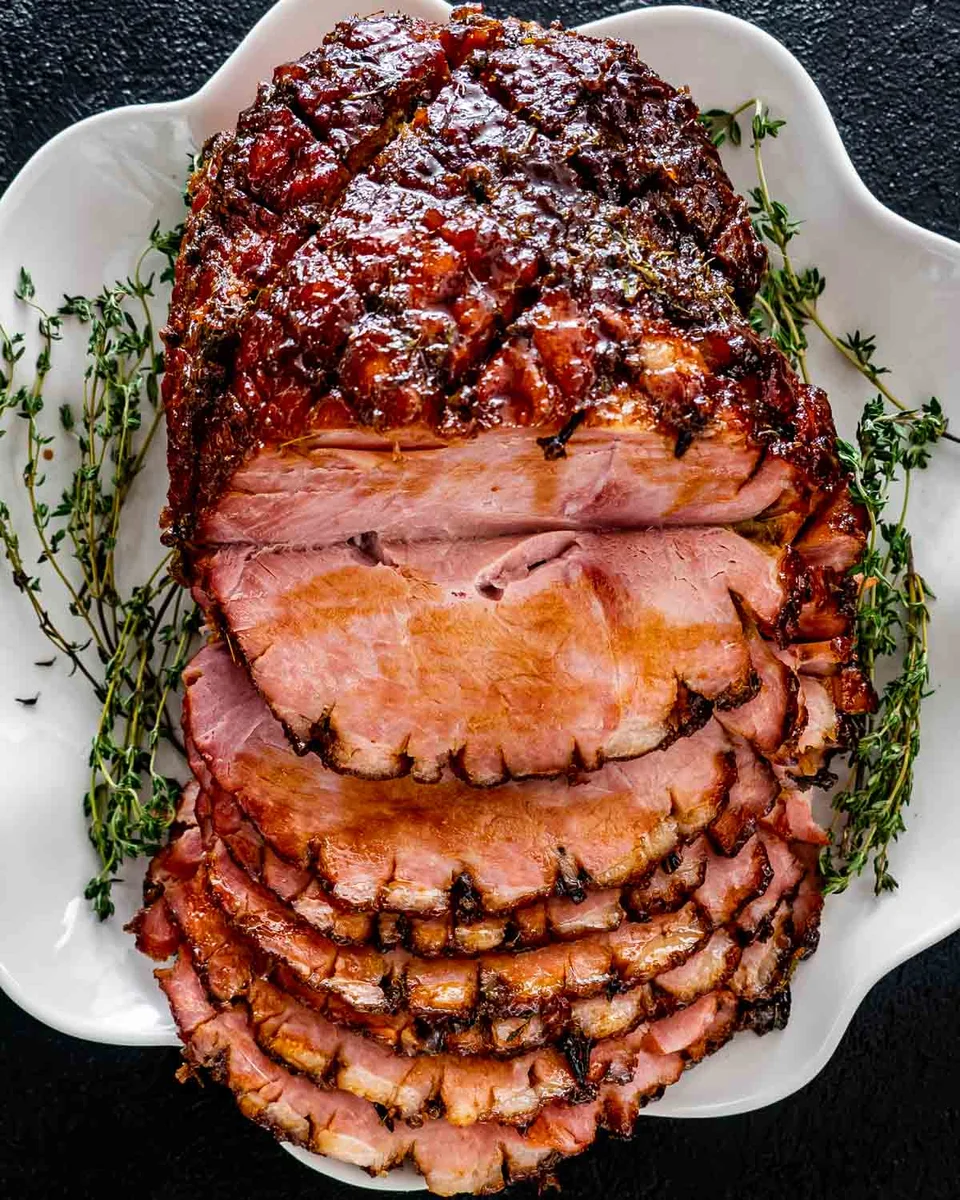
This American holiday ham is baked with a sweet-savoury glaze of bourbon, orange, brown sugar and mustard, with cloves tucked into its scored surface. It makes a flavourful centrepiece for a festive meal and is straightforward to carve and serve to a crowd.
Ingredients
- 2.72 kgfully cooked ham
- About 40whole cloves
- 200 g, packedbrown sugar
- 60 mlbourbon or other whiskey
- 30 mlapple cider vinegar
- 30 mlDijon mustard
- 1 mediumorange, zested and juiced
- 2 tablespoonsfresh thyme
- 5 mlWorcestershire sauce
- 1 teaspoongarlic powder
Instructions
- 1
Prepare the ham
Remove the ham from its packaging and pat it dry with paper towels. Leave it at room temperature for at least 2 hours before baking.
- 2
Heat the oven
Preheat the oven to 163°C. Line a roasting pan with foil, arrange a rack in the lower third of the oven and remove any upper racks.
- 3
Score the ham
With a sharp knife, cut a diamond pattern into the fat, about 6–13 mm deep or as deep as the fat layer allows. Set the ham in the prepared pan, fat side up.
- 4
Add the cloves
Press the cloves into the ham, placing them in the centre of the diamonds or at the points where the scored lines cross.
- 5
Make the glaze
Put the brown sugar, bourbon, apple cider vinegar, Dijon mustard, orange zest and juice, thyme, Worcestershire sauce and garlic powder in a small saucepan. Bring to a gentle simmer over low heat, stirring often until the sugar dissolves, then take the pan off the heat.
- 6
Brush on glaze
Use a pastry brush to coat the ham generously with about one-third of the glaze, working it into the scored lines.
- 7
Bake and baste
Place the roasting pan in the oven and bake for 2 hours, or about 20 minutes per pound, brushing the ham with the remaining glaze every 20 minutes. It is ready when its internal temperature reaches 63°C.
- 8
Brown the surface
Remove the ham from the oven and baste it with the remaining glaze. If the top is not browned enough, place the ham under the grill for a few minutes.
- 9
Rest and serve
Take the ham out of the oven and baste it with the pan juices. Cover it with foil and leave it to rest for 15 minutes before slicing and serving.
What is bourbon glazed baked ham?
Baked ham is a familiar American celebratory centrepiece, often served for holiday meals. This version layers sweet brown sugar and orange with bourbon, mustard and vinegar for a glaze that balances savoury, sweet and tangy flavours.
Scoring the fat gives the glaze places to cling, while cloves add a warm, aromatic note. The ham is already fully cooked, so baking heats it through and develops the glaze rather than cooking a raw joint from scratch.
Nutrition and macros by portion
The nutrition label shows one serving as written: 644 calories, 49g protein, 20g carbs, 38g fat.
| Portion | Adjustment | kcal | Protein | Carbs | Fat |
|---|---|---|---|---|---|
| Lighter | Serve a smaller ham portion | 451 kcal | 34g | 14g | 27g |
| This serving | As written | 644 kcal | 49g | 20g | 38g |
| Hungry | Add an extra slice | 966 kcal | 74g | 30g | 57g |
The ham supplies most of the protein and also contributes a substantial share of the fat. Brown sugar and orange juice provide the glaze’s carbohydrates, while the bourbon and other glaze ingredients add flavour in smaller amounts. Balance a serving with vegetables and a modest portion of potatoes or another starch.
Choosing the ham and aromatics
Ham: Use a fully cooked ham as specified; the method and timing are written for that. Patting it dry helps the glaze coat the surface rather than slide off.
Cloves: Place them in the scored diamonds or where the cuts intersect. Their strong fragrance means the suggested count is approximate, so a few more or fewer will work.
Making the bourbon glaze
Dissolving the sugar: Warm the glaze ingredients gently and stir frequently until the sugar has dissolved. Keep the pan at a low simmer rather than letting the mixture boil hard.
Flavour balance: Orange juice and zest bring citrus, while vinegar and Dijon provide tang against the brown sugar. Bourbon gives the glaze its distinctive whiskey note.
Scoring and glazing
Diamond cuts: Score only through the fat, making cuts about 6–13 mm deep or as deep as the fat layer allows. A sharp knife makes it easier to keep the pattern neat and even.
First coating: Brush on about one-third of the glaze before baking and work it into the cuts. Reserve the rest for repeated brushing during baking and the final baste.
Baking and checking doneness
Steady heat: Bake at 163°C for about 2 hours, or around 20 minutes per pound, basting every 20 minutes with the remaining glaze. The recipe’s stated check is an internal temperature of 63°C.
Browning: If the ham needs more colour after baking, give it a few minutes under the grill, watching it closely. The sugar in the glaze can darken quickly.
Resting and serving
Resting: After the final baste, cover the ham with foil and leave it for 15 minutes. This gives you time to prepare the platter and makes the ham easier to slice.
On the plate: Serve slices with roasted or mashed potatoes and vegetables, or add a crisp salad to contrast with the rich, sweet glaze.
Recipe notes & tips
- Pat the ham dry before scoring so the glaze has a less slippery surface to coat.
- Score only as deeply as the fat layer allows, rather than cutting far into the meat.
- Stir the glaze frequently over low heat until the sugar has dissolved.
- Set a timer to baste the ham every 20 minutes during baking.
- Watch the ham carefully under the grill, as the sugary glaze can brown quickly.
- Rest the ham for the full 15 minutes before slicing.
Variations
- Use another whiskey: Replace the bourbon with another whiskey, as the recipe allows.
- Change the citrus: Try a different orange variety while keeping the zest and juice quantities from one medium orange.
- Adjust the cloves: Use a few more or fewer whole cloves to suit your preference.
- Add more thyme: Increase the fresh thyme for a more pronounced herbal note.
- Make it tangier: Use the specified apple cider vinegar and Dijon glaze as the main counterpoint to the brown sugar.
Common mistakes to avoid
- Skipping the drying step: Pat the ham with paper towels before scoring and glazing.
- Cutting too deeply: Score through the fat only, or to the depth of the fat layer.
- Heating the glaze too fast: Keep it at a low simmer and stir often until the sugar dissolves.
- Using all the glaze at once: Start with about one-third and reserve the rest for basting.
- Forgetting to baste: Brush on the remaining glaze every 20 minutes while the ham bakes.
- Slicing straight away: Cover the ham with foil and rest it for 15 minutes first.
How to store
Refrigerate leftover ham in a covered container within 2 hours of serving and use within 3–4 days. Reheat slices until steaming hot, adding a little pan juice or water and covering them to help prevent drying.
Frequently asked questions
Can I use a ham that is not fully cooked?
This recipe specifies fully cooked ham, and its timing is based on reheating that type of ham. For an uncooked ham, use a recipe and cooking time designed for that cut.
Can I prepare the glaze ahead?
The method makes the glaze on the day, just before brushing it onto the ham. If made in advance, refrigerate it and warm it gently until brushable before use.
Where should I put the cloves?
Press them into the centre of the scored diamonds or at the intersections of the cuts. Either placement works for this recipe.
How often should I baste the ham?
Brush it with the remaining glaze every 20 minutes during the 2-hour bake. Baste once more after taking it out of the oven.
What should the internal temperature be?
The recipe says the fully cooked ham is ready when its internal temperature registers 63°C. Check the temperature in the ham without touching the bone.
Can I skip the cloves?
You can leave them out if you prefer, though they provide a distinctive aromatic flavour and are part of the recipe as written.
Cook it from the original
This recipe comes from jocooks.com. Their page has the author’s own photos, notes and tips — the best place to cook it from.
Open the recipe on jocooks.com