
Lemon Garlic Roasted Chicken
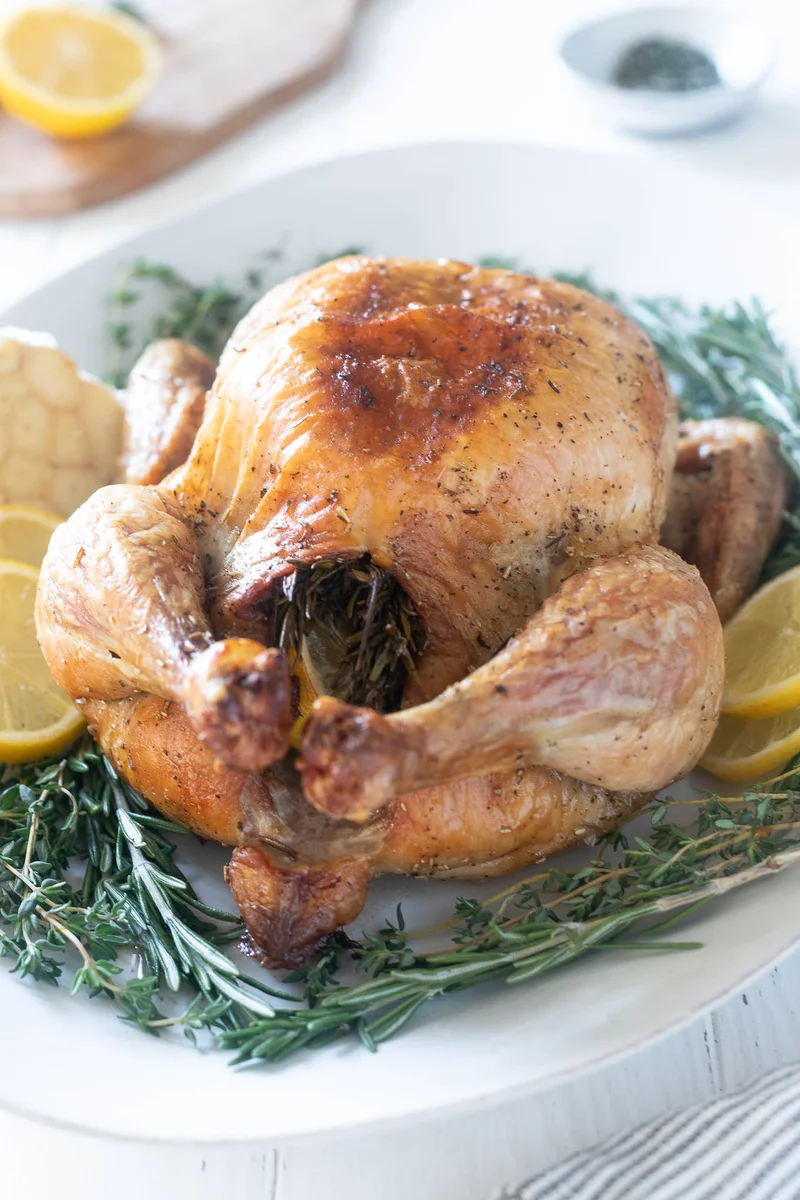
This American-style roast chicken is seasoned with lemon, garlic and rosemary, then roasted until the meat is juicy and the skin is crisp. Dry-brining ahead gives the skin time to dry and lets the salt season the bird throughout.
Ingredients
- 1.81 kg (4 lb)whole chicken
- 15 ml (1 tablespoon), or enough to season the chicken generouslykosher salt
- 22.5 ml (1.5 tablespoons)olive oil
- 7.5 ml (1.5 teaspoons)garlic powder
- 7.5 ml (1.5 teaspoons)dried rosemary, or your favourite dried herbs
- 5 ml (1 teaspoon)black pepper
- 1lemon, quartered
- 1 headgarlic, halved crosswise
- 3 sprigsfresh rosemary, or your favourite herbs
Instructions
- 1
Dry-brine chicken
Remove the giblets and pat the chicken dry with kitchen paper. Season it generously with salt inside the cavity and all over the outside, then set it on a rimmed baking tray and refrigerate uncovered for 1–3 days. Take it out about an hour before cooking to come towards room temperature; the skin should look very dry.
- 2
Mix the rub
Heat the oven to 204°C (400°F). Stir the olive oil, garlic powder, dried rosemary and black pepper together in a small bowl, then rub the mixture over the chicken's exterior.
- 3
Fill and truss
Put the lemon quarters, halved garlic head and rosemary sprigs inside the cavity. Tie the legs together with kitchen twine and tuck the wing tips underneath the front of the chicken.
- 4
Roast the chicken
Roast uncovered at 204°C (400°F) for 30 minutes. Lower the oven to 177°C (350°F) and roast for a further 45–60 minutes, until a thermometer in the thickest part of the thigh, without touching bone, reads 79°C (175°F). Check after 1 hour of total cooking, as ovens vary, and loosely cover with foil if the skin becomes too dark.
- 5
Rest the chicken
Take the chicken out of the oven and loosely cover it with foil. Leave it to rest for at least 20 minutes so the juices can redistribute.
- 6
Carve and serve
Transfer the chicken to a chopping board and remove the twine. Carve it and arrange the pieces on a serving platter. Discard the lemon, garlic and rosemary from the cavity, and keep the carcass for stock if you like.
What is lemon garlic roast chicken?
Roast chicken is a familiar American-style centrepiece for Sunday meals, holidays and everyday family dinners. This version pairs lemon and garlic with rosemary for a savoury, aromatic flavour.
The method combines an uncovered dry brine with a two-stage roast. Dry skin and a final rest help deliver crisp skin and juicy meat.
Nutrition and macros by portion
The nutrition label shows one serving as written: 523 calories, 43g protein, 3g carbs, 37g fat.
| Portion | Adjustment | kcal | Protein | Carbs | Fat |
|---|---|---|---|---|---|
| Lighter | More vegetables, less skin | 366 kcal | 30g | 2g | 26g |
| This serving | As written | 523 kcal | 43g | 3g | 37g |
| Hungry | Larger chicken portion | 785 kcal | 65g | 5g | 56g |
Most of the protein comes from the chicken, while the olive oil and chicken skin contribute much of the fat. The small amount of carbohydrate comes mainly from the seasonings and aromatics; serve with vegetables and a modest portion of potatoes or another starch to round out the plate.
Why dry-brine the chicken?
Salt: Season the bird inside and out, then refrigerate it uncovered for 1–3 days as directed. This gives the seasoning time to penetrate and helps the surface dry.
Timing: The hour out of the fridge before roasting takes the chill off the chicken. The skin should still look dry when it goes into the oven.
Make the herb and garlic rub
Oil and seasoning: Mix the olive oil with garlic powder, dried rosemary and black pepper before rubbing it over the outside. A small bowl helps distribute the seasonings evenly.
Fresh aromatics: The lemon, halved garlic head and rosemary sprigs go inside the cavity, where they perfume the chicken as it roasts. They are discarded before serving.
How to roast it evenly
Hot start: Begin at 204°C (400°F) for 30 minutes to get the roasting underway. Then lower the oven to 177°C (350°F) for the remaining 45–60 minutes.
Temperature check: Check the thickest part of the thigh after 1 hour of total cooking time, keeping the thermometer clear of the bone. The recipe's target is 79°C (175°F); loosely cover the bird if its skin is browning too quickly.
Rest before carving
Rest: Leave the cooked chicken loosely tented with foil for at least 20 minutes. This gives the juices time to settle before you cut into the meat.
Carving: Remove the twine and carve on a board that can catch any juices. Discard the cavity aromatics, or save the carcass for stock.
What to serve alongside
Vegetables: Roast potatoes, carrots or seasonal greens make straightforward companions to the lemon and rosemary flavours. You can also serve a crisp salad for a lighter contrast.
Serving balance: Add a generous portion of vegetables and a suitable starchy side to make a fuller plate. Spoon over any juices collected during carving.
Recipe notes & tips
- Use a rimmed baking tray to catch the chicken's juices.
- Salt the cavity as well as the outside during the dry brine.
- Keep the chicken uncovered in the fridge so its skin can dry.
- Use a thermometer and avoid touching the thigh bone when checking.
- Tent the chicken loosely rather than wrapping it tightly while it rests.
Variations
- Change the herbs: Use your preferred dried herbs in place of dried rosemary.
- Swap fresh herbs: Replace the rosemary sprigs with other fresh herbs you enjoy.
- Add pan vegetables: Roast suitable vegetables in the tray alongside the chicken, checking that they do not crowd it.
- Serve with gravy: Use the roasting juices as a base for gravy if desired.
- Save the carcass: Simmer it later to make chicken stock.
Common mistakes to avoid
- Skipping the dry brine: Salt the chicken ahead and leave it uncovered in the fridge for 1–3 days.
- Leaving the skin damp: Pat the chicken thoroughly dry before salting it.
- Guessing doneness: Check the thickest part of the thigh with a thermometer, avoiding the bone.
- Letting the skin get too dark: Cover the chicken loosely with foil if it browns too much.
- Carving straight away: Rest the chicken under loose foil for at least 20 minutes first.
How to store
Refrigerate leftover chicken in a covered container within 2 hours and use within 3–4 days. Reheat portions until piping hot, or use the cold meat in salads and sandwiches; freeze leftovers for longer storage.
Frequently asked questions
Can I dry-brine the chicken for just one day?
Yes. The method calls for 1–3 days uncovered in the fridge, so one day fits the stated range.
Do I need to bring the chicken to room temperature?
The method recommends taking it out about an hour before cooking. Keep it on a tray and avoid leaving it out longer than needed.
How do I know when the chicken is done?
Check the thickest part of the thigh without touching bone. The recipe gives 79°C (175°F) as the target and suggests checking after 1 hour of total roasting.
Why roast at two temperatures?
The recipe starts at 204°C (400°F) for 30 minutes, then lowers the oven to 177°C (350°F). Follow the thermometer reading and check the chicken as it cooks.
Can I use other herbs?
Yes. The recipe allows your favourite dried herbs in place of dried rosemary and your favourite fresh herbs in place of the rosemary sprigs.
Can I use the carcass after dinner?
Yes. Remove the cavity aromatics and reserve the carcass for making chicken stock.
Cook it from the original
This recipe comes from flavorthemoments.com. Their page has the author’s own photos, notes and tips — the best place to cook it from.
Open the recipe on flavorthemoments.com