
Spicy Peanut Sauce Recipe
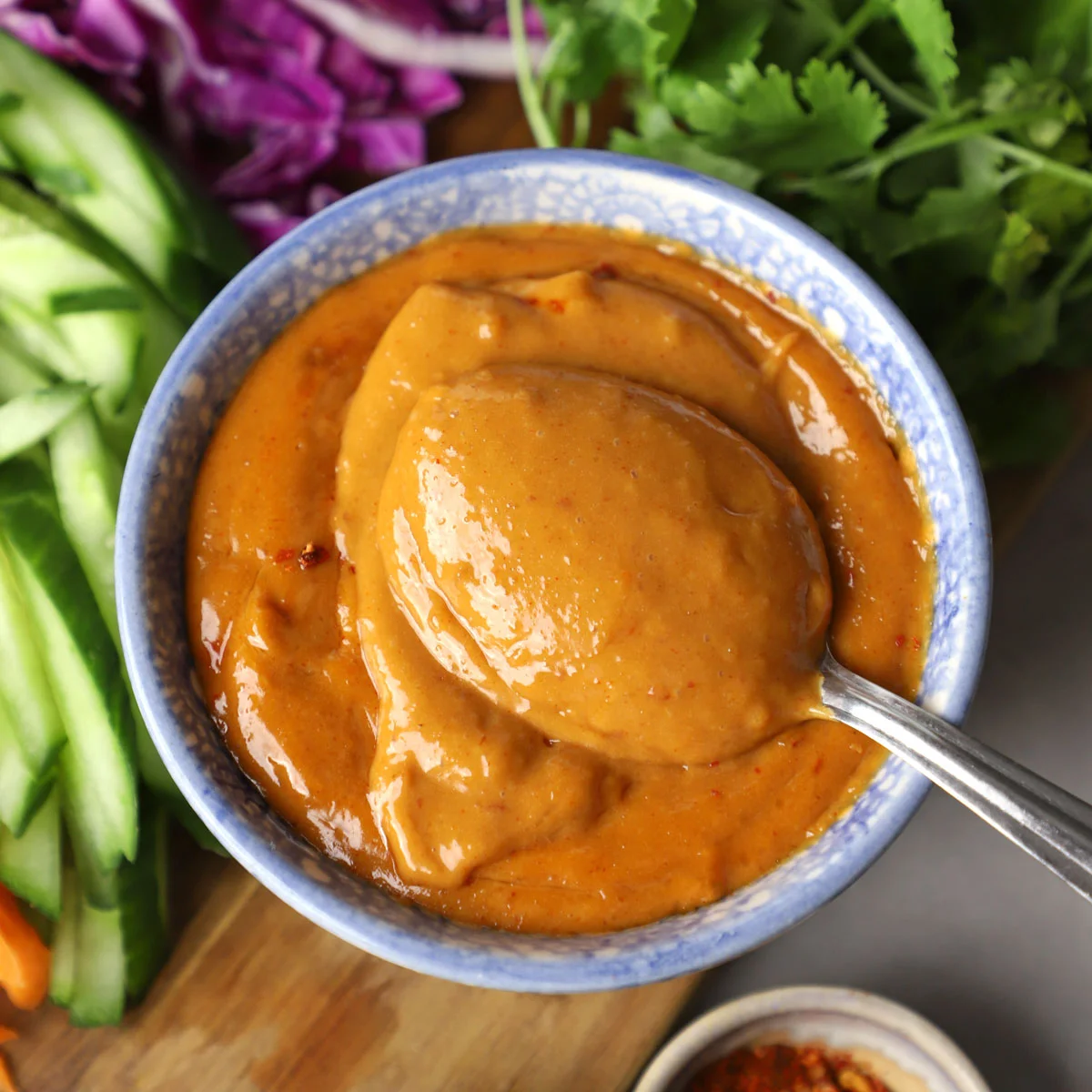
This sweet, spicy peanut sauce is a Thai-inspired dip for spring rolls and satay, and it also works as a salad dressing. A quick blend brings together rich peanut butter, chilli, garlic and a tangy, savoury balance.
Ingredients
- 1 cup (about 240 g)unsweetened peanut butter
- 4 tablespoons (60 ml)light soy sauce
- to tasteginger
- 1 tablespoonminced garlic
- 2 tablespoons (30 ml)rice vinegar
- 1 tablespoonbrown sugar or jaggery powder
- 1 tablespoonred chilli paste
- 1 teaspoonred chilli flakes
- to tastelime juice
- 2 tablespoons (30 ml)sesame oil
- 60 ml (¼ cup)water or coconut milk
Instructions
- 1
Blend the ingredients
Put the peanut butter, soy sauce, ginger, garlic, rice vinegar, sweetener, chilli paste and chilli flakes in a blender or food processor fitted with its blade. Pulse until thoroughly combined.
- 2
Add liquid
Add the lime juice and water or coconut milk.
- 3
Blend until smooth
Pulse for a few seconds more, until the sauce is silky and smooth.
- 4
Adjust the flavour
Taste the sauce and add more sweetener, soy sauce for saltiness, lime juice for acidity or chilli flakes for heat, as needed.
- 5
Chill the sauce
Keep the sweet and spicy peanut sauce in the fridge for up to 1 week.
What is spicy peanut sauce?
Peanut sauces are a familiar feature of Southeast Asian cooking, served with dishes such as satay and fresh rolls. This Thai-inspired version combines peanut butter with soy, vinegar, chilli and a sweetener for a richly flavoured dip.
Blending makes the mixture quick to prepare and helps the seasonings spread evenly through the peanut butter. Water or coconut milk loosens it into a sauce that can be adjusted to suit dipping or dressing.
Nutrition and macros by portion
The nutrition label shows one serving as written: 2 calories, 68g protein, 83g carbs, 172g fat.
| Portion | Adjustment | kcal | Protein | Carbs | Fat |
|---|---|---|---|---|---|
| Lighter | Use less sesame oil | 1 kcal | 48g | 58g | 120g |
| This serving | As written | 2 kcal | 68g | 83g | 172g |
| Hungry | Serve with satay | 3 kcal | 102g | 125g | 258g |
Peanut butter and sesame oil provide most of the fat, while peanut butter also contributes protein; the sugar or jaggery supplies carbohydrate. Since this is a concentrated sauce rather than a full meal, serve it alongside vegetables and a protein-rich dish, using the sauce as a dip or dressing.
The balance of flavours
Savoury base: peanut butter provides the thick, nutty foundation, while light soy sauce adds saltiness. Rice vinegar and lime juice bring acidity to balance that richness.
Sweet heat: brown sugar or jaggery rounds out the sharp and savoury notes. Chilli paste and flakes supply heat, so adjust them gradually to suit your preference.
Getting a smooth texture
Start with the thicker ingredients: pulse the peanut butter with the seasonings until combined before adding the liquid. This helps break up dense patches rather than leaving streaks in the finished sauce.
Thin it gradually: water or coconut milk loosens the mixture. If it still seems too thick for dipping after blending, add a little more liquid and pulse again.
How to adjust the seasoning
Taste after blending: the sauce combines salty, sweet, tangy and hot elements, and the brands of peanut butter and soy sauce can vary. Add more sweetener, soy sauce, lime juice or chilli flakes to correct the balance.
Make small changes: a little extra soy sauce can quickly make the sauce saltier, while more lime juice lifts its acidity. Pulse briefly after each adjustment so the flavour is evenly mixed.
Choosing water or coconut milk
Water: use it for a straightforward, pourable sauce that lets the peanut, soy and chilli flavours stand out.
Coconut milk: choose it for a creamier texture and a gentle coconut note. Either option can be blended in until the sauce reaches a consistency suited to its use.
Ways to serve it
For dipping: serve the sauce with spring rolls or satay, keeping it thick enough to cling to each bite. It can also be spooned alongside other snacks or grilled foods.
For salads: loosen the sauce until it can be drizzled, then toss or serve it with the salad. A little extra water or coconut milk can help reach that consistency.
Recipe notes & tips
- Use a blender or food processor with a blade attachment to combine the thick ingredients evenly.
- Add the water or coconut milk after the first blend so you can judge how much thinning the sauce needs.
- Taste the sauce before adding extra soy sauce, as the peanut butter and soy sauce can vary in saltiness.
- Add chilli flakes in small increments if you are unsure how hot you want the finished sauce.
- Blend briefly after each seasoning adjustment to distribute it throughout the sauce.
Variations
- Creamier sauce: use coconut milk in place of water for a richer texture.
- Milder heat: reduce the chilli flakes to soften the heat.
- Sweeter finish: add a little more brown sugar or jaggery after tasting.
- More acidity: add extra lime juice a little at a time.
- Thinner dressing: blend in additional water until it is easy to drizzle.
Common mistakes to avoid
- Adding all the liquid at once: the sauce may become thinner than intended; blend in the listed liquid, then adjust carefully.
- Over-blending after thinning: the sauce can become looser than you want; pulse only briefly to finish.
- Adding too much soy sauce: the sauce can become overly salty; taste before adding more.
- Increasing the chilli too quickly: the heat can overwhelm the other flavours; add flakes gradually and taste.
- Skipping the final taste: the balance may need adjusting; check for saltiness, sweetness, acidity and heat before serving.
How to store
Store the sauce in a covered container in the fridge for up to 1 week. Stir it before serving; if it has thickened, mix in a little water or coconut milk to loosen it.
Frequently asked questions
What can I use this peanut sauce for?
Serve it as a dip for spring rolls or satay, or thin it to use as a salad dressing.
Can I use water instead of coconut milk?
Yes. The recipe offers either option: water gives a simpler sauce, while coconut milk makes it creamier.
How can I make the sauce thinner?
Blend in a little extra water or coconut milk until it reaches the consistency you want.
How do I make it less spicy?
Use fewer chilli flakes, then taste after blending before adding any more.
How long does the sauce keep?
It can be kept in the fridge for up to 1 week in a covered container.
Can I adjust the flavour after blending?
Yes. Add sweetener for sweetness, soy sauce for saltiness, lime juice for acidity or chilli flakes for more heat, then pulse briefly.
Cook it from the original
This recipe comes from funfoodfrolic.com. Their page has the author’s own photos, notes and tips — the best place to cook it from.
Open the recipe on funfoodfrolic.com